
If you scroll through any barbershop’s Instagram page right now, chances are you’ll spot a burst fade within the first five posts. It’s become one of the most requested men’s haircuts of the last few years, and for good reason. The curved fade wraps around the ear instead of cutting straight across it, which gives the whole haircut a sharper, more sculpted finish than a standard taper.
But “burst fade” isn’t one single haircut. It’s a fading technique that can be paired with dozens of top styles, from a mohawk to a mullet to a simple buzz cut. That flexibility is exactly why it works for nearly every face shape, hair type, and lifestyle.
What Is a Burst Fade Haircut?
A burst fade is a fading technique where the hair tapers in a curved, semi-circular shape around the ear rather than in a straight vertical line. Barbers sometimes call it a “radial fade” or a “halo taper” because the fade seems to burst outward from a single point behind the ear, similar to a sunburst.
What Are the Best Burst Fade Haircut Styles?
Below are 32 of the best burst fade haircuts for men, ranging from clean and professional to bold and statement-making. Each one uses the same curved fading technique but pairs it with a different top style, length, or texture.
1. Classic Burst Fade

The classic burst fade is the foundation every other variation builds on. It uses a moderate curve around the ear with a mid-length top, giving you a balanced look that isn’t too flashy or too plain. It’s a safe first choice if you’ve never had a burst fade before and want to see how it suits you.
2. Low Burst Fade

The low burst fade keeps the taper close to the hairline, starting just above the ears rather than higher up the head. This creates a subtler, more understated version of the cut, which makes it a strong option for workplaces with conservative grooming policies while still giving you that curved detail around the ear.
3. Mid Burst Fade
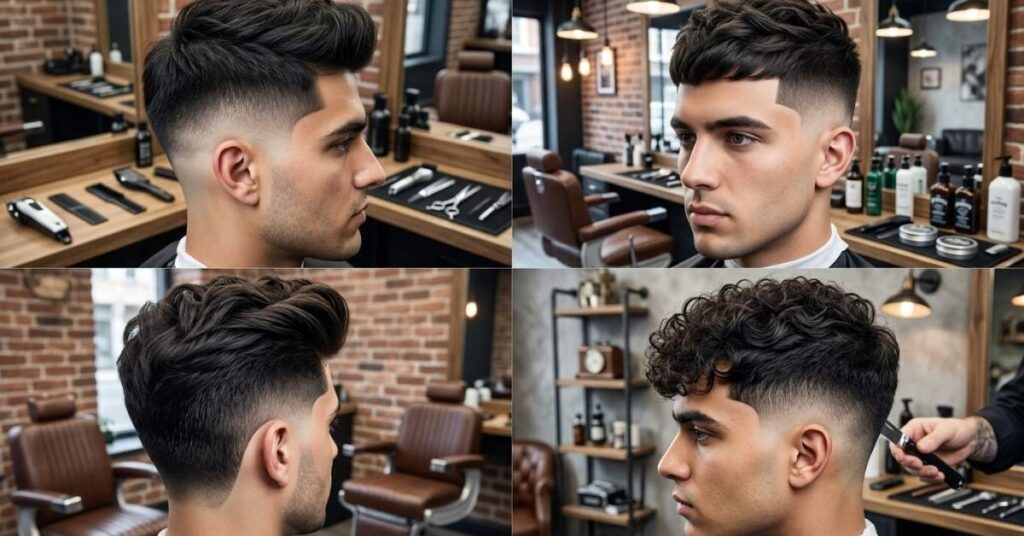
Sitting between the low and high versions, the mid burst fade offers the most versatility of the three. It provides enough contrast to look sharp and modern without being as bold as a high fade, making it one of the most commonly requested options at barbershops.
4. High Burst Fade
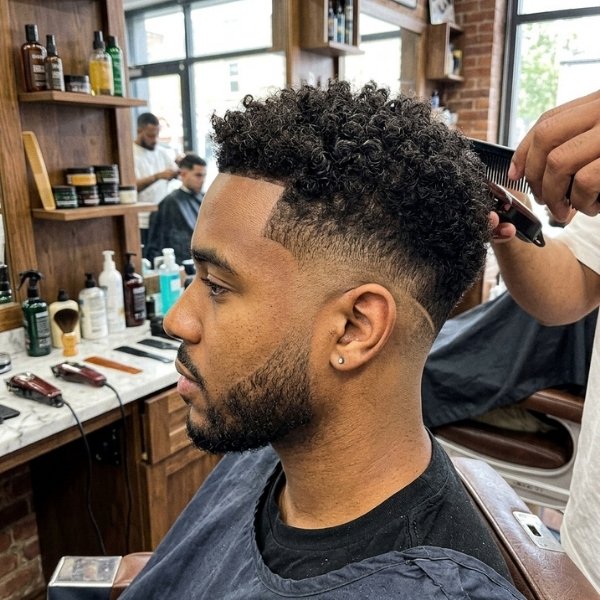
The high burst fade starts much higher on the head, often near the temple, before curving down and blending into the neckline. This creates a dramatic, high-contrast look between the skin-close sides and the longer top. It suits men who want their haircut to make a statement.
5. Burst Fade Mullet

The burst fade mullet pairs a soft, curved fade around the ears with longer hair left at the back. This combination gives you the clean, faded sides of a modern cut with the retro, rebellious energy of a mullet. It works especially well on straight or slightly wavy hair that holds its shape.
6. Burst Fade Mohawk
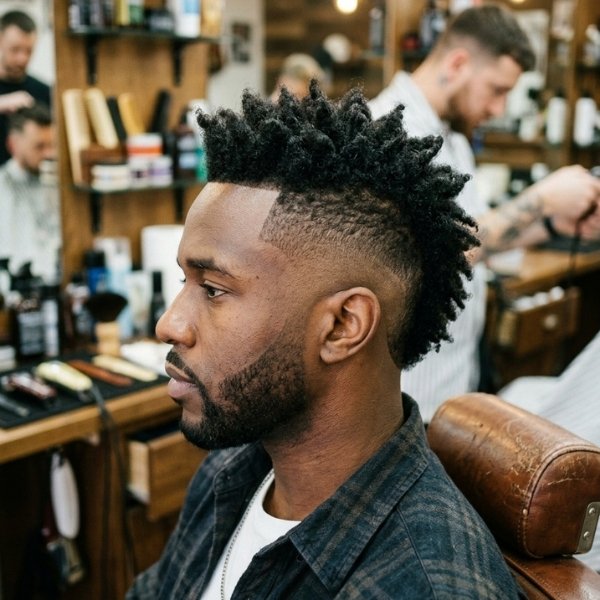
This version combines a strip of longer hair running from the forehead to the nape with tightly faded sides that curve around the ear. It’s one of the boldest options on this list and tends to suit men with oval or diamond face shapes, since the height on top elongates the face.
7. Burst Fade Faux Hawk
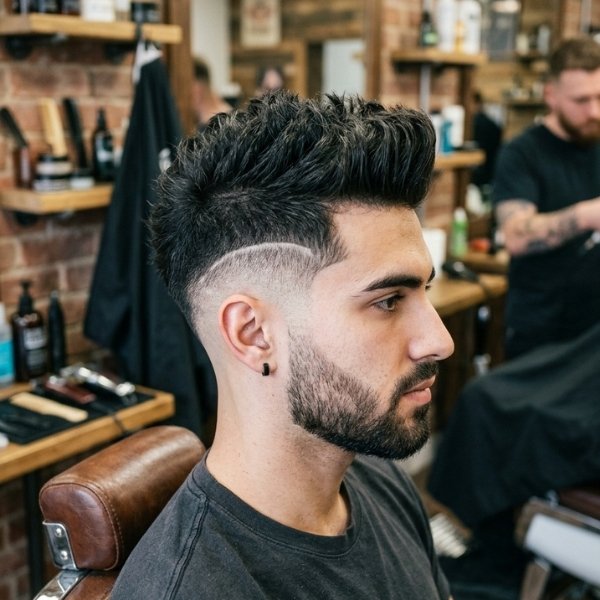
A softer alternative to the full mohawk, the faux hawk keeps some length on the sides while styling the top into a raised center strip. The burst fade underneath adds definition without the commitment of a true mohawk, making it easier to style for both casual and formal settings.
8. Burst Fade Textured Crop
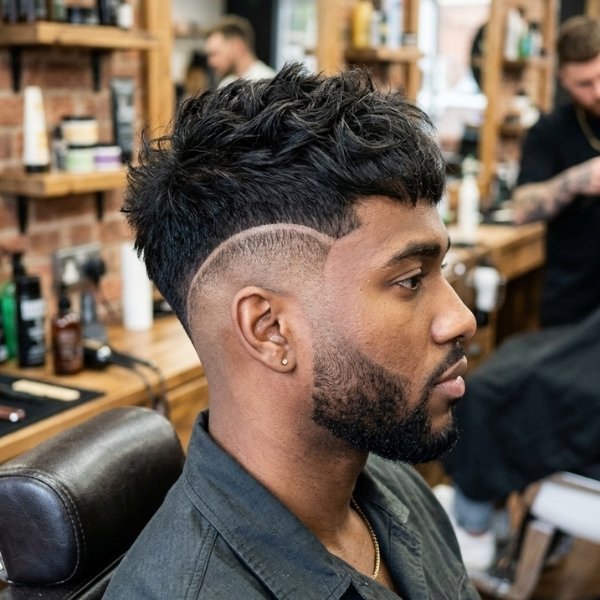
The textured crop features short, choppy layers on top with a fringe that sits forward, paired with a burst fade on the sides. Texturizing paste or clay helps separate the strands for a lived-in, effortless finish. It’s a popular pick for men with straight to wavy hair who want low daily maintenance.
9. Burst Fade French Crop

Similar to the textured crop but slightly shorter and more structured, the French crop pairs a defined fringe with rough, textured layers on top. The burst fade gives the sides a clean, sharp edge that contrasts nicely with the soft texture up top.
10. Burst Fade Pompadour

The pompadour brings volume and height to the front of the hair, swept upward and back, while the burst fade keeps the sides tight and controlled. This is a strong choice for formal occasions or anyone who wants a polished, put-together look with a modern twist.
11. Burst Fade Quiff

A quiff is shorter and less structured than a pompadour, with the front hair pushed up and slightly back for a relaxed wave. Paired with a burst fade, it creates a stylish balance between casual and refined that works for both the office and a night out.
12. Burst Fade V-Cut
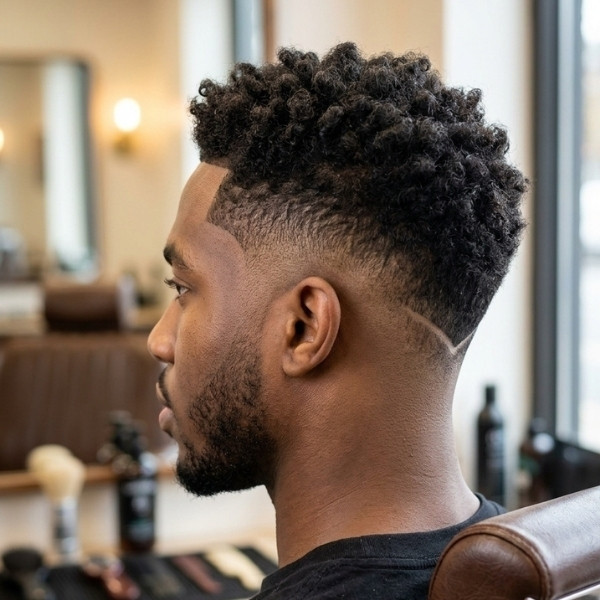
The V-cut features hair styled into a V-shaped point at the nape of the neck, which pairs distinctively with the curved lines of a burst fade. It’s a detail-heavy style best left to an experienced barber who can freehand the shape precisely.
13. Burst Fade Comb Over
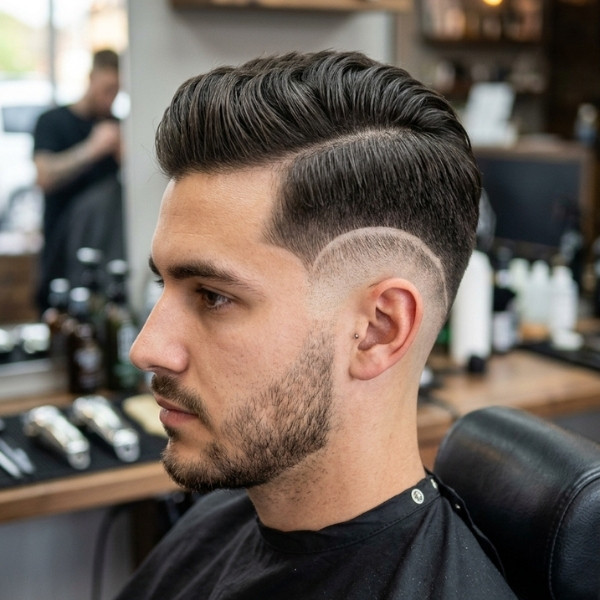
The comb over keeps the top hair brushed neatly to one side, with the burst fade curving cleanly around the ear beneath it. This combination reads as more professional and polished, making it a favorite for men who need a haircut that works in corporate settings.
14. Burst Fade Slick Back

For a sleeker, more dramatic finish, the slick back sweeps all the top hair backward using gel or pomade. The burst fade underneath keeps the sides sharp, creating contrast between the smooth top and the tightly faded sides.
15. Burst Fade Buzz Cut

If low maintenance is your priority, the buzz cut with a burst fade is about as simple as it gets. The uniform length on top still lets the curved fade detail show through, giving even the shortest haircut a bit of extra structure and sharpness.
16. Burst Fade Crew Cut

The crew cut keeps slightly more length on top than a buzz cut, usually enough to comb or add light texture to. Combined with a burst fade, it gives a clean, classic silhouette that works well for both younger guys and older men who prefer a traditional look.
17. Burst Fade Side Part
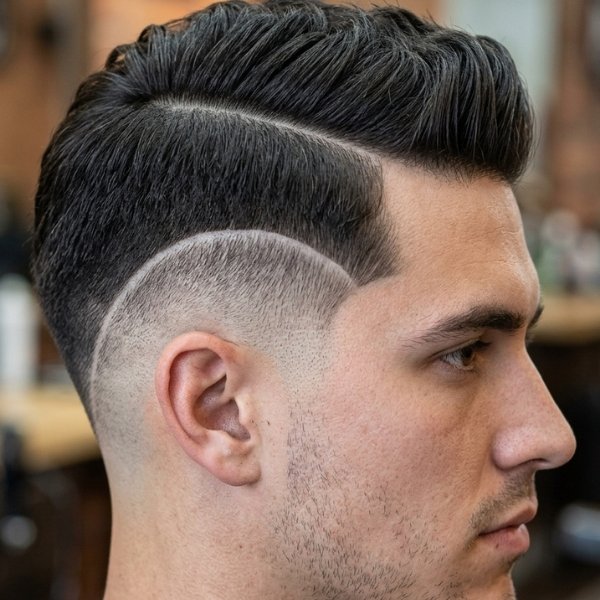
A side part adds a defined line through the top hair, which is then combed to one side for a neat, structured finish. The burst fade beneath it keeps the whole look sharp and intentional, making this one of the more versatile options for everyday wear.
18. Burst Fade Hard Part
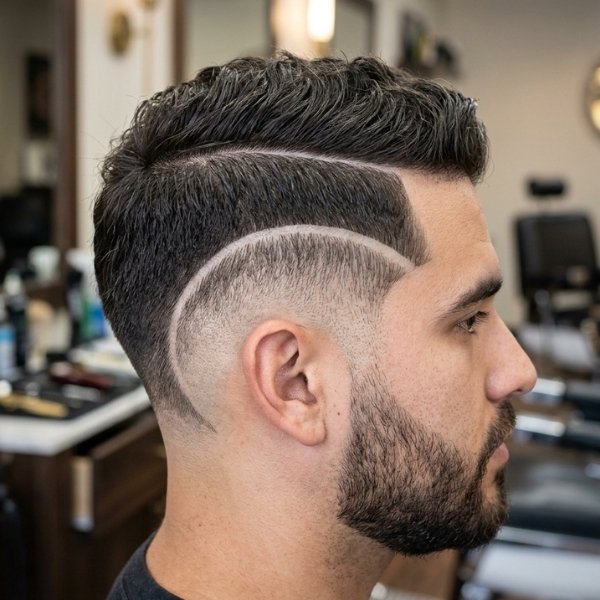
The hard part takes the side part concept further by shaving a thin, visible line to separate the part from the rest of the hair. Paired with a burst fade, it adds an extra layer of precision and detail that stands out, especially on darker hair.
19. Burst Fade with Beard
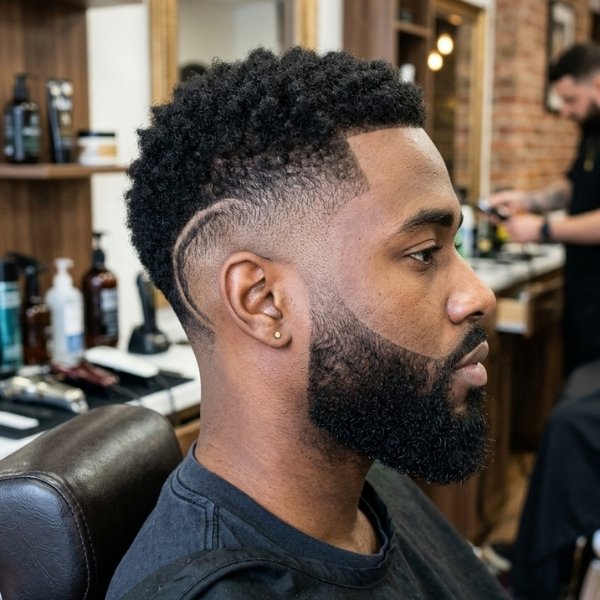
Combining a burst fade with a well-groomed, faded beard creates a cohesive, masculine look where the facial hair blends seamlessly into the haircut. This is one of the most requested combinations in barbershops because it frames the whole face rather than just the head.
20. Burst Fade with Design

For men who want to personalize their cut further, adding a shaved design, whether it’s a simple line, a geometric pattern, or something more intricate, into the fade creates a completely unique look. Designs are typically added within the faded section for maximum visibility.
21. Burst Fade Long Hair
Leaving significant length on top while keeping a tight burst fade on the sides creates striking contrast. This version works particularly well for men who want to experiment with different top styles day to day, since the extra length offers more styling flexibility.
22. Burst Fade Curly Hair
Curly hair naturally adds volume and texture that pairs beautifully with the curved lines of a burst fade. The contrast between the defined curls on top and the tight fade on the sides gives the haircut a lot of visual interest without extra styling effort.
23. Burst Fade Wavy Hair
Wavy hair offers natural movement that works well with a mid or textured top style. A burst fade cleans up the sides while letting the waves on top do the visual work, resulting in a low-effort but stylish everyday cut.
24. Burst Fade Straight Hair
Straight hair gives the sharpest, cleanest lines when paired with a burst fade, since there’s no natural texture to soften the curve. This combination suits comb overs, side parts, and slicked-back styles particularly well.
25. Burst Fade Afro
An afro paired with a burst fade keeps the natural volume and shape of the top hair intact while adding definition at the sides. It’s a striking combination that highlights natural texture rather than trying to tame it.
26. Burst Fade Dreadlocks
For men with locs, a burst fade on the sides creates a sharp frame around the natural length and thickness of the dreadlocks. This pairing has become increasingly popular because it modernizes a traditional style without altering the locs themselves.
27. Burst Fade Brush Up
The brush up uses a round brush and blow dryer to push the top hair straight upward, creating height and volume. Combined with a burst fade, it results in a bold, structured look that works especially well on thicker hair types.
28. Burst Fade Taper
A taper adds a gradual, gentle blend down the back and sides rather than a hard fade, and combining it with the burst technique around the ears creates a softer overall transition. It’s a good middle-ground option for men who want subtlety with a bit of curved detail.
29. Burst Fade Ivy League
The Ivy League is a classic, slightly longer crew cut that’s brushed to one side. Adding a burst fade to the sides modernizes this traditionally conservative style, making it a smart choice for men who want a professional look with a contemporary edge.
30. Burst Fade Side Swept Fringe
This style lets the front section of hair fall diagonally across the forehead, framing the face. The burst fade keeps the sides tidy and prevents the longer fringe from looking unkempt, striking a nice balance between soft and sharp.
31. Burst Fade Modern Mullet
A more refined take on the classic mullet, the modern mullet trims the back to a more manageable length while keeping the burst fade tight around the ears. It offers the retro appeal of a mullet without looking as dated or exaggerated.
32. Burst Fade High Top
The high top brings back a bold, boxy silhouette on top with the hair cut flat and full. A burst fade on the sides keeps the look grounded and current, making this a distinctive choice for men who want serious volume and height.
Who Does a Burst Fade Suit?
A burst fade can be adapted for almost anyone, but certain variations will look sharper depending on your face shape and hair type. Here’s how to match the style to you.
By Face Shape
- Round faces: A high or mid burst fade with added height on top helps elongate the face. Styles like the mohawk, faux hawk, or pompadour work well here.
- Square faces: A low or mid burst fade with a softer, textured top balances out strong jawlines. Textured crops and side parts are good options.
- Oval faces: Considered the most versatile face shape, oval faces suit nearly every burst fade variation, including bold choices like the burst fade mohawk or high top.
- Diamond faces: A faux hawk or mohawk burst fade complements the narrower forehead and chin, drawing attention to the cheekbones.
- Heart-shaped faces: A side part or comb over burst fade helps balance a wider forehead with a narrower chin.
- Long or rectangular faces: A low burst fade with more width on top, such as a brush up or crew cut, helps shorten the overall appearance of the face.
By Hair Type
- Straight hair: Best suited to sleek styles like the slick back, comb over, or hard part, since straight hair holds clean lines well.
- Wavy hair: Works well with textured crops, quiffs, and side-swept fringes that let the natural movement show.
- Curly hair: Pairs naturally with curly top styles, faux hawks, and mohawks, where the curl pattern adds volume without extra product.
- Coily or afro-textured hair: Suits the burst fade afro or high top, both of which preserve natural volume while sharpening the sides.
- Thick hair: Benefits from a burst fade because the tapering helps remove bulk and weight, especially in a taper or brush-up style.
- Fine or thin hair: A textured crop or French crop adds the illusion of density without overwhelming finer strands.
Burst Fade vs Drop Fade: What Is the Difference?
Burst fades and drop fades are often confused because both use a curved fading technique instead of a straight vertical line. The difference comes down to where and how that curve happens.
A burst fade is isolated around the ear. The barber treats the ear as the focal point, creating a tight, semi-circular taper that “bursts” outward from that spot before blending into the nape of the neck.
A drop fade, on the other hand, continues its curve further back and lower, following the natural curve of the skull down toward the back of the head. It creates a longer, more continuous line rather than a concentrated burst around the ear.
Here’s a quick side-by-side comparison:
| Feature | Burst Fade | Drop Fade |
| Fade shape | Semi-circle around the ear | Continuous curve around the back of the head |
| Best for | Round or wider face shapes | Oval or longer face shapes |
| Pairs well with | Mohawks, mullets, faux hawks | Crew cuts, side parts, classic styles |
| Maintenance | Grows out faster, needs trims every 2 to 3 weeks | Grows out more evenly, slightly longer between trims |
| Overall look | Bold, sculpted, eye-catching | Subtle, sophisticated, timeless |
Neither style is objectively better. The right choice depends on your face shape, how often you’re willing to visit the barber, and whether you want a haircut that stands out or one that blends into more formal settings.
How Do You Choose the Right Burst Fade?
With 32 variations to choose from, narrowing down the right one can feel overwhelming. A few questions can help simplify the decision.
- How much maintenance are you willing to commit to? High-contrast, high burst fades need trims roughly every two to three weeks to stay sharp. Low burst fades and tapers can stretch a bit longer between visits.
- What does your daily routine look like? If you’re short on time in the morning, a buzz cut or crew cut burst fade requires almost no styling. If you enjoy the process, a pompadour or quiff gives you more to work with.
- What’s your workplace like? Conservative offices generally respond better to low or mid burst fades paired with classic tops like a side part or comb over. Creative industries offer more room for high fades, designs, or a mohawk.
- What’s your natural hair texture? Work with your texture rather than against it. Curly and coily hair types tend to look best when the fade highlights rather than fights the natural curl pattern.
- What’s your face shape? Refer back to the face shape breakdown above as a starting point, then bring reference photos to your consultation.
What Should You Tell Your Barber?
Clear communication is the difference between walking out with the haircut you wanted and walking out disappointed. When you sit down in the chair, be specific about the following:
- The fade height. Say clearly whether you want a low, mid, or high burst fade, since these look noticeably different.
- The guard number. If you know the clipper guard size you like on the sides, mention it. If not, ask your barber to show you a few lengths before committing.
- The top style. Name the specific look you want, such as a textured crop, mullet, or slick back, rather than just saying “something modern.”
- Reference photos. Bring two or three photos that show the fade height, the top length, and how you want the hairline shaped. Photos remove a lot of guesswork.
- Your styling habits. Let your barber know how much time you’re realistically willing to spend styling each morning so they can tailor the cut and recommend suitable products.
- Any sensitivities. Mention if you have a sensitive scalp, cowlicks, or thinning areas so the barber can plan the fade around them.
How to Style a Burst Fade for Maximum Volume
Getting the most volume out of your burst fade comes down to technique, not just product.
- Start with damp, not soaking wet, hair. Towel dry until hair is roughly 70 percent dry before applying any product.
- Apply a volumizing or texturizing product at the root. A light sea salt spray, texture powder, or volumizing mousse lifts the hair from the base rather than weighing it down.
- Blow dry against the direction of hair growth. Using a round brush and directing airflow upward and against the natural fall of your hair builds lift at the roots.
- Finish with a light-hold paste or clay. Heavy pomades can flatten volume, so opt for matte clay or texturizing paste for a fuller, more natural finish.
- Use your fingers, not a comb, for the final shaping. Combing tends to flatten texture, while finger-styling preserves separation and volume.
- Avoid overloading on product. A small, coin-sized amount is usually enough. Too much product weighs hair down and reduces the volume you’re trying to build.
How Often Should You Get a Burst Fade?
Because the curved line around the ear grows out faster than a straight fade, most men need to visit the barber every two to three weeks to keep a burst fade looking sharp. High burst fades tend to need the most frequent upkeep since the contrast between the skin-close sides and the longer top becomes obvious as soon as regrowth starts.
Low and mid burst fades can sometimes stretch to three or four weeks between trims, especially if you’re not too particular about a razor-sharp line. If maintaining a strict schedule isn’t realistic for you, mention that during your consultation so your barber can choose a variation that grows out more gracefully.
What Is the Biggest Mistake Men Make with a Burst Fade?
The single biggest mistake is going to a barber without experience specifically in curved, freehand fading techniques. A burst fade requires precision around the ear that a standard clipper-over-comb fade doesn’t, and an inexperienced barber can easily leave the line uneven or too harsh.
Other common mistakes include:
- Choosing a fade height that doesn’t suit your face shape. A high burst fade on a long face, for example, can make the face look even longer.
- Skipping regular trims. Letting a burst fade grow out too long blurs the curved line that makes the style distinctive in the first place.
- Not communicating styling habits. Choosing a high-maintenance top style, like a pompadour, without being willing to style it daily leads to a cut that never looks the way it did when you left the barbershop.
- Overusing heavy product. As mentioned earlier, too much pomade or gel can crush the volume and texture that makes a burst fade stand out.
- Ignoring hair texture. Forcing a style that fights your natural texture, such as a sleek slick back on very curly hair, often results in more frustration and daily upkeep than necessary.
FAQ
Is a burst fade the same as a mullet?
No. A burst fade is a fading technique for the sides, while a mullet refers to keeping the back hair long. The two can be combined into a burst fade mullet, but they aren’t the same thing.
How long does a burst fade last?
A burst fade typically stays sharp for two to three weeks before it needs a trim, since the curved line around the ear grows out faster than a standard fade.
Can curly hair get a burst fade?
Yes. Curly hair works especially well with a burst fade, as the fade adds definition and structure while letting the natural curl pattern stand out on top.
What hairstyles pair best with a burst fade?
Mohawks, mullets, faux hawks, textured crops, and pompadours are among the most popular pairings, since they highlight the curved contrast of the fade.
How do I ask my barber for a burst fade?
Specify the fade height (low, mid, or high), the top style you want, and bring reference photos. This gives your barber a clear picture of the exact look you’re after.
Final Thoughts
The burst fade has earned its popularity because it isn’t a single, rigid haircut. It’s a technique that adapts to your face shape, hair texture, and personal style, whether that means a low-key low burst fade for the office or a bold burst fade mohawk for a weekend look. The key to getting it right is choosing a variation suited to your features, communicating clearly with your barber, and staying on top of maintenance so the curved line stays crisp.
With 32 styles to choose from, there’s a burst fade here for nearly every man. Save a few reference photos from this list, book your next barber appointment, and you’ll be walking out with a haircut that’s sharp, current, and genuinely suited to you.