
The middle part haircut has quietly become one of the most requested cuts at barbershops around the world. It isn’t a passing trend borrowed from a TikTok filter. It’s a hairstyle with real staying power, worn by everyone from 90s heartthrobs to K-pop idols to the guy sitting two chairs down at your local barbershop right now.
What makes it so popular is how adaptable it is. A middle part works on short hair and long hair, on fades and full manes, on straight strands and loose curls. It frames the face, adds symmetry, and looks intentional without requiring hours in front of a mirror.
In this guide, we’re breaking down 35 of the best middle part haircuts for men, how to choose the right one for your face and hair type, and exactly how to style and maintain it so it holds up from morning meetings to late nights out. We’ll also cover how to keep a middle part in place on straight, thick hair, a texture that tends to fight this style harder than any other.
What Is a Middle Part Haircut?
A middle part haircut is exactly what the name suggests: hair that’s divided straight down the center of the scalp, so it falls evenly on both sides of the face. The result is a symmetrical, balanced look often nicknamed the “curtain haircut,” because the parted sections resemble curtains framing a window.
Unlike a side part, which pushes volume to one side and creates an asymmetrical silhouette, a middle part distributes hair evenly. When styled with lift at the roots, the front hairline often forms a soft “M” shape that adds shape and depth to the whole cut.
The style isn’t new. It had a moment in the 1920s, resurfaced with rock musicians in the 1970s, and became a signature look for boy bands and rom-com leading men in the 1990s. Today it’s back again, driven largely by Gen Z and K-pop culture, and it pairs well with everything from skin fades to shoulder-length hair.
Stylish Middle Part Hairstyles for Men
Before diving into the full list of 35 styles, it helps to understand the core categories most middle part haircuts fall into. Nearly every variation you’ll see at a barbershop is a spin on one of these four foundations.
Middle Part Flow

The middle part flow is all about natural movement. Hair grows outward and slightly downward from the crown, framing the face without stiff styling. This cut usually needs five to eight inches of length on top and looks best air-dried with a light spray of sea salt for texture. It’s the look most associated with the “eboy” aesthetic and pairs beautifully with a soft taper on the sides.
Middle Part Mullet
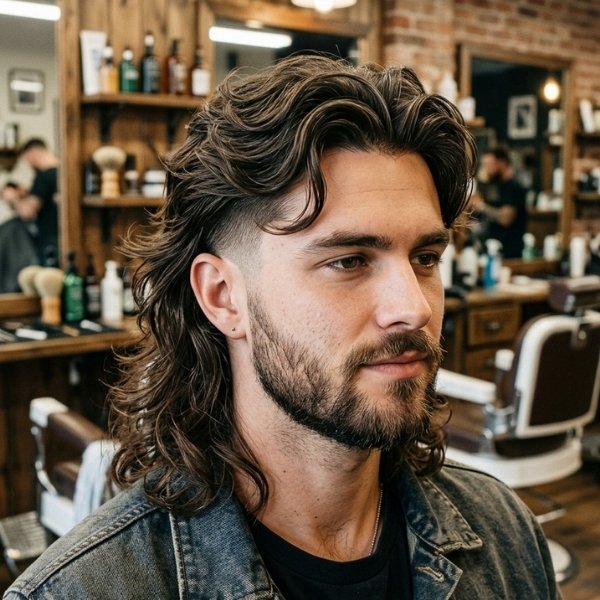
A modern take on a retro classic, the middle part mullet combines shorter, layered length on top and sides with longer strands at the back. The center part softens the boldness of the mullet silhouette, making it easier to wear in everyday settings while still standing out.
Messy Middle Part

The messy middle part trades sleek precision for loose, tousled waves that fall naturally on either side. Texture is everything here. Without it, the cut can look undone rather than intentionally relaxed. A texturizing spray or clay worked through damp hair gives it the separation it needs.
Middle Part Fade
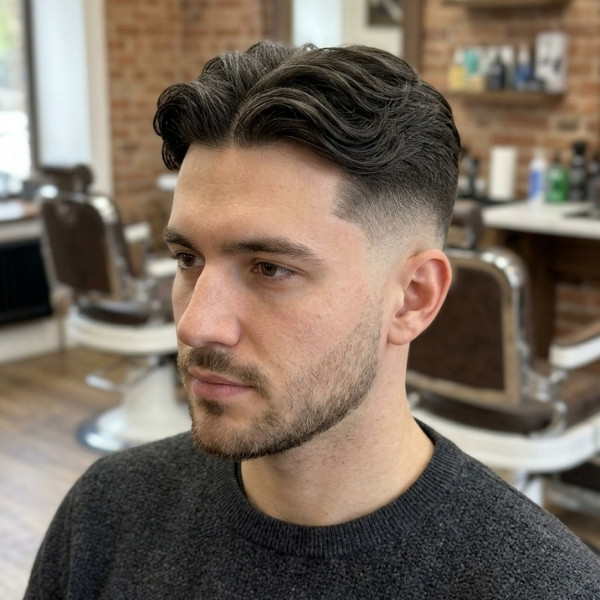
The middle part fade pairs a longer, center-parted top with tightly faded sides. It’s the most commonly requested version of this haircut because it offers a sharp, low-maintenance contrast. A low fade keeps things office appropriate, while a skin fade adds more drama for nights out.
Best Styling Kit for the Middle Part on Straight, Thick Asian Hair
Straight, thick hair is one of the toughest textures to style into a middle part. It’s dense, it resists bending, and it tends to fall flat or spring back to its natural part line within hours. Most generic styling products simply aren’t built for this hair type. They may look fine right after application, then collapse by lunchtime as the fringe drops and volume disappears.
The fix isn’t more product. It’s the right product. A strong-hold, low-shine clay or paste gives thick, straight strands something to grip onto, while a lightweight texture powder adds lift at the roots without weighing hair down. Look for a kit that includes a matte clay for structure, a texture powder for volume, and a light hold spray to lock the part in place without stiffness. Applying product to dry rather than damp hair also makes a noticeable difference, since wet styling tends to collapse the moment thick hair fully dries.
With the right combination, even the most stubborn straight, thick hair can hold a defined middle part from morning to night. Here are 31 more middle part styles worth considering, many of which work especially well on this hair type.
Flat Middle Part
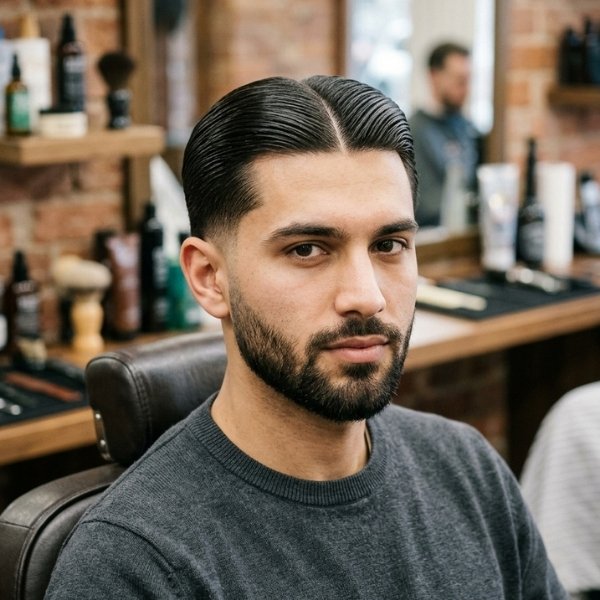
The flat middle part keeps things sleek and close to the scalp, with minimal volume and a smooth, glass-like finish. It suits men who want a low-maintenance, polished look. Blow-dry hair flat against the head, then finish with a light pomade to control shine and stray strands.
Soft Middle Part

Softer and more relaxed than a sharply defined part, this version blends naturally into loose layers on either side. It works well for fine to medium hair and gives a lived-in, effortless finish. A lightweight styling cream adds just enough hold without stiffness.
Medium Length Middle Part
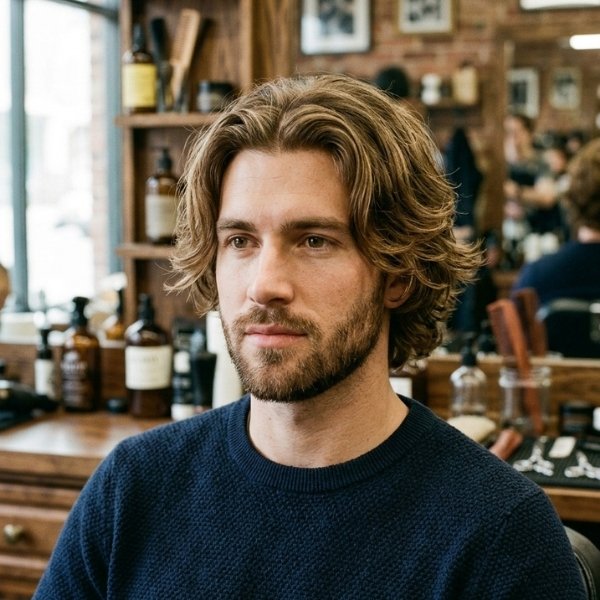
Sitting between short and long, the medium length middle part offers versatility. It’s long enough to style into waves, curls, or a flow, but short enough to stay manageable day to day. Regular trims every six to eight weeks keep the shape from growing shapeless.
Blonde Middle Part

Lightened hair adds contrast and dimension to any middle part style, especially fades and curtains. Bleaching and toning can dry out strands, so a hydrating conditioner and heat protectant become essential parts of the routine to keep the color looking fresh.
Skin Fade Middle Part
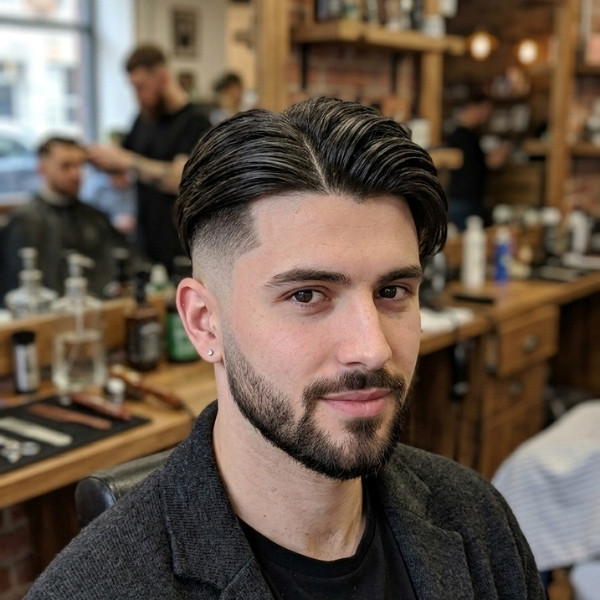
This bold combination pairs a razor-sharp skin fade with a longer, center-parted top. The dramatic contrast between the bald sides and voluminous top makes this one of the most eye-catching options on this list. It suits oval and square face shapes particularly well.
Middle Part Taper Fade
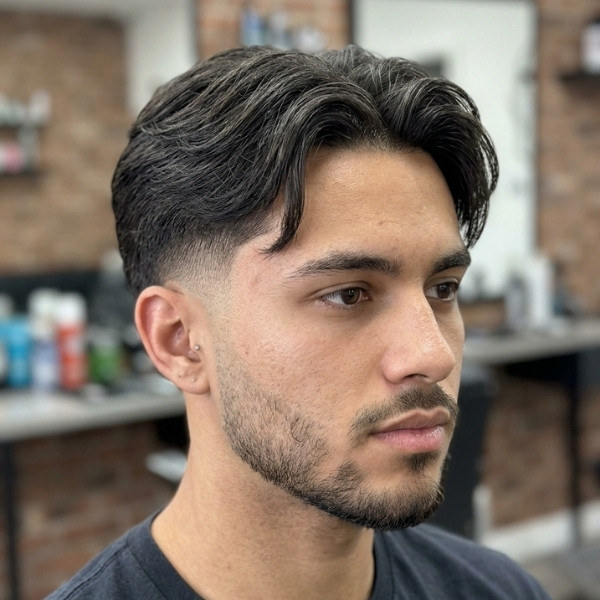
A softer alternative to the skin fade, the taper fade gradually shortens hair at the neckline and around the ears without exposing skin. It reads as clean and put-together, making it a versatile choice for both formal and casual settings.
Short Middle Part

The short middle part is the easiest entry point into this hairstyle. With just enough length to create a fringe that falls to the eyebrows, it’s low-maintenance and grows out cleanly without looking neglected for four to five weeks after a cut.
Low Taper Middle Part
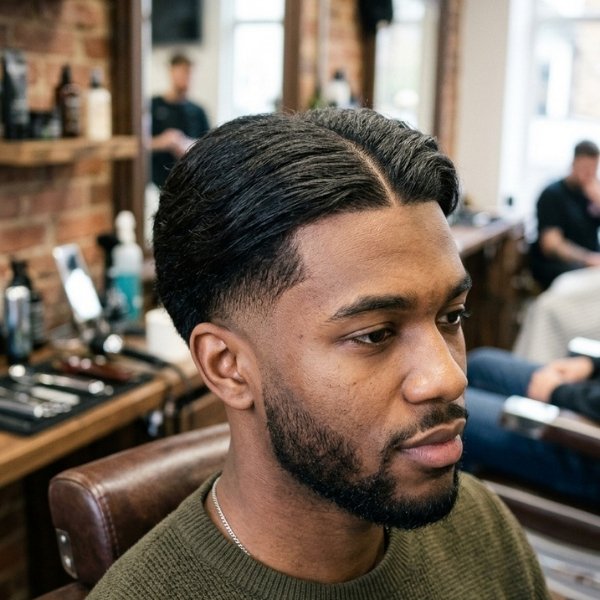
A low taper keeps fading subtle, concentrated near the neckline rather than climbing up the sides. This creates a understated, professional finish that works well for men who want the middle part look without a dramatic haircut change.
Wavy Middle Part

Natural waves add movement and texture that straight hair can’t replicate on its own. A sea salt spray applied to damp hair enhances the wave pattern, while air-drying or diffusing keeps the texture soft rather than crunchy.
Textured Middle Part

Texture is created through layering and choppy cutting techniques that break up the uniformity of straight sections. A matte clay worked through dry hair with fingertips adds definition and separation for a deliberately imperfect finish.
Curly Middle Part

For naturally curly hair, the middle part creates a symmetrical frame that highlights curl pattern and volume. A curl-defining cream applied to soaking wet hair, followed by air-drying, keeps ringlets bouncy without frizz.
Korean Middle Part
Popularized by K-pop idols, this style features a soft, airy fringe with clean edges and gentle curve at the front. Volume is lifted at the crown while sides stay neat. Blow-drying upward, then finishing with texture clay, achieves that signature effortless look.
Slick Back Middle Part
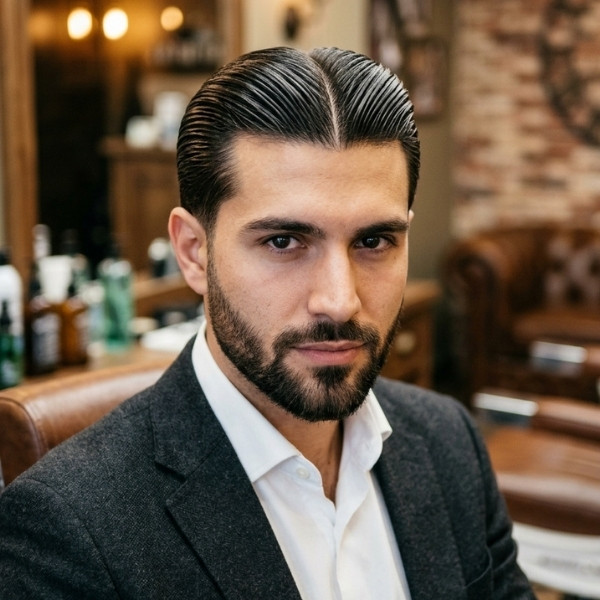
This hybrid combines a center part at the roots with hair swept back and away from the face. A strong-hold pomade with a matte finish keeps thick hair controlled without the greasy shine that glossy products can leave behind.
Long Middle Part
Long middle part styles need at least shoulder-length hair to fully commit to the curtain effect. This length works exceptionally well with waves or a slight perm and pairs nicely with a beard for a more rugged, lived-in aesthetic.
Middle Part Curtains

The classic curtain cut, this style features a fringe long enough to sweep to either side of the forehead, framing the face like drawn curtains. It’s the most recognizable version of the middle part and suits nearly every face shape.
Blowout Taper Middle Part
This style combines height and volume on top, created through a round-brush blowout, with a tapered fade on the sides. The added lift makes it a striking option for men who want more presence without extra length.
Two Block Middle Part
Borrowed from Korean street style, the two block cut features disconnected short sides beneath a longer, flowing top. Ask your barber for at least six inches on top for enough length to style into a full middle part flow.
Fluffy Middle Part
Soft, rounded, and full of volume, the fluffy middle part relies on layering and a diffuser to create a cloud-like texture on top. A light mousse applied before blow-drying helps maintain the shape throughout the day.
Burst Fade Middle Part
A burst fade curves around the ear rather than running in a straight line, creating a rounded, more organic fade pattern. Paired with a middle part on top, it offers a modern, slightly edgier alternative to a standard fade.
Mid Taper Middle Part
Sitting between a low and high taper, the mid taper offers a balanced amount of contrast on the sides. It’s a safe, versatile choice for men who want definition without committing to a dramatic fade.
Middle Part Straight Hair
Naturally straight hair creates a sleek, even flow on both sides of a middle part, highlighting clean lines and natural shine. Because straight strands have less to grip onto, a styling cream applied to damp hair helps the part hold its shape.
Middle Part Asian
This variation blends smooth, straight texture with subtle layering for movement. Given how thick and resistant Asian hair textures can be, a strong-hold clay applied to dry hair, then warmed between the palms first, is key to keeping the part from collapsing.
Middle Part Perm
A loose, digital perm adds bounce and definition to an otherwise straight middle part, creating natural-looking waves that hold their shape without daily styling. It’s a popular low-maintenance option for men with flat, straight hair who want more texture.
Layered Middle Part
Layering removes bulk and adds movement, making thick hair easier to part and style. This technique works especially well combined with a middle part, since shorter layers near the crown help hair fall naturally to either side.
Modern Middle Part
A modern middle part typically combines a blunt, precise cut with soft, natural styling rather than the heavily gelled look of decades past. Think textured ends and a matte finish instead of high shine.
Wolf Cut Middle Part
The wolf cut merges shaggy layers with a mullet-inspired silhouette. Adding a middle part to the front softens the overall edginess and creates a face-framing effect that suits medium to long hair lengths.
Middle Part Braids
For longer hair, braiding from a center part creates a structured, low-maintenance style that keeps hair off the face while still showing off the symmetrical part. It works well for active lifestyles or humid climates.
Old Money Middle Part
Inspired by preppy, understated aesthetics, the old money middle part favors a clean, sleek finish with minimal product shine. Pair it with a low, tidy fade for a polished, timeless look.
Classic Middle Part
The most traditional version of this cut, the classic middle part uses even length on both sides with minimal layering. It’s a versatile, easy-to-maintain style that has remained consistently popular for decades.
Middle Part with Beard
Pairing a middle part with a well-groomed beard adds structure and balance to the face, especially for men with rounder or shorter face shapes. The beard grounds the volume on top, creating a more proportional silhouette.
Middle Part with Low Fade
Combining a subtle, low fade with a center-parted top offers a clean, professional finish that works in nearly any setting. It’s one of the most requested combinations because it looks sharp without being high-maintenance.
Middle Part vs Other Hairstyles
Choosing a middle part often means comparing it against other popular parting styles. Here’s how it stacks up.
Middle Part vs Side Part
A side part pushes volume to one side, creating an asymmetrical look that reads as more traditional and formal. A middle part, by contrast, is symmetrical and tends to look more relaxed and current. Side parts also require a defined line, while middle parts can be looser and more textured.
Middle Part vs Curtains
Technically, curtain bangs are a specific style of middle part where the fringe is long enough to sweep dramatically to either side. Every curtain cut is a middle part, but not every middle part goes as far as full curtain bangs, which need extra length up front to achieve that swept effect.
How to Hold a Middle Part All Day on Straight, Thick Asian Hair
Straight, thick hair is naturally resistant to holding any shape that isn’t its default fall pattern, which makes an all-day middle part a real challenge. A few adjustments make a significant difference.
Start with dry hair rather than damp hair. Wet styling on thick, straight strands almost always collapses once the hair fully dries, undoing the shape you just created. Instead, use a blow dryer with a nozzle attachment to direct hair away from the center part while it’s still slightly damp, then finish styling once it’s fully dry.
Use a matte clay or strong-hold paste rather than a light cream. Warm a small amount between your palms until it turns glossy or clear, then work it through from root to tip using your fingertips rather than a comb. This distributes product evenly and helps create separation instead of a flat, pasted-down look.
Add a texture powder at the roots for extra grip and lift, particularly if your hair tends to fall flat by midday. A light-hold finishing spray locks everything in place without adding stiffness or shine. Touch up throughout the day with clean, dry fingers rather than reapplying product, which can build up and weigh hair down.
How to Choose the Right Middle Part
Not every version of this haircut suits every man. Choosing the right one comes down to two main factors: hair type and face shape.
By Hair Type
Straight hair suits sleek, flat middle parts or fades, since there’s less natural texture to manage. Wavy and curly hair pairs well with looser, more textured versions like the messy middle part or middle part flow, which lean into natural movement rather than fighting it. Thick hair benefits from layering to reduce bulk, while fine hair often needs texture powder or a light perm to add the volume needed to hold a defined part.
By Face Shape
Round faces suit middle parts with added volume on top, since the extra height creates the illusion of length. Oval faces are the most versatile and can pull off nearly any variation. Square faces look sharper when paired with soft layers that soften strong jawlines. Long faces balance best with mid-length styles that avoid adding extra height, while heart-shaped faces benefit from styles that add width near the jaw, such as curtains or a soft middle part.
How to Ask Your Barber for a Middle Part
Clear communication with your barber makes the difference between the haircut you wanted and one that misses the mark.
Describe the Style Clearly
Mention your desired length on top, how you want the sides blended or faded, and where exactly you want the part to sit. Specific terms like “low taper,” “skin fade,” or “six inches on top with a middle part flow” give your barber concrete direction instead of vague descriptions.
Show a Reference Photo
Photos remove guesswork. They clarify length, texture, and part placement far better than words alone, and they help your barber understand exactly how the finished style should fall and frame your particular face shape.
Discuss Hair Length and Layers
Talk through how much length you’re comfortable losing and whether you want layers added for movement or removed for a cleaner, blunt finish. This is also the time to mention your natural hair type, since straight, thick hair often needs different layering than wavy or curly hair to achieve the same look.
How to Style a Middle Part
Getting a great haircut is only half the equation. Styling it correctly day to day is what keeps it looking sharp.
Prep and Condition the Hair
Start with clean, conditioned hair. Product applied to dirty or overly oily hair rarely holds well and can look greasy rather than styled. A lightweight conditioner keeps strands manageable without leaving them too slick to hold shape.
Create the Middle Part
While hair is damp, use a wide-tooth comb to create a clean, straight line down the center of the scalp. Comb hair away from the part on both sides to establish the direction it will fall throughout the day.
Add Texture and Volume
Apply a small amount of texturizing product, such as sea salt spray or texture powder, focusing on the roots for lift and the mid-lengths for separation. This step matters most for straight or fine hair that lacks natural texture.
Blow-Dry for Shape and Hold
Using a round brush or diffuser, blow-dry hair away from the part in the direction you want it to fall. Finish with a blast of cool air to help set the shape and reduce frizz before applying any finishing product.
Apply Styling Product to Finish
Warm a small amount of clay, cream, or pomade between your palms, then work it through dry hair with your fingertips. Focus on the ends and part line rather than the roots, unless you’re specifically trying to add texture there.
How to Maintain a Middle Part Hairstyle
A great middle part doesn’t stay great without a bit of ongoing care.
Regular Trims
Schedule trims every four to six weeks to keep the shape from growing out unevenly. This is especially important for shorter middle part styles, which can start to look shapeless or overgrown faster than longer variations.
Daily Hair Routine
Wash hair two to three times a week rather than daily to avoid stripping natural oils, which help with texture and hold. On non-wash days, a small amount of dry shampoo at the roots can refresh volume without a full rinse.
Best Hair Products for Middle Part Styles
The right product lineup makes styling faster and the results longer-lasting.
Texture Clay
A matte, strong-hold clay is the backbone of most middle part styles, particularly on thick or straight hair. It adds grip and definition without shine.
Styling Cream
Lighter than clay, styling cream works well for softer, more natural-looking middle parts and adds a bit of flexible hold without stiffness.
Sea Salt Spray
Ideal for wavy and textured styles, sea salt spray adds grit and enhances natural movement, especially when applied to damp hair before air-drying.
Pomade
A matte, strong-hold pomade suits slicked-back or classic middle part styles, offering control without the greasy shine of older, glossy formulas.
Texture Powder
This lightweight powder adds volume and grip at the roots, making it especially useful for thick, straight hair that tends to fall flat throughout the day.
Hydrating Argan Oil
A few drops of argan oil smooth frizz and add shine to color-treated or dry hair, without weighing down the overall style.
Clarifying Shampoo
Used once a week, a clarifying shampoo removes product buildup that can make thick hair harder to style and cause volume to drop faster.
Hydrating Conditioner
A rich, hydrating conditioner keeps hair manageable and reduces frizz, which is particularly important for straight, thick strands that are prone to dryness at the ends.
FAQ’s About Middle Part Haircuts for Men
What is a middle part haircut?
A middle part haircut divides hair evenly down the center of the scalp, so it falls symmetrically on both sides of the face.
Is the middle part hairstyle attractive for men?
Yes. It enhances facial symmetry, frames features well, and remains one of the more fashion-forward styles in men’s grooming today.
Is the middle part in style for guys?
It is, largely thanks to Gen Z trends, 90s-inspired fashion, and continued popularity in K-pop and streetwear culture.
Which face shape is best for a middle part male?
Oval and heart-shaped faces typically suit a middle part best, though most face shapes can wear a tailored version of the style.
How do I style a middle part haircut for men?
Comb a clean center line on damp hair, blow-dry for shape and lift, then finish with a small amount of styling product for hold.
Can everyone pull off a middle part?
Most men can, but very fine hair or a strong cowlick near the front hairline may need extra product or a slightly adjusted part placement.
How long should hair be for a middle part?
At least three to four inches on top is usually needed, though longer styles like curtains or a middle part flow need five inches or more.
What products are best for styling a middle part hairstyle?
Matte clay, texture powder, and light-hold sprays work best, especially for thick or straight hair that needs extra grip to hold its shape.
How do guys part their hair in the middle?
Use a wide-tooth comb on damp hair to create a straight line down the center of the scalp, then style each side away from that line.
What should I tell my barber for a middle part?
Be specific about length on top, how you want the sides faded or blended, and show a reference photo if you have one.
Does a middle part make you look younger?
It can. The symmetrical, face-framing effect is often associated with youthful, trend-forward styling, particularly in shorter or textured variations.
What hair types work best with a middle part?
Straight, wavy, and curly hair can all work well, though each type needs slightly different products and techniques to hold the part all day.
Final Thoughts
The middle part haircut has earned its place as one of the most versatile, wearable styles in men’s grooming right now. Whether you’re drawn to a sharp skin fade, a soft textured flow, or a full curtain cut, the key to making it work long-term comes down to three things: choosing a variation suited to your face shape and hair type, communicating clearly with your barber, and using products built for how your hair actually behaves, especially if you’re working with straight, thick strands that tend to resist holding a shape. Get those three right, and a middle part can easily become your go-to haircut for years to come.