
The middle part modern mullet has moved from niche barbershop request to one of the most searched men’s haircuts of 2026. It takes the rebellious energy of the classic mullet and pairs it with the clean, centered part that dominates Korean and European street style right now.
The result is a haircut that feels intentional rather than retro. It works in a boardroom, a music video, and a weekend brunch without missing a beat.
This guide breaks down the full story behind the middle part mullet, walks through 15 signature variations you can show your barber today, and explains exactly how to style and maintain the cut so it never looks accidental. Whether you have straight, wavy, or curly hair, thin strands or thick ones, there is a version of this haircut built for you.
The Evolution of Middle Part Mullet in Modern Fashion
The mullet started in the 1970s and exploded through the 1980s as a shaggy, low-effort cut worn short on top and long at the back. It was loud, unstructured, and rarely styled with much precision.
The middle part changed everything. Instead of a random top, the hair is trained to fall evenly on both sides of a defined center line, framing the face the way a curtain fringe does. This single adjustment gave the mullet a sense of balance it never had before.
A few forces pushed this evolution forward:
- K-pop and Korean street style popularized the centered, soft curtain fringe on men, and barbers began blending it with mullet length at the back.
- Social platforms like TikTok and Instagram turned transformation videos into a discovery engine for bold cuts, giving the middle part mullet massive visibility.
- Athletes and public figures adopted longer, shoulder-grazing mullets with a center part, showing it could read as sharp rather than sloppy.
- Barbers began using fades, tapers, and internal layering instead of blunt cutting, which softened the whole silhouette.
Where the 80s mullet screamed rebellion, the 2026 version whispers confidence. It keeps the length and attitude but adds structure through fading, texturizing, and precise parting. That is the real evolution: same DNA, far more control.
15 Signature Variations of Middle Part Modern Mullet
Every face shape, hair type, and lifestyle calls for a slightly different approach. Below are 15 variations worth discussing with your barber, ranked from the softest and most wearable to the boldest and most editorial.
Soft Divider Mullet
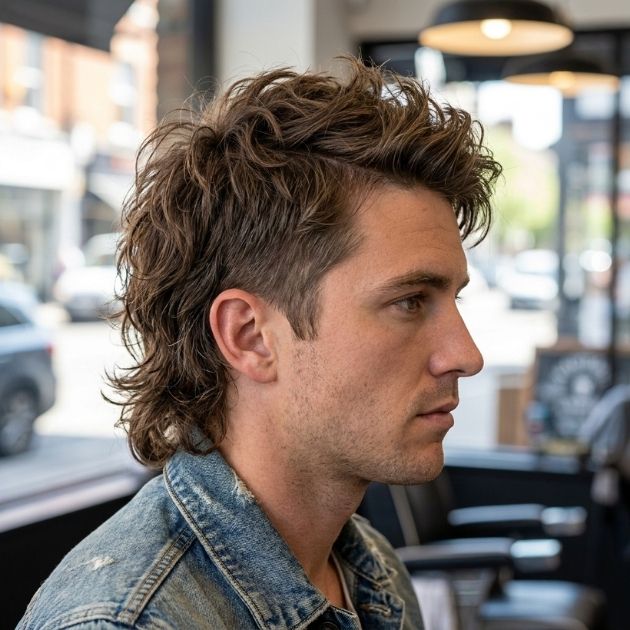
This version uses a light, natural part rather than a hard shaved line down the middle. The hair falls softly on each side with minimal product, giving a relaxed, undone look that still reads as deliberate. It suits straight to slightly wavy hair and works well for a first-timer easing into the mullet trend.
Editorial Volume Mullet
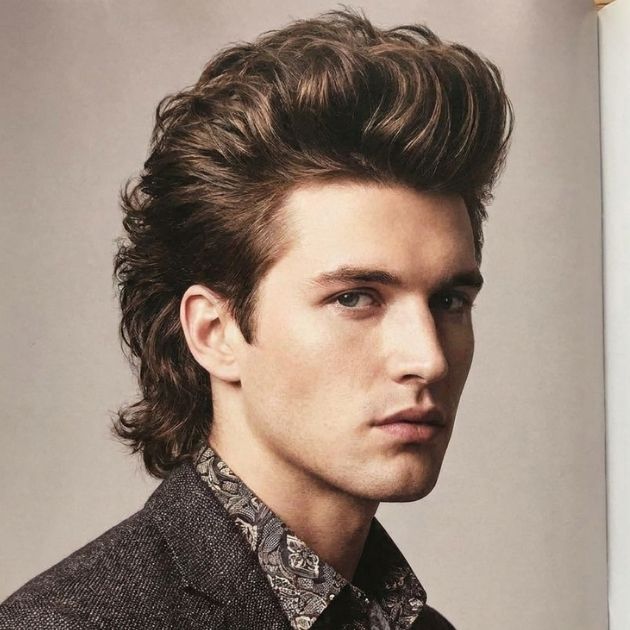
Built for runway and photoshoot energy, this variation focuses on maximum crown volume paired with a fuller, longer back. Blow-drying against the growth direction and finishing with a lightweight mousse creates the lift needed for this dramatic, high-fashion shape.
Skin Fade Center Mullet

A skin fade on the sides creates sharp contrast against the flowing middle-parted top and longer back. This is the most contemporary pairing in the entire list, mixing barbershop precision with rock-star length. It suits men who want maximum definition with zero bulk on the sides.
Soft Layer Flow Mullet
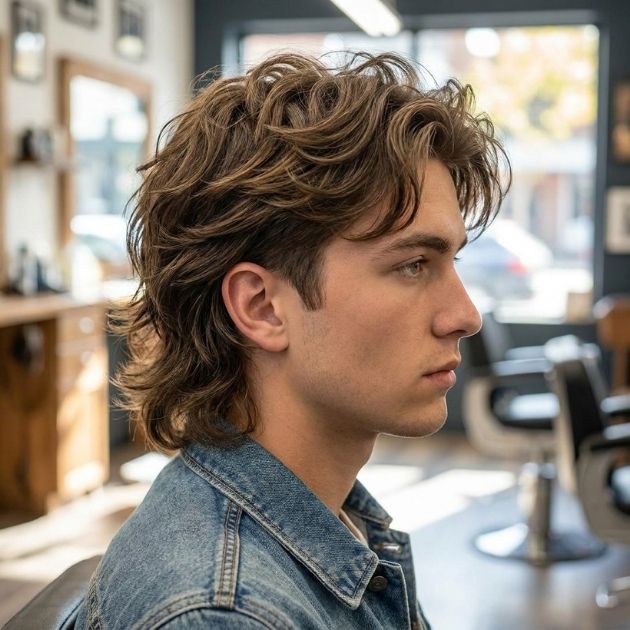
Internal layering removes bulk while keeping length, so the hair moves naturally instead of sitting stiff. The middle part sits gently rather than sharply defined, and the back flows in soft waves. This works especially well on medium to thick hair that tends to feel heavy.
Urban Texture Mullet

Choppy, textured ends give this cut a lived-in, street-style finish. A matte clay or texture powder roughs up the top while the center part keeps the face-framing structure intact. It pairs naturally with a stubble beard and casual streetwear.
Balanced Edge Mullet
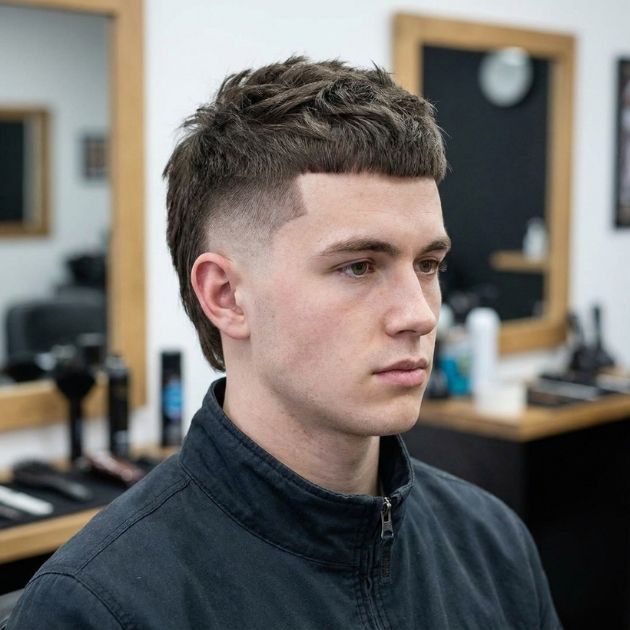
This variation keeps the sides tapered rather than faded, creating a softer transition between the short sides and the longer back. The middle part stays crisp and symmetrical, making this one of the most versatile, work-friendly options on the list.
Curved Flow Middle Mullet
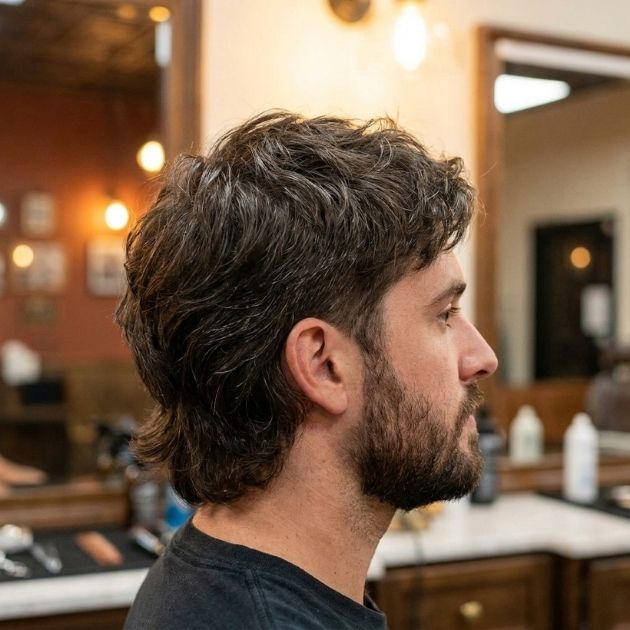
Instead of straight-falling strands, the top is cut and styled to curve gently around the face, almost like a soft curtain fringe. The back retains classic mullet length. This suits round and oval face shapes particularly well because the curve softens the jawline.
Minimal Precision Mullet
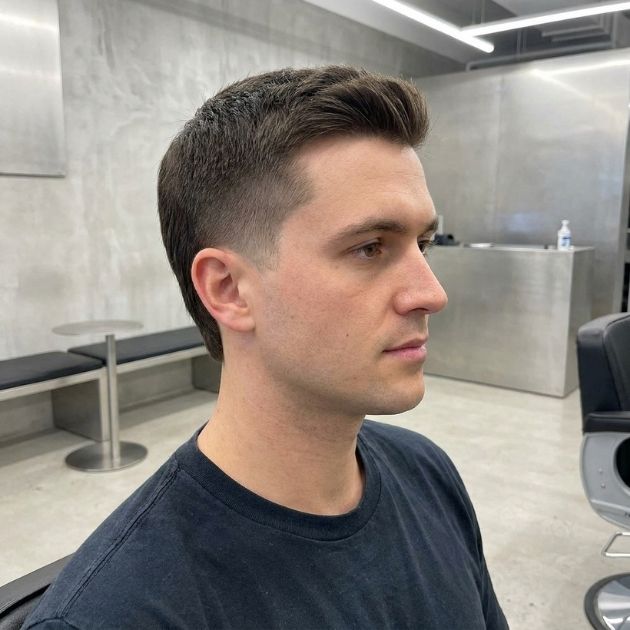
A cleaner, more restrained take on the trend, this version uses sharp cutting lines, a tight taper, and a subtle middle part rather than a dramatic one. It is the closest the mullet gets to corporate-appropriate, making it a smart pick for professional settings.
Heavy Texture Center Mullet
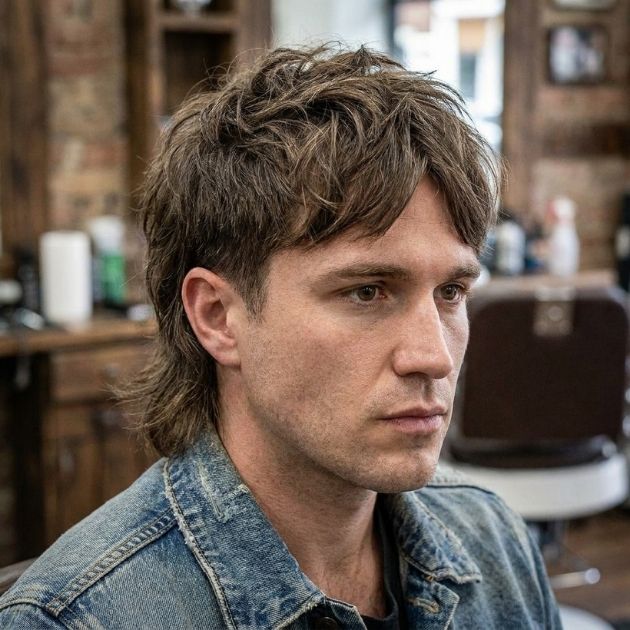
Thick, chunky texture throughout the crown gives this style serious volume and grit. The middle part still holds the shape together, but the overall look leans wild and expressive. Best suited to thick, coarse hair that can support heavier texturing.
Loose Wave Mullet

Natural or styled waves flow through both the top and the longer back, and the middle part gives the waves somewhere to fall from. Sea salt spray enhances the texture without weighing hair down. This is a favorite for wavy and curly hair types.
Sharp Contrast Mullet

High contrast is the whole point here: a tight fade or shaved sides against a noticeably longer, fuller top and back. The middle part creates a clean division that makes the length up top look even more dramatic. This is the boldest, most attention-grabbing style on the list.
Modern Soft Drop Mullet

The hair is cut to drop gently past the ears with rounded, soft edges rather than blunt lines. Combined with a middle part, this creates an effortless, almost undone silhouette. It is low-maintenance and forgiving for men who do not want a strict daily styling routine.
Professional Styling Breakdown
Cutting the shape is only half the job. Styling is what separates a sharp middle part mullet from one that looks unfinished. Barbers point to five habits that make the biggest difference.
Use Lightweight Texture Products
Heavy pomades and waxes weigh hair down and flatten the crown, which works against the volume this cut needs. A lightweight sea salt spray, texture powder, or light-hold clay adds grip and movement without collapsing the shape.
Maintain Natural Symmetry
The middle part only works when both sides are trained to fall evenly. Blow-drying each side in the same direction and combing through while damp helps prevent one side from sitting flatter or fuller than the other.
Focus on Controlled Volume
Volume should sit at the crown and taper down smoothly, not spike randomly. Lifting the roots with a round brush while blow-drying, then letting the mid-lengths fall naturally, keeps the volume looking intentional rather than accidental.
Regular Shaping is Key
The mullet’s short-to-long silhouette grows out unevenly, with the sides and top losing shape faster than the back. A trim every four to six weeks keeps the fade or taper crisp while allowing the back to keep growing toward the desired length.
Heat Styling Direction Matters
Directing airflow downward and outward from the center part trains hair to fall correctly over time. Styling against this natural direction, especially early on, helps prevent the classic mullet mistake of hair that clumps awkwardly at the crown.
Who Should Choose This Hairstyle?
The middle part modern mullet is flexible, but it genuinely suits some people more than others. It tends to work best for:
- Men with straight, wavy, or loosely curly hair that can hold a center part without constant re-combing.
- Oval, round, and square face shapes, since the centered part and framing layers balance facial proportions well.
- Anyone transitioning out of a buzz cut or short crop who wants a low-commitment way to grow hair out with style along the way.
- People in creative industries such as music, fashion, design, and content creation, where a bold personal look is an asset rather than a liability.
- Men who are comfortable with moderate maintenance, since fades and tapers need regular barbershop visits to stay sharp.
It is less ideal for very fine, thin hair without added texture, since the center part can expose scalp and reduce the fullness the style depends on. In that case, asking a stylist about texturizing techniques or a slightly off-center part can help.
Style Positioning in the Modern Fashion Industry
The middle part mullet has settled into an unusual position in fashion right now: it reads as both nostalgic and forward-looking at the same time. Stylists on runways and in editorial shoots use it to signal confidence and individuality, while streetwear brands lean on it as a symbol of anti-conformity.
Musicians and athletes have played a major role in normalizing the look outside of niche barbershop circles, wearing longer, center-parted mullets on stage, on camera, and on social media. That visibility has pushed the style from underground trend to mainstream request.
Industry data backs up the momentum. Surveys from major grooming chains have repeatedly found the mullet ranking among the most requested vintage-inspired cuts among men, a sign that its comeback is not a passing moment but a sustained shift in men’s grooming preferences.
What keeps it relevant heading further into 2026 is adaptability. The same core shape can be dialed up with a skin fade and heavy texture for a bold statement, or dialed down with a soft taper and minimal part for a workplace-appropriate version. Few haircuts offer that much range from one starting silhouette.
FAQ’s
Is the middle part mullet still trending in 2026?
Yes. It remains one of the most requested men’s cuts in 2026, driven by social media visibility and its versatility across face shapes and hair types.
How long does it take to grow a middle part mullet?
Most men need three to five months of growth at the back while keeping the sides trimmed to maintain the short-to-long contrast.
What face shapes suit this haircut best?
Oval, round, and square face shapes generally suit it best because the center part and face-framing layers help balance proportions.
Can I get a middle part mullet with curly hair?
Yes. Curly hair adds natural texture and volume, and a curl cream or mousse helps define the shape without frizz.
How often should I trim a middle part mullet?
Every four to six weeks keeps the sides and top sharp while allowing the back to keep growing toward your target length.
What products work best for styling?
Lightweight sea salt sprays, texture powders, and light-hold clays add movement and grip without flattening the crown.
Is this haircut suitable for professional workplaces?
Softer versions like the Minimal Precision Mullet or Balanced Edge Mullet are polished enough for most professional settings.
Does this style work with thin hair?
It can, but thin hair benefits from added texturizing or a slightly off-center part to avoid exposing too much scalp.
Conclusion
The middle part modern mullet earns its place as one of 2026’s defining haircuts because it solves an old problem: how to wear a bold, expressive style without looking unkempt. The centered part brings structure and balance, while the mullet’s signature length keeps things edgy and distinct.
With 15 variations to choose from, ranging from soft and low-maintenance to sharp and editorial, there is a version suited to nearly any hair type, face shape, and lifestyle. Pair the right cut with lightweight products, regular trims, and consistent styling direction, and this haircut will look as sharp on day thirty as it does the moment you leave the chair.
If you are ready to try it, bring a reference photo to your next barber appointment and describe the exact balance of fade, texture, and length you want. That single step avoids most of the common mistakes and sets you up with a middle part mullet that looks genuinely modern, not merely retro.