Walk into any barbershop right now and ask what the most-requested cut is. Nine times out of ten, the answer is some version of the low fade. And it makes sense. The low fade haircut is one of those rare styles that feels both current and timeless, working just as well in a boardroom as it does at a backyard cookout.
What makes it special? The fade starts low, just above the ears and along the neckline, creating a gradual, clean blend rather than a dramatic contrast. The result is a sharp, polished look that does not overpower your natural features. It enhances them. Whether you have straight, curly, wavy, or coily hair, there is a low fade variation built for your texture, your face shape, and your lifestyle.
This guide breaks down every popular style, gives you real barber advice, and answers the questions men actually search for. Let’s get into it.
Trending Low Fade Haircut For Men
The best low fade styles are not one-size-fits-all. Each variation has its own personality. Here are the most popular ones dominating barbershops right now.
Classic Low Fade
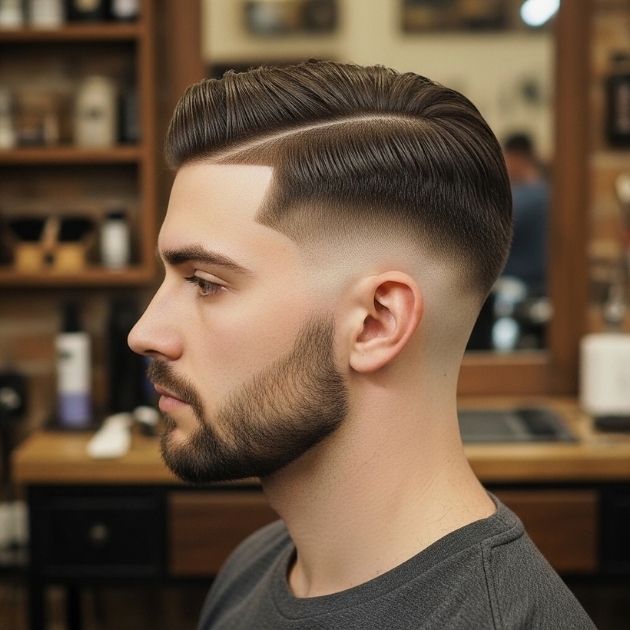
The classic low fade is exactly what it sounds like: a clean, smooth taper that starts just above the ear and gradually blends down to the neckline. There are no gimmicks, no dramatic drops, just precise barbering that elevates any hairstyle on top. This is the go-to choice for men who want a sharp, adaptable cut that works Monday through Sunday. Pair it with a comb over, a side part, or even a simple textured top and you are set.
Best for: All face shapes, especially oval and square.
Low Fade with Curly Hair
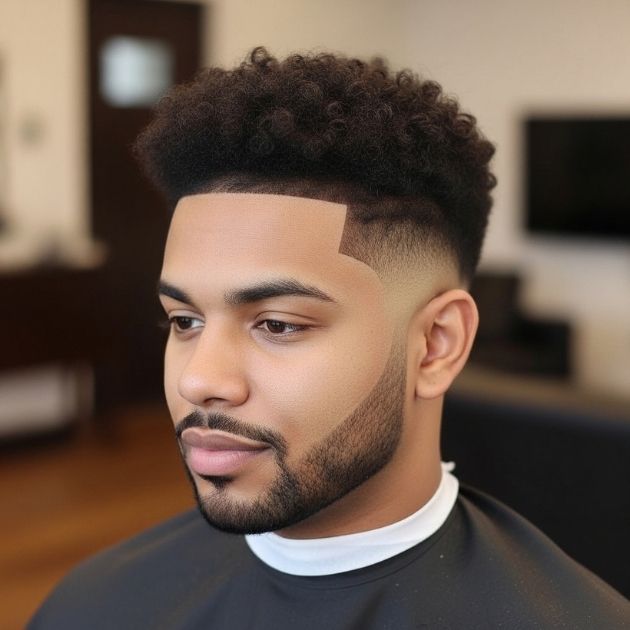
Curly hair and a low fade are genuinely one of the best combinations in men’s grooming. The fade tightens the sides and back, which draws all the attention upward to your curls, giving them room to breathe and pop without looking unruly. It adds structure without sacrificing your natural texture. Ask your barber to keep the top long enough for your curl pattern to show, and use a curl-defining cream to keep things looking intentional.
Best for: Type 2B to 4C curl patterns.
Low Fade with Straight Hair
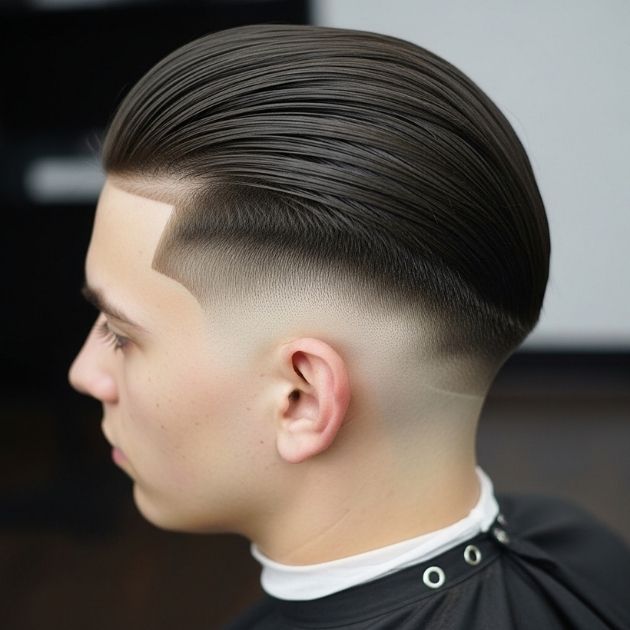
Straight hair sits flat naturally, and a low fade gives it the shape and dimension it often lacks on its own. The clean taper adds a structured foundation that makes the top look fuller and more styled. A pomade or light wax dragged through the top creates a sleek or textured finish depending on your vibe.
Best for: Fine to medium straight hair, all face shapes.
Low Fade with Wavy Hair
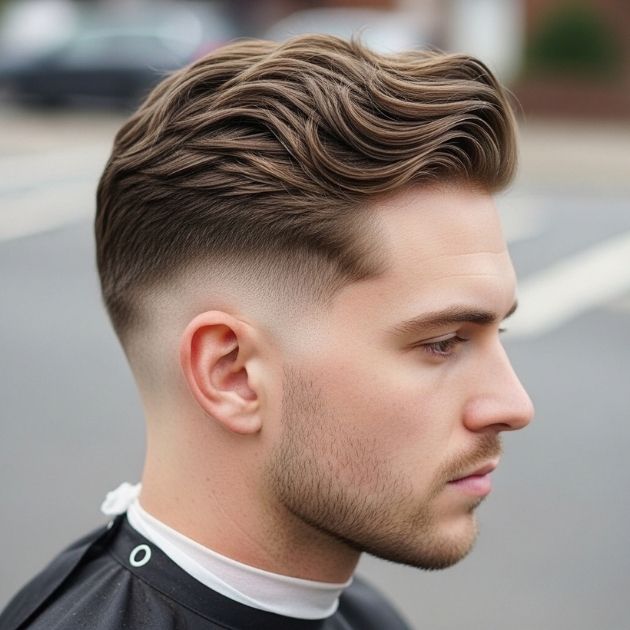
Wavy hair gets the best of both worlds with a low fade. The loose, natural movement on top contrasts beautifully with the tight, blended sides. A sea salt spray or texture paste helps define the waves without making them look stiff. This style is effortlessly cool and requires minimal morning effort once your hair learns its shape.
Best for: Men who want a relaxed, beach-ready everyday look.
Low Taper Fade
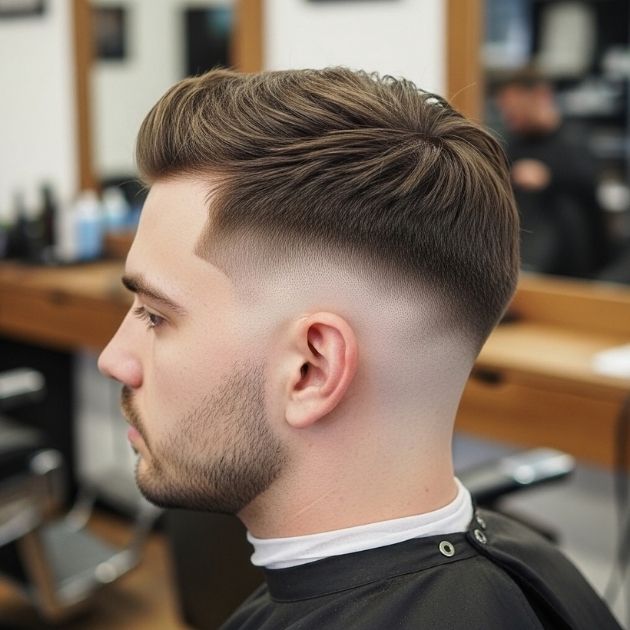
The low taper fade is the subtle cousin of the classic fade. Instead of a hard contrast, the taper gently shortens the hair near the ears and neckline with almost no visible line. It is the most understated option on this list, making it ideal for professional settings where a bold fade might feel too casual. Banks, courtrooms, corporate offices, this cut fits everywhere.
Best for: Men in formal or conservative work environments.
Low Skin Fade
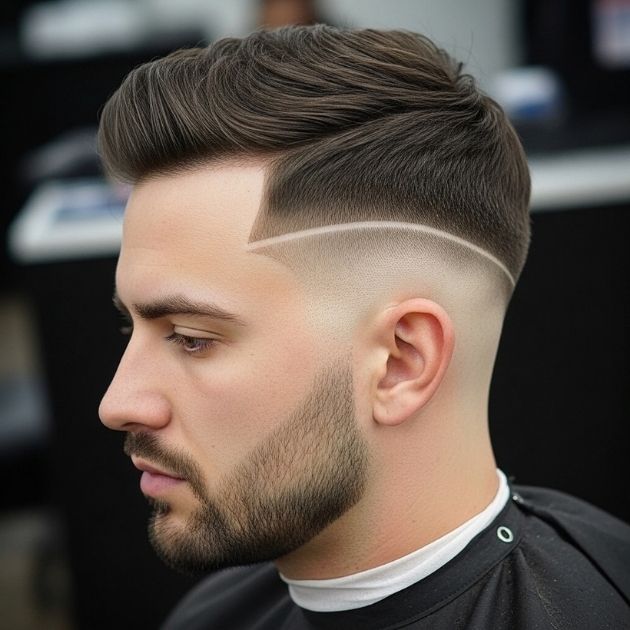
The low skin fade takes the fade all the way down to the bare skin along the sides and nape. The contrast is sharper and bolder than a standard low fade, but because it starts low, it still keeps a clean and polished feel rather than an aggressive one. It pairs beautifully with textured tops, high-volume styles, and tight curls.
Best for: Men who want maximum definition and clean lines.
Low Drop Fade
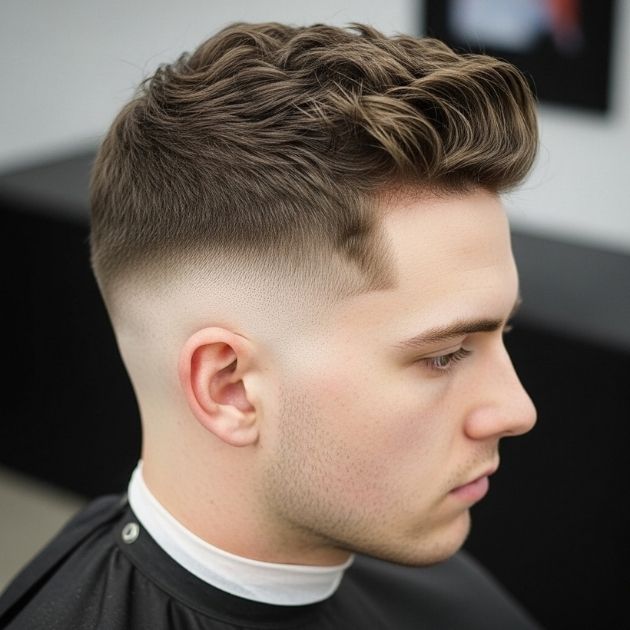
The low drop fade curves down behind the ear rather than running in a straight horizontal line. This creates a rounded, slightly arched shape that follows the natural contour of the head. The result is a more dynamic silhouette that gives your haircut personality beyond just the top styling. Drop fades work especially well with longer tops and beard combinations.
Best for: Oval and diamond face shapes looking for added angular definition.
Buzz Cut with Low Fade
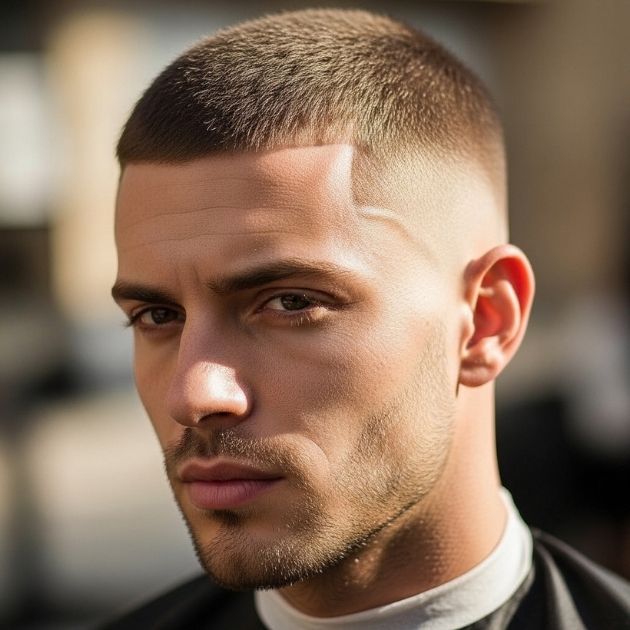
The buzz cut with a low fade strips everything back to its sharpest, most minimal form. The top is cut to a uniform short length, and the sides fade cleanly down. This is low-maintenance grooming at its best. It frames the face, keeps things tight, and requires almost zero daily styling. Athletes and minimalists love this one for good reason.
Best for: Men with strong facial features and a preference for zero-effort styling.
Pompadour with Low Fade
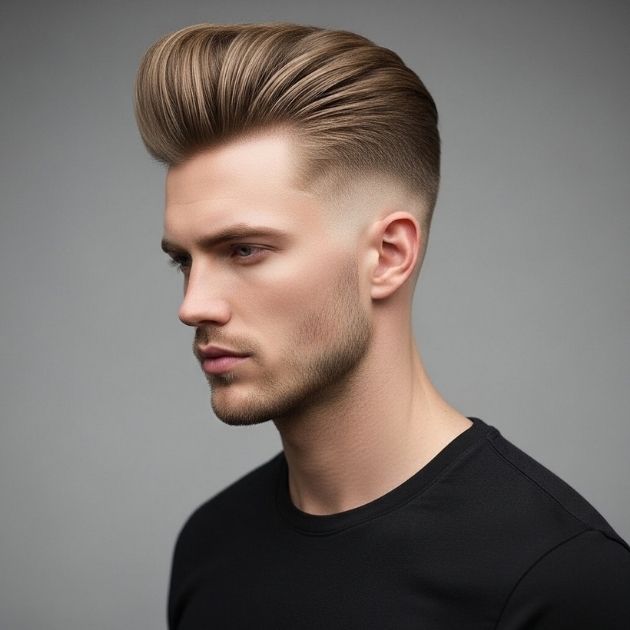
The pompadour with a low fade is a classic barbershop pairing that never stops looking sharp. The volume and sweep of the pompadour on top demands a clean, tight foundation, and the low fade delivers exactly that. A strong-hold pomade or styling cream is key here. Blow-dry upward and back for the classic lift, or let it sit naturally for a looser, modern take.
Best for: Oval, heart, and oblong face shapes.
Fringe with Low Fade
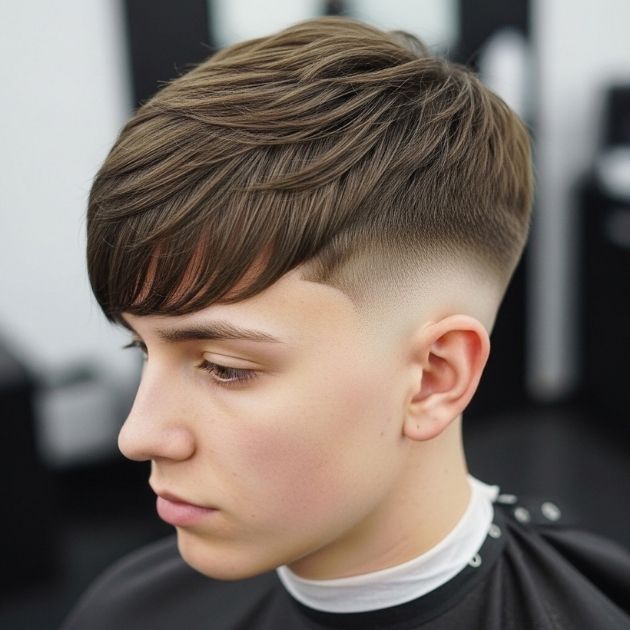
A fringe, or textured crop, with a low fade is one of the most requested styles among younger men right now. The fringe sweeps forward across the forehead while the sides are neatly faded, creating a balanced, youthful look with real edge. Matte clay or texture paste is your best friend here. Work it through damp hair and style forward and slightly to one side for the best result.
Best for: Round and square face shapes that benefit from added forehead length.
Faux Hawk with Low Fade
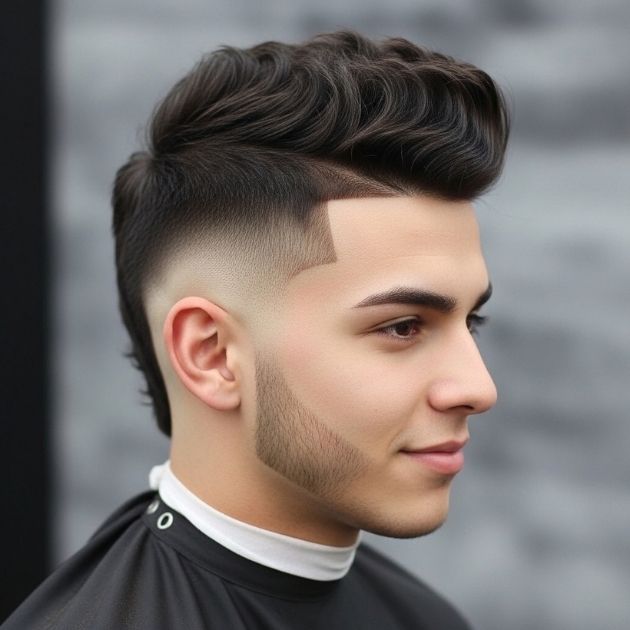
The faux hawk brings all the boldness of a mohawk without the commitment. The hair is styled upward along the center of the head while the sides are faded low. The low fade keeps the overall look refined rather than extreme, making this style surprisingly versatile. Use a strong wax or gel to hold the center strip up throughout the day.
Best for: Men with oval or oblong faces who want a style that stands out.
Undercut with Low Fade
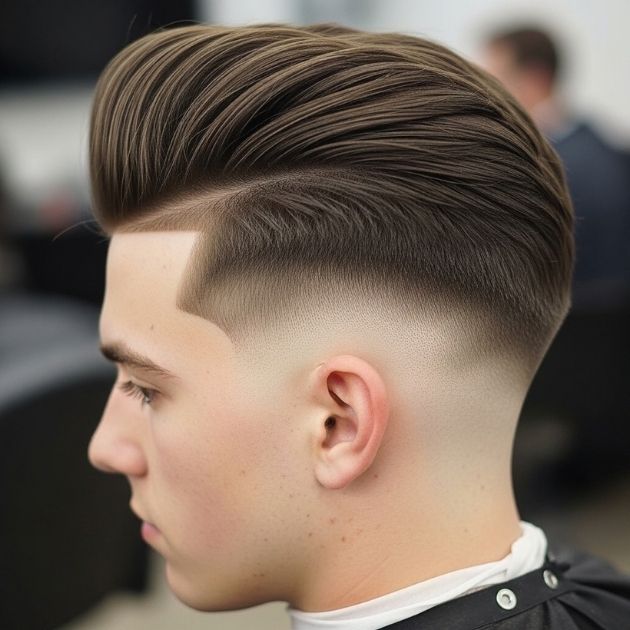
The undercut features a clear disconnection between the longer top and the shorter sides. When a low fade is blended into the sides rather than a hard cut, it softens the transition and makes the undercut feel more modern and wearable. This is a great option for men who want volume and movement on top with a clean foundation beneath.
Best for: Thick, heavy hair that needs weight removed from the sides.
Comb Over with Low Fade
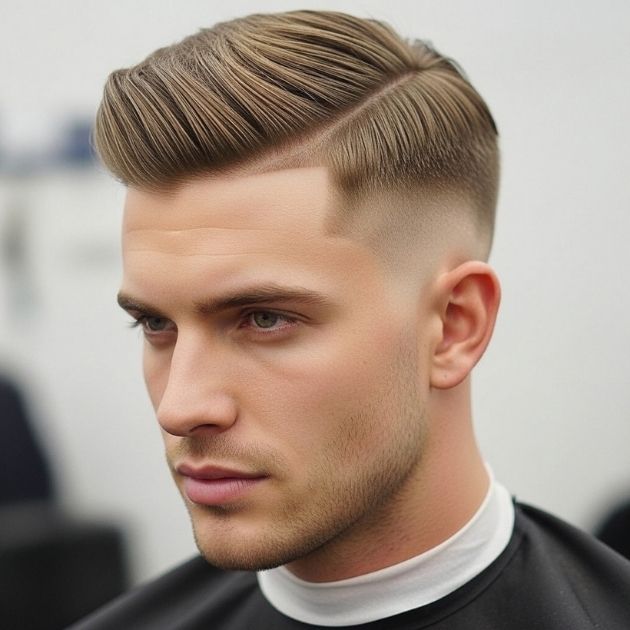
The comb over with a low fade is the definition of smart casual. The top is grown out, parted to one side, and combed or brushed across, while the sides fade smoothly away. It is one of the cleanest professional styles available right now and works whether you want a slick, polished finish or a more lived-in, textured look. A medium-hold pomade keeps it in place without looking overdone.
Best for: Men in professional settings, especially those with fine or medium hair.
Spiky Hair with Low Fade
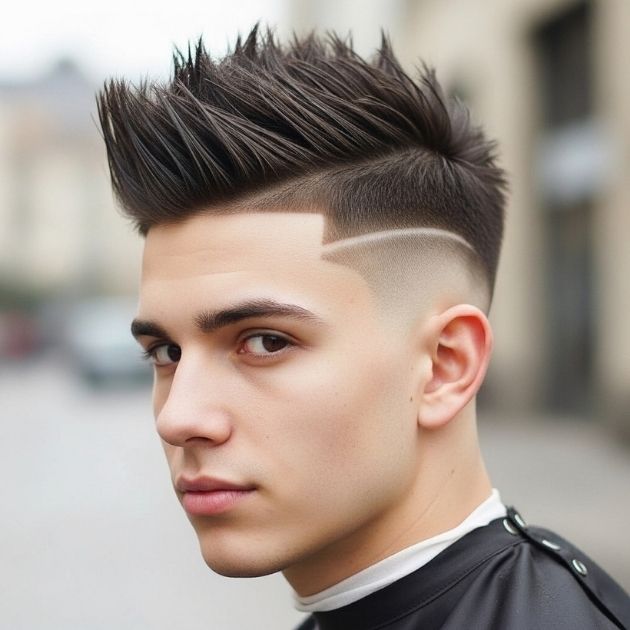
Spiky hair has made a comeback, but with a modern update. Paired with a low fade, individual spikes or a textured spiked finish on top look intentional rather than dated. Use a matte clay and work small sections upward with your fingers for a natural, piece-y spike rather than the helmet-like gel spikes of the early 2000s.
Best for: Younger men, or anyone wanting a playful, energetic style.
Afro Low Fade
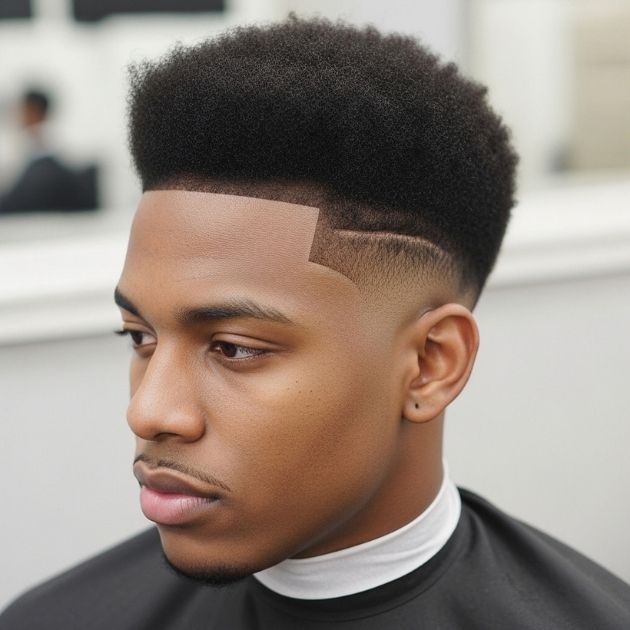
The afro low fade lets your natural hair take center stage. The low fade cleans up the sides and base while the afro on top is shaped and rounded to its natural volume. This style celebrates texture and works with natural coils without chemical alteration. Ask your barber to pick and shape the top after the fade to get a balanced, globe-like silhouette.
Best for: Type 4 natural hair, especially men embracing their natural texture.
Low Fade with Beard
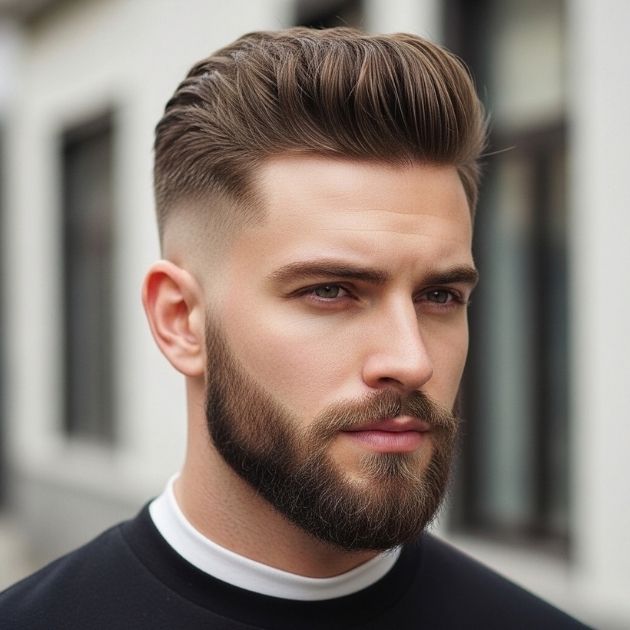
Pairing a low fade with a well-groomed beard is one of the most complete looks in men’s grooming. The fade blends seamlessly into the beard line when done correctly, creating a natural, continuous transition from hairline to jaw. Ask your barber to blend the fade into the beard rather than creating a hard line between them. Keep the beard conditioned with beard oil to maintain a healthy, polished appearance.
Best for: Men with any beard length, particularly those with strong jawlines.
Low Fade with Design (Hard Part/Lines)
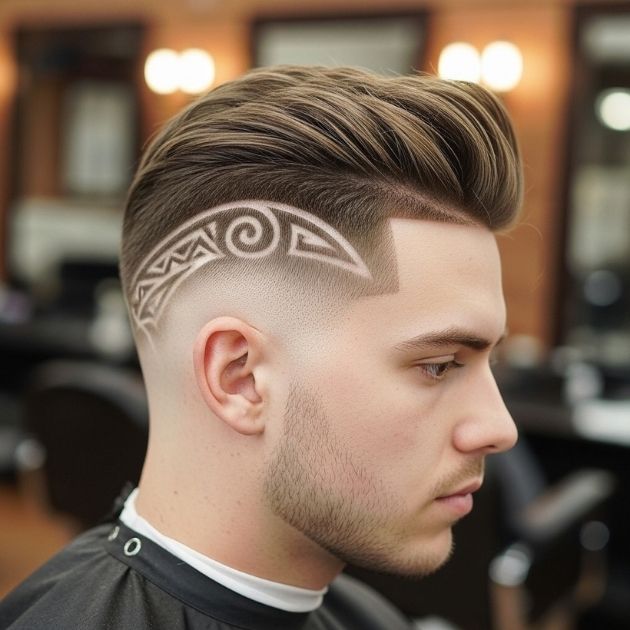
Adding a shaved design, hard part, or razor line to a low fade takes the cut into creative territory. Hard parts are the most popular option, creating a precise parting line that defines the style’s structure. More intricate geometric lines and patterns push the look into full barbershop artistry. This style is ideal for men who use their haircut as a form of personal expression.
Best for: Bold personalities, special occasions, or anyone wanting a truly unique look.
Here’s What Separates a Good Fade from a Great One?
Not all fades are created equal. Here is what to look for:
- Seamless blending: A great fade has no visible lines or harsh steps between guard lengths. The transition should look like it was airbrushed.
- Clean neckline: Whether it is tapered or squared, the neckline should be crisp and symmetrical.
- Consistent length on both sides: Both sides should match in height and blending point. Asymmetry is the most common sign of a rushed job.
- Respect for your hairline: A skilled barber works with your natural hairline rather than fighting it.
- Fresh lineup: The edges around the forehead and temples should be clean and defined without being overplucked or unnatural.
The difference comes down to time, technique, and the quality of the clipper work. A good barber will use multiple guard sizes and blend by hand with a comb and scissors. A great one makes it look effortless.
How to Ask Your Barber for the Right Low Fade Haircut?
Knowing what you want is half the battle. Here is how to communicate it clearly:
- Specify the fade height: Say “low fade” explicitly and point to just above your ear to show where you want it to start.
- Describe the top: Tell your barber how long you want to keep the top and whether you want it textured, slick, or natural.
- Name the style: Use the style names from this guide. “I want a comb over with a low fade” gives your barber an immediate visual reference.
- Bring a photo: A reference image removes all ambiguity. It is the single most effective tool for getting the exact cut you want.
- Mention your hair texture: Your barber may adjust the technique based on whether your hair is fine, thick, curly, or coily.
- Discuss the neckline: Choose between a tapered neckline (natural-looking) or a squared neckline (sharper, more defined) based on your preference.
The Evolution of Low Fade Haircut
The fade haircut did not emerge from a trend cycle. It has real roots.
Its earliest mainstream adoption came through the United States military in the 1940s and 1950s. Soldiers needed haircuts that were clean, hygienic, and easy to maintain under helmets, and the close-cropped, blended sides of the fade fit perfectly. When those soldiers returned home, they brought the style with them, and barbershops across North America began refining it.
During the same era, Black barbers were developing their own sophisticated clipping and blending techniques in urban communities, prioritizing precision, artistry, and clean hairlines. These traditions formed the cultural backbone of modern fade barbering.
The 1980s and 1990s brought the fade into popular culture. Hip-hop artists, basketball players, and entertainers adopted the style, making it visible to global audiences. Athletes like Michael Jordan helped cement the fade as a symbol of clean, confident masculinity that worked at every level from the street to the spotlight.
By the 2000s, the fade had diversified into skin fades, drop fades, temple fades, and tapers. The low fade specifically gained traction as a more refined, professional option for men who wanted the clean foundation of a fade without the dramatic contrast of a high or mid version.
Today, the low fade is considered a grooming staple. It continues to evolve with new styling combinations, wet-look skin fades, blurred necklines, and creative design work proving that this cut still has room to grow.
FAQ’s
What is a low fade haircut?
A low fade haircut is a barbering style where the hair gradually tapers from longer on top to shorter at the sides and back, with the blending point starting just above the ears.
How often should I get a low fade touched up?
Most men benefit from a trim every 2 to 4 weeks to keep the fade sharp and the neckline clean.
Is a low fade suitable for all hair types?
Yes. The low fade works with straight, wavy, curly, and coily hair, and your barber can adapt the technique to suit your specific texture.
What is the difference between a low fade and a low taper?
A low taper blends the hair more gradually with minimal skin exposure, while a low fade creates a more defined, blended-to-skin transition along the sides and back.
Can a low fade work with a beard?
Absolutely. When blended correctly, the low fade transitions seamlessly into a beard, creating a polished, continuous look from hairline to jaw.
What products should I use with a low fade?
Use matte clay for textured styles, pomade for slick or comb over looks, curl cream for curly hair, and beard oil if you are pairing the cut with facial hair.
Does a low fade suit all face shapes?
Yes, though specific variations work better for certain shapes. A low drop fade suits oval faces, while a fringe with low fade adds length to rounder faces.
Conclusion
The low fade haircut has earned its place as one of the most reliable, versatile, and genuinely stylish cuts in men’s grooming. It is not a trend that will fade out (no pun intended). It is a structural tool that enhances your features, suits your lifestyle, and grows out gracefully between barber visits.
Whether you are drawn to the clean simplicity of a classic low fade, the bold expression of a design cut, or the natural celebration of an afro low fade, there is a version of this haircut built for you. The key is knowing what you want, communicating it clearly, and finding a barber whose technique matches your expectations.
Book that appointment. Show them your reference photo. And walk out looking sharp.