
Walk into any barbershop today, and there is a good chance the guy sitting in the chair is asking for a low taper fade. This haircut has quietly become one of the most requested men’s styles across the United States, and it is easy to understand why. It is clean, versatile, and flattering across a wide range of face shapes and hair textures. For white males in particular, the low taper fade delivers a sharp, polished appearance without demanding a complicated grooming routine.
Whether you are stepping into your first fade or refining a cut you already wear regularly, this complete guide covers everything you need: what the cut actually is, how it differs from other fades, why it suits white males so well, how to communicate it clearly at the barbershop, and how to style and maintain it at home. Let us get into it.
What Is a Low Taper Fade?
A low taper fade is a men’s haircut where the hair on the sides and back gradually decreases in length, starting just above the ears and blending smoothly down toward the natural neckline. The word “taper” refers to this gradual shortening, while “fade” describes how the hair blends until it nearly disappears near the skin at the base.
The result is a haircut that appears intentional and polished without looking overly dramatic. The sides stay relatively full compared to a high or mid fade, which gives the overall silhouette a natural, balanced look. For white males, the low taper fade creates clean structure around the jawline and neck without relying on sharp skin contrast, which can sometimes look harsh on finer or lighter hair.
How the Low Taper Fade Differs from Other Fades
Understanding where the low taper sits among other fade styles helps you communicate your preferences at the barbershop and set realistic expectations.
- Low taper fade: The fade begins just above the ear, staying close to the natural hairline. It grows out gracefully and suits professional environments well.
- Mid fade: Starts at the middle of the sides, roughly at temple level. Offers more contrast than the low fade but remains versatile.
- High fade: Begins near the top of the sides and temples, creating a bold, dramatic look with maximum contrast.
- Skin fade: The hair blends all the way down to bare skin, which is available at any height. Delivers the sharpest contrast possible.
- Taper only (no fade): The hair simply shortens gradually without reaching near-skin length. More conservative and subtle than any fade variation.
The low taper fade wins on versatility. It suits professional settings, grows out more evenly, and works especially well with straight and wavy hair textures common among white males.
Benefits of the Low Taper Fade Haircut
1. Compatible with Straight and Wavy Hair Textures
Straight and wavy hair are the most common textures among white males, and the low taper fade is tailor-made for both. Straight hair produces an exceptionally clean, sharp transition through the fade, while wavy hair adds natural contrast between the tidier sides and the textured top. This combination of controlled sides with a relaxed, textured crown gives the cut an effortless, modern look that requires minimal product.
2. Enhances Common Face Shapes and Features
The low taper fade subtly frames the face without aggressive contrast. For white males who typically have oval, square, rectangular, or oblong face shapes, the cut creates definition around the jawline and temples. It draws the eye upward and adds perceived structure, making features appear more defined and masculine. It works particularly well for men with stronger jawlines or pronounced cheekbones, naturally highlighting those characteristics.
3. Low Maintenance Yet Stylish
One of the biggest selling points of the low taper fade is the balance it strikes between effort and appearance. Daily styling takes only a few minutes with the right product, and the cut stays sharp for two to three weeks before a trim becomes necessary. Compared to longer styles that require daily attention, the low taper fade gives you a consistently groomed look with far less work.
4. Works Across Professional and Casual Settings
This cut moves seamlessly from the boardroom to the weekend. Paired with a slick back or side part, it reads as polished and professional. Styled with a textured crop or loose fringe, it suits casual and social settings just as comfortably. Very few haircuts offer that kind of range, which is why it has become a grooming staple for men of all ages.
How to Ask for a Low Taper Fade at the Barber
Walking into the barbershop knowing exactly what to say saves time and guarantees you leave with the cut you actually wanted.
Steps to Communicate Your Fade Style Clearly
- Say “low taper fade” explicitly. Tell your barber the fade should start just above the ear and blend down to the natural hairline.
- Specify your preferred guard length on top. For example, “keep the top around 2 to 3 inches” or “leave enough length on top to style with product.”
- Mention the neckline finish. Ask for a tapered neckline rather than a blocked one if you prefer a natural, softer finish. A hard line works if you want a sharper, more defined look.
- Show a reference photo. Bring a clear image of the variation you want. This eliminates any confusion and gives your barber a visual target.
- Describe your desired skin contrast. If you want the fade to go down to skin level at the bottom, say so. If you prefer it to stay above the skin, communicate that clearly.
- Mention your hair texture. Let your barber know if your hair is fine, thick, straight, or wavy. This helps them adjust the blending technique accordingly.
Hair Type and Face Shape Suitability for Low Taper Fade White Male Haircut
Best Hair Types for the Low Taper Fade Haircut
| Hair Type | How It Works With the Low Taper Fade |
| Straight | Produces the cleanest, sharpest transition through the fade |
| Wavy | Creates natural texture contrast between sides and crown |
| Fine | Low fade avoids harsh lines that would look overdone on fine hair |
| Thick | The taper controls bulk on the sides without removing too much volume |
| Coarse | Blending requires more passes but the result is just as sharp |
Face Shapes That Complement the Low Taper Fade
- Oval face: This is the most universally flattering face shape. Almost any low taper variation works well, so you have full creative freedom.
- Square face: The low taper softens the corners slightly while keeping the jawline well-defined. Textured tops work especially well.
- Round face: Pair the low taper with a textured quiff or high-volume top to add length and reduce the appearance of roundness.
- Rectangular or oblong face: Keep the top flat and avoid excessive height. A textured crop or buzz cut combination balances the proportions well.
- Diamond face: The low taper frames the lower face nicely. A fuller top helps balance a narrower chin.
Styling and Maintenance Guide for Low Taper Fade White Male Haircut
Daily Styling Routine for the Low Taper Fade Hairstyle
A good styling routine does not need to be complicated. Here is a simple daily approach that works for most low taper fade variations:
- Wash and towel dry. Start with slightly damp hair. Over-washing strips natural oils, so two to three times per week is sufficient for most men.
- Apply a styling product. Choose a matte clay for a natural finish and light hold, a pomade for shine and a sleeker look, or a volumizing cream for wavy or textured tops.
- Use a blow dryer (optional). For slick back or volume styles, a blow dryer on medium heat while combing backward adds shape and lift.
- Set your style. Use your fingers or a comb to direct the hair into your preferred shape. A fine-tooth comb works well for side parts and slick backs.
- Finish with light hold spray if needed. For styles that need to stay in place all day, a light-hold spray over the top locks everything without stiffness.
Weekly Grooming and Barber Maintenance
- Visit your barber every two to three weeks to keep the fade crisp and defined.
- At home, keep a small clipper or trimmer on hand to clean up the neckline between appointments if needed.
- Condition your hair two to three times per week to keep it manageable and healthy.
- Avoid heavy waxes or gels that build up on the scalp over time.
Popular Low Taper Fade White Male Haircut
1. Low Taper Fade with Textured Crop
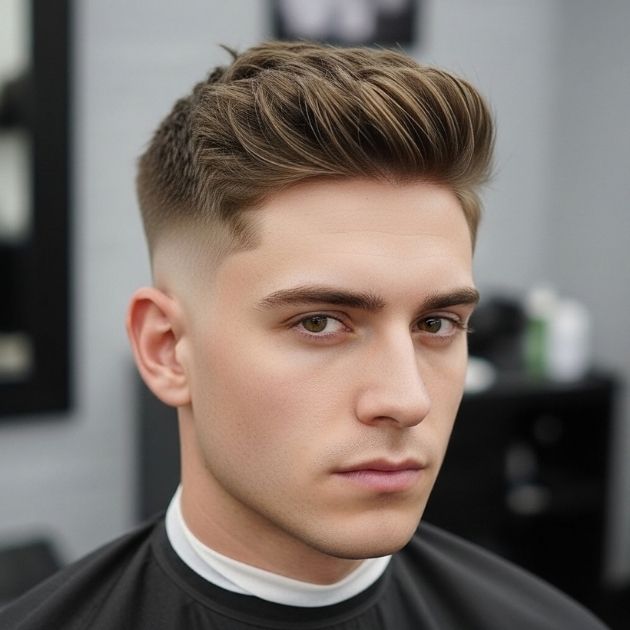
The textured crop is one of the most popular pairings for the low taper fade in 2025. The top is cut short with choppy, disconnected layers and a blunt fringe. It suits straight and slightly wavy hair well and requires minimal product, usually a small amount of matte clay worked through the tips. This combination is sharp, modern, and effortless.
2. Low Taper Fade with Slick Back Style
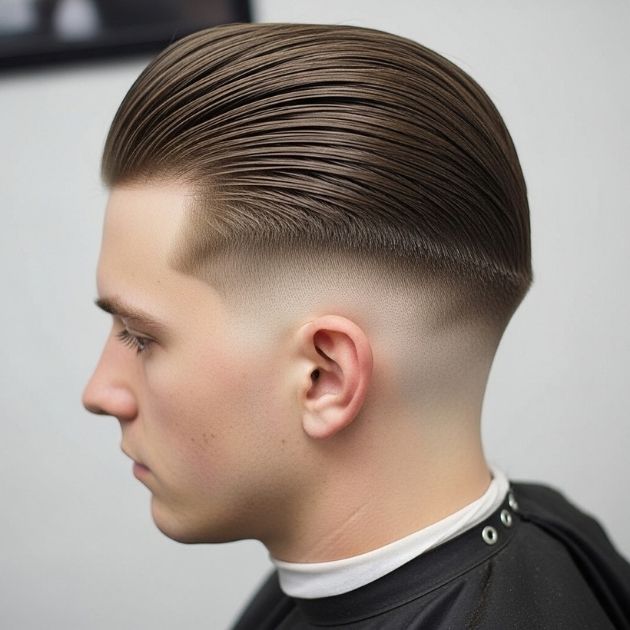
Brushing the top back over a clean low taper creates a polished look with timeless appeal. This variation suits men with medium to longer tops and works particularly well with straight or slightly wavy hair. Use a pomade with medium shine for the best result. It reads as professional during the week and stylish on weekends.
3. Low Taper Fade with Fringe (Forward Sweep)
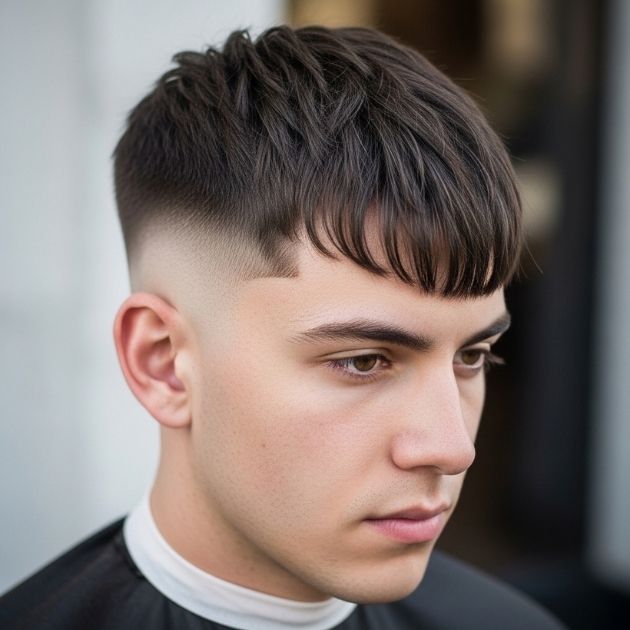
A forward-swept fringe over a low taper adds a youthful, modern edge to the cut. The hair on top is styled forward and slightly downward, creating soft texture across the forehead. This variation suits oval and rectangular face shapes especially well. Use a lightweight styling cream for natural movement and a relaxed finish.
4. Low Taper Fade with Buzz Cut or Crew Cut
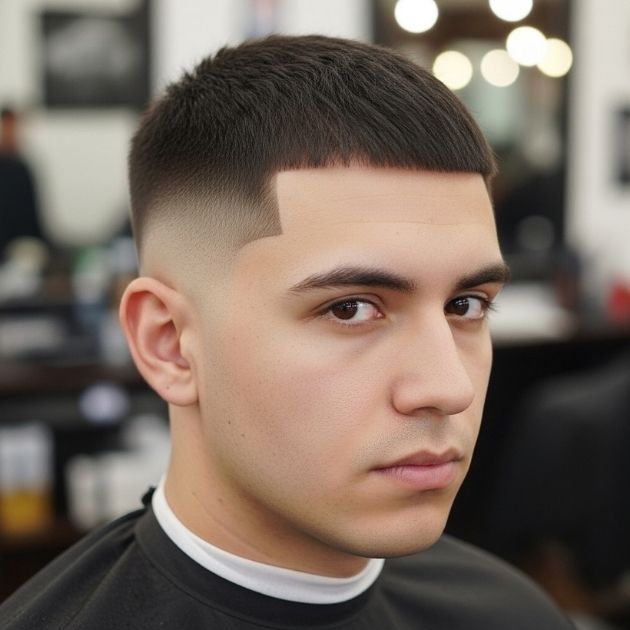
For men who prefer minimal length on top, combining a low taper fade with a crew cut or buzz cut delivers a sharp, low-maintenance result. The top is clipped short with a uniform guard, usually a number 2 or 3, while the low taper blends cleanly into the neckline. This combination requires virtually no daily styling and stays neat for weeks.
5. Low Taper Fade White Male with Curly or Wavy Top Style
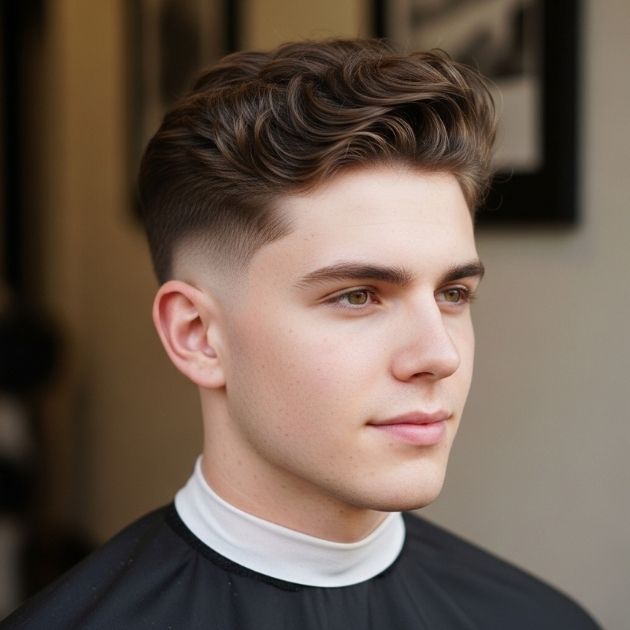
White males with natural waves or curls can use the low taper fade to their advantage. Letting the natural texture on top grow out while keeping the sides tight creates a striking contrast that looks effortlessly cool. Use a curl-defining cream or light mousse to enhance the natural pattern on top without weighing it down.
6. Low Taper Fade White Male with Side Part
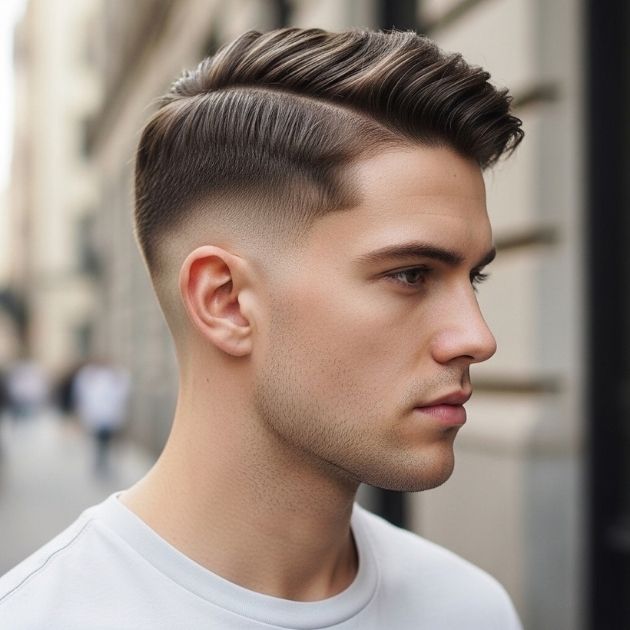
A side part combined with a low taper fade is the go-to choice for men who prefer a classic, refined aesthetic. The part creates a clean line of definition on top, while the low taper keeps the sides sharp without being dramatic. This style suits oval, square, and rectangular face shapes well. A medium-hold pomade delivers the ideal finish for this variation.
7. Creative Styling Add-Ons and Enhancements for Low Taper Fade White Male Haircut
There are several ways to elevate a basic low taper fade and make it uniquely yours:
- Hard part: A shaved line added to the side part creates extra definition and a razor-sharp finish.
- Beard pairing: A short beard or stubble blended into the low taper creates a seamless transition from the fade to the jawline.
- Line up: A clean-lined hairline above the forehead sharpens the entire look when added alongside the taper.
- Highlights or toning: Subtle highlights on the top add dimension and make the cut look even more dynamic.
Barbering and Maintenance Mistakes to Watch Out For
- Waiting too long between appointments. A low taper fade loses its shape quickly once the sides start growing out. Stick to a two to three week schedule for consistently sharp results.
- Not bringing a reference photo. Verbal descriptions can be misinterpreted. A clear photo removes guesswork entirely.
- Choosing the wrong product for your hair type. Heavy wax on fine hair weighs it down. Light clay on thick hair lacks control. Match your product to your texture.
- Asking for too high a fade. If you want a low taper fade, confirm the starting point is just above the ear. Some barbers default to mid fades without clarifying.
- Ignoring the neckline preference. The finish at the back makes a significant visual difference. Decide between tapered and blocked before you sit in the chair.
- Over-washing hair. Washing daily strips the natural oils that help fine or straight hair hold its shape throughout the day.
- Skipping conditioner. Conditioner keeps hair manageable and reduces frizz, which is especially important for wavy-textured tops.
FAQ’s
What is a low taper fade white male haircut?
It is a men’s haircut where the sides blend gradually shorter starting just above the ears, creating a clean and natural-looking transition toward the neckline.
How often should I get a low taper fade touched up?
Every two to three weeks is ideal to keep the fade lines sharp and the neckline clean.
Does the low taper fade work for fine straight hair?
Yes, it is one of the best options for fine straight hair because it creates structure and definition without harsh contrast.
What products work best for styling a low taper fade?
Matte clay suits textured and natural styles, pomade works for slick backs and side parts, and light cream is ideal for wavy or curly tops.
Can the low taper fade look professional at work?
Absolutely. Paired with a side part or slick back, it is one of the most office-appropriate modern haircuts available.
What face shape suits the low taper fade best?
Oval face shapes work best, though the cut complements square, rectangular, and diamond shapes very well with the right top style.
How is a low taper fade different from a skin fade?
A low taper fade blends down toward the skin but does not always reach bare skin, while a skin fade cuts all the way to the scalp for a bolder contrast.
Is the low taper fade suitable for older white males?
Yes, it is timeless and age-appropriate. Paired with a classic side part or slick back, it looks sharp and refined on men of any age.
Conclusion
The low taper fade white male haircut earns its popularity for good reason. It is versatile, flattering across a wide range of face shapes and hair textures, and simple enough to maintain without turning grooming into a full-time job. Whether you gravitate toward a clean textured crop, a polished slick back, or a casual wavy top, the low taper fade provides the perfect foundation.
Use this guide to walk into your next barbershop appointment with confidence. Know what to ask for, show a reference photo, and communicate your hair texture and preferred neckline finish. Once you have the cut, pair it with the right products and a consistent maintenance schedule, and you will have one of the most reliable, sharp-looking haircuts in modern men’s grooming working in your favor every single day.