Walk into any barbershop in 2025 and you will hear the same request more than almost any other: a modern mullet fade. Once dismissed as a relic of 1980s rock culture, the mullet has roared back into mainstream grooming with a sharp, polished edge that nobody saw coming. Clean fades, textured tops, and flowing back lengths have transformed this iconic cut into one of the most versatile and confidence-boosting hairstyles alive today. Whether you are curious, committed, or somewhere in between, this guide covers everything you need to know before sitting in the barber’s chair.
Why the Modern Mullet Fade Is Trending Now
The mullet’s comeback is not a coincidence. Several forces have collided to push it back to the top of the trending charts.
- Social media reach: The hashtag #ModernMullet has crossed 1.5 billion views on TikTok alone. Barbers from New York to Melbourne are posting transformations daily, and the engagement is extraordinary.
- Celebrity adoption: From Paul Mescal’s understated take to Morgan Wallen’s country-bold version, high-profile figures have normalized the style for mainstream audiences.
- Post-pandemic self-expression: After years of playing it safe, people are leaning into bolder, more personal looks. The mullet fade is the ideal vehicle for that shift.
- Gender fluidity: The cut no longer belongs to one group. Men, women, and nonbinary individuals are all claiming it as their own.
- Gen Z nostalgia: For younger generations, the 80s and 90s are vintage, not embarrassing. The mullet nods to that era while feeling completely current.
The result is a hairstyle that feels both rebellious and refined, bold enough to turn heads but structured enough to take seriously.
Modern Mullet Fade vs. Classic Mullet: Key Differences
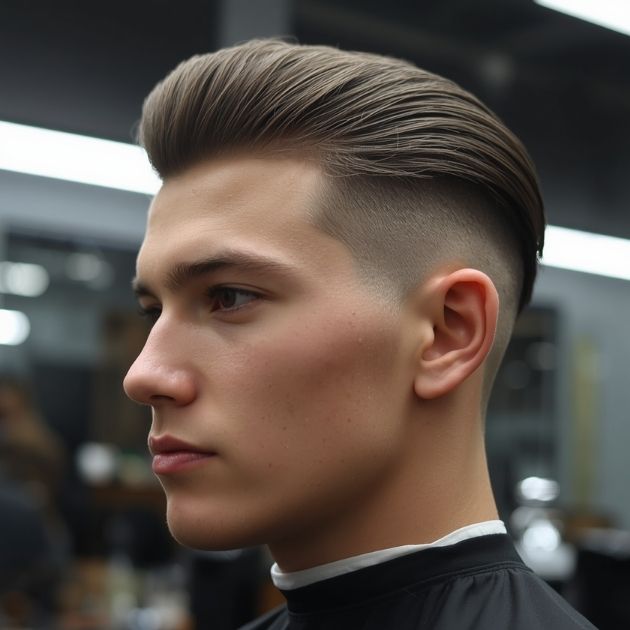
Understanding what separates today’s version from the original helps you communicate clearly with your barber and choose the right look.
| Feature | Classic Mullet | Modern Mullet Fade |
| Sides | Blunt or scissored | Faded or tapered |
| Texture | Heavy, often flat | Layered, textured |
| Back length | Long, often dramatic | Controlled and intentional |
| Overall finish | Rough and disconnected | Blended and polished |
| Wearability | Limited settings | Casual to semi-professional |
The classic mullet was boxy and often unintentional-looking. Today’s version uses fade blending, choppy layering, and precise cutting ratios (commonly 2:1 or 3:1 front-to-back length proportion) to create something that feels deliberate and sharp. Unlike its predecessor, the modern take adapts to your lifestyle rather than defining it.
Popular Mullet Fade Variations to Know
There is no single mullet fade. The beauty of this cut is how many directions it can take.
Low Taper Fade Mullet
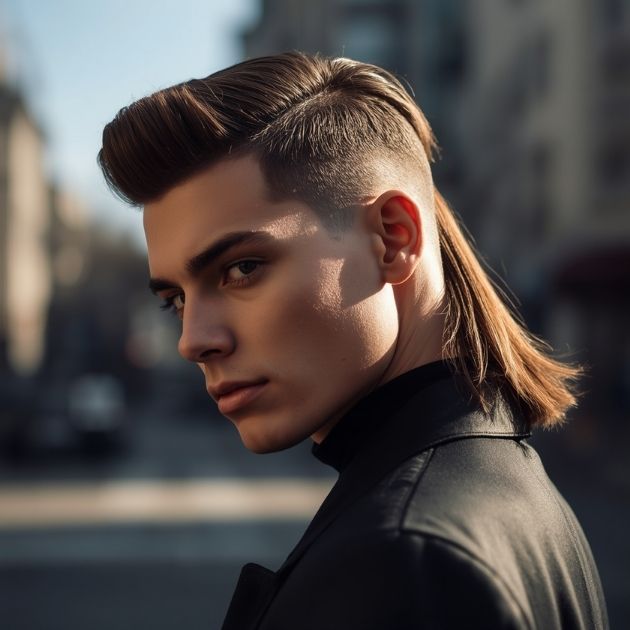
The most wearable variation for everyday life. The fade starts just above the ear, keeping transitions subtle. The top carries natural texture, and the back grows into a clean, controlled length. Great for first-timers and those with workplace dress codes.
High Fade Mullet
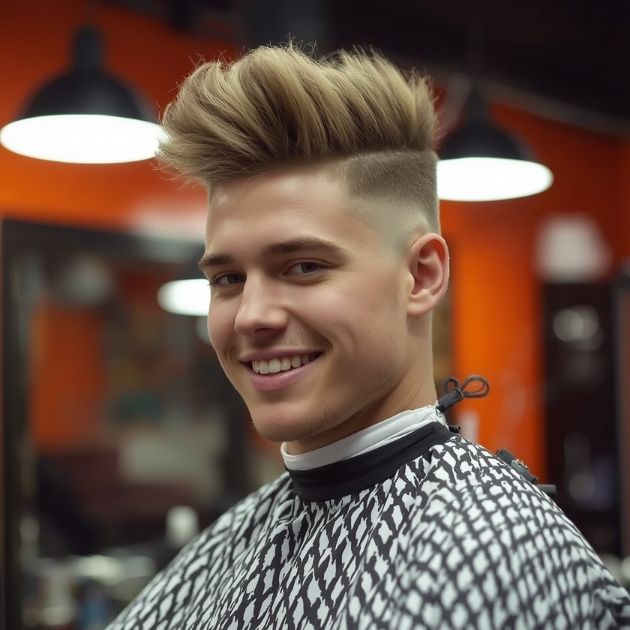
A bolder, more contemporary take. The sides fade tightly up toward the temples, creating dramatic contrast between the short sides and the longer top and back. Works best with straight to wavy hair and pairs well with a well-groomed beard.
Skin Fade Mullet with Fringe
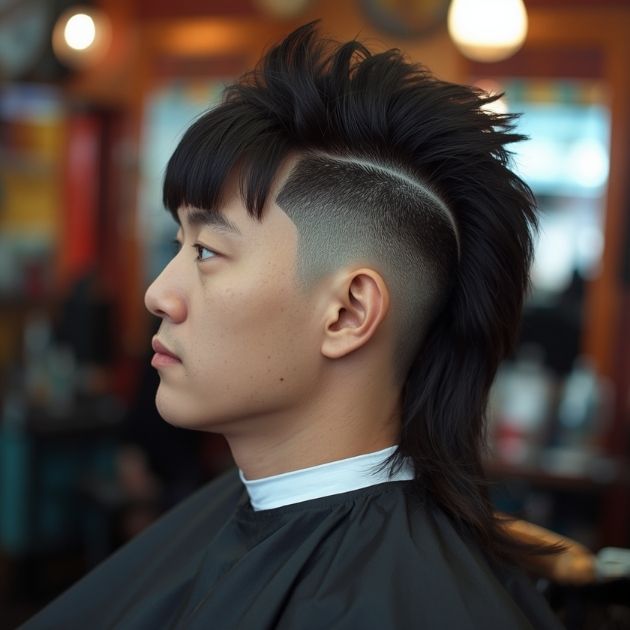
The sides go all the way down to the skin, making the fringe and back pop even more dramatically. This version is for those who want maximum contrast and a statement look. It requires the most frequent maintenance, roughly every two to three weeks.
Wolf Cut Mullet
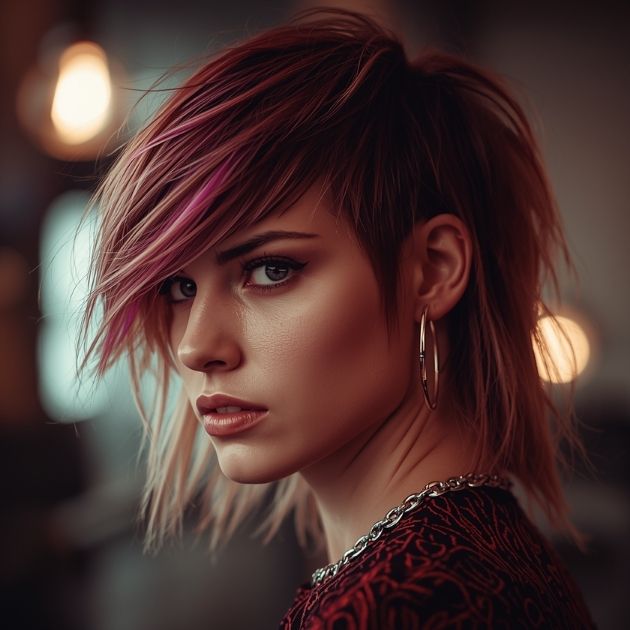
A crossover favorite on TikTok. Heavy layering, a messy fringe, and a flowing mullet back combine into something that feels effortless. This is the go-to for wavy and curly hair types, where the layers settle naturally into place.
Burst Fade Mullet
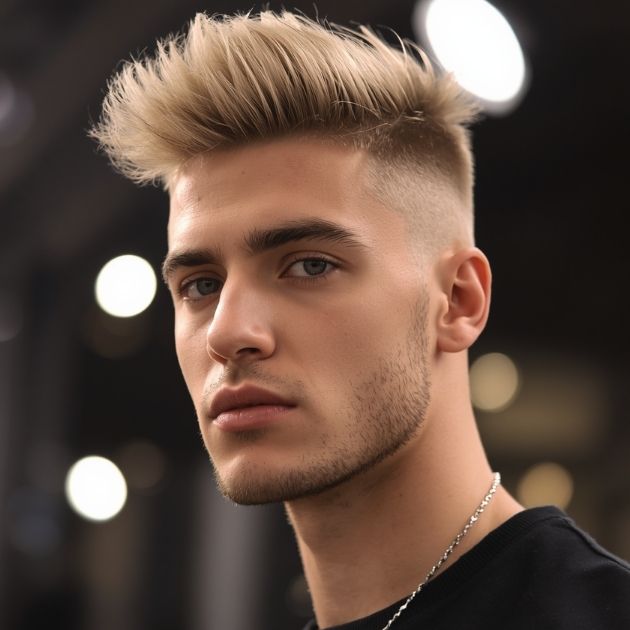
The fade radiates in a rounded shape around the ear before blending into the back. It gives the mullet a sculptural, artistic quality without looking overdone.
Shag Mullet
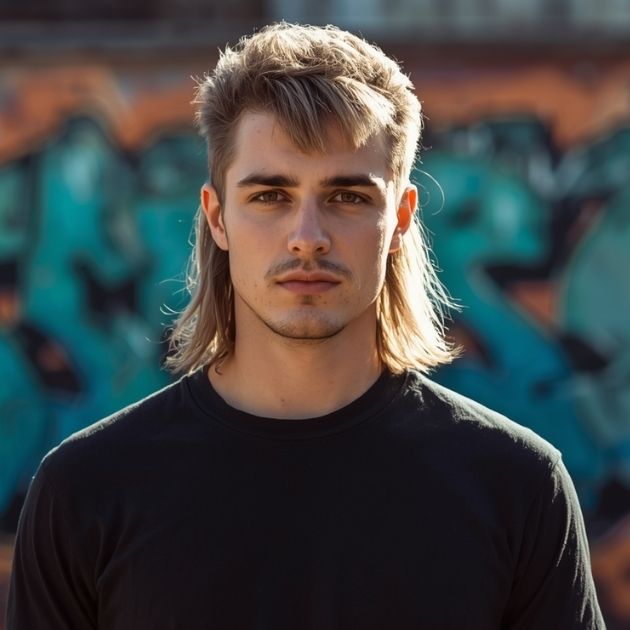
Inspired by 1970s rock, this variation skips the hard fade entirely in favor of choppy, cascading layers from crown to nape. It is soft, textured, and works beautifully for those who want the mullet silhouette without the sharp sides.
Curly Perm Mullet
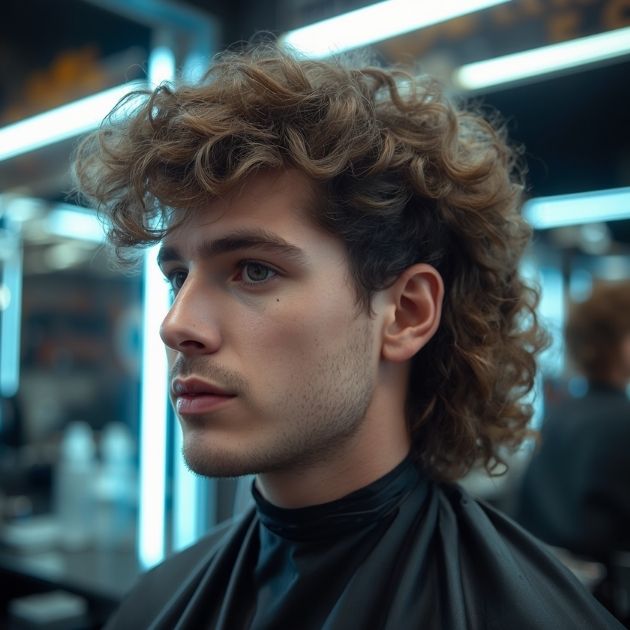
Curls or waves added through a salon perm give the mullet bounce and volume it naturally lacks on fine or straight hair. A lower taper keeps things clean while the curly back adds personality.
Modern Mullet Fades by Hair Type
Your hair texture plays a huge role in how the mullet sits and moves.
Straight hair delivers the cleanest, sharpest version of the mullet fade. Lines are crisp, the back flows smoothly, and fades look precise. Style with matte clay for definition or light pomade for a sleeker finish.
Wavy hair is arguably the best natural match for the mullet. Waves add volume and movement to both the top and back without needing much product. A sea salt spray scrunched into damp hair is often all you need.
Curly hair creates a bolder, more dramatic mullet with natural volume built in. A high taper fade helps control the sides while letting the curls do the work on top and in the back. Use a curl cream to define coils and prevent frizz.
Thick hair gives the mullet weight and presence. Barbers will often use point cutting and razoring techniques to remove bulk while maintaining shape.
Fine or thin hair benefits from a short-to-medium mullet where layering creates the illusion of volume. Avoid heavy products that weigh strands down.
Modern Mullet Fade for Every Personality
One of the mullet fade’s greatest strengths is how it bends to suit different personal styles.
- The minimalist: A subtle low taper with a short, textured top and a modest back length. Clean, quiet confidence.
- The creative: A wolf cut mullet with bold color at the tips, lots of layering, and a lived-in texture. Expressive and energetic.
- The athlete: A skin fade with a short, cropped top and a small mullet tail. Practical, sharp, and unmistakably current.
- The rockstar: A long-backed mullet with a high fade and a heavy fringe. Loud and unapologetic.
- The professional: A low taper with a neat top and a back that just grazes the collar. Stylish without being distracting.
Styling & Maintenance Tips: From Barber to Daily Routine
Knowing how to style your mullet between cuts is just as important as the cut itself.
Daily Styling
- Start with slightly damp hair for better product distribution.
- Apply matte clay or texturizing paste to the top and work it through with your fingers.
- Use sea salt spray on the back section and scrunch lightly for natural movement.
- Blow-dry the roots upward for extra volume at the crown if needed.
- Finish with a light-hold spray to lock texture without stiffness.
Maintenance Schedule
- Every 2 to 3 weeks: Skin fade and high fade styles need touch-ups to stay sharp.
- Every 3 to 4 weeks: Low taper fades can go a little longer before the sides look overgrown.
- Every 6 to 8 weeks: The back section and natural wave or shag styles need the least frequent trims.
Products Worth Knowing
- Matte clay: best for everyday texture and hold
- Sea salt spray: adds wave and movement to the back
- Curl cream: defines curls on textured mullets
- Light pomade: gives a sleeker, more polished finish
- Texturizing powder: adds volume at the roots without weight
What to Tell Your Barber: The Mullet Fade Breakdown
Walking in without a plan is the fastest way to leave with the wrong cut. Here is exactly what to say:
- Bring a reference photo. Visuals eliminate guesswork and give your barber a concrete target.
- Specify fade height. Say “low fade starting just above the ear” or “high fade up to the temples” rather than just “fade.”
- Name the back length. Give a rough measurement or point to where on your neck you want the back to fall.
- Describe the top. Do you want texture, volume, a fringe, or a curtain part?
- Ask about proportions. A skilled barber will discuss the front-to-back length ratio to make sure the look suits your face shape.
If you are nervous about committing, start with a subtle version. A short mullet with a low taper is an easy entry point that you can build from.
Is the Mullet Fade Professional? Can You Wear It to Work?
This depends almost entirely on your workplace culture and how you style the cut. The short answer: yes, a modern mullet can be worn in many professional settings, but with some nuance.
A low taper fade mullet with a clean top and a back that just grazes the collar reads as edgy but polished. Creative industries, tech companies, retail, hospitality, and media tend to embrace it without hesitation. Traditional corporate environments, law firms, and more conservative offices may require a shorter back and a cleaner overall shape to keep things office-appropriate.
The key is proportion and finish. A tight fade, a neat top, and a back that flows rather than hangs keeps the mullet looking intentional rather than unkempt. Style it with a matte product instead of something glossy, and you will find the line between expressive and professional is easier to walk than you might expect.
Modern Mullet Fade for Teens & Students
Young people have been among the loudest adopters of the mullet fade revival, and for good reason. It is a haircut that communicates individuality, confidence, and trend awareness without requiring a dramatic commitment.
For teens and students, the most practical versions are:
- A short mullet with a mid taper fade, which is easy to maintain and adaptable for school dress codes.
- A wolf cut mullet for those who want something more expressive but still manageable.
- A textured crop mullet that is longer in the back but still structured on the sides.
Maintenance is straightforward, product requirements are minimal, and the cut grows out gracefully rather than becoming awkward at the three-week mark.
Gender Inclusive & Nonbinary Mullet Styles
The modern mullet fade is one of the most genuinely gender-neutral haircuts available today. On TikTok and Instagram, nonbinary and gender-fluid creators have turned the mullet into a symbol of self-expression that exists entirely outside the traditional masculine-feminine binary.
Popular gender-inclusive variations include:
- Soft shag mullet: Wispy layers, face-framing curtain bangs, and a flowing back with minimal or no fade. It sits comfortably between feminine and masculine style cues.
- Undercut mullet: Short, disconnected sides with a longer top and back create a bold, androgynous silhouette.
- Textured pixie mullet: Very short on top with a longer tail at the nape. Minimal, striking, and completely genderless in its appeal.
Queer salons and barbers who specialize in gender-affirming haircuts are increasingly skilled at tailoring mullet fades to individual identities. Do not hesitate to communicate what masculinity, femininity, or androgyny means to you before the scissors come out.
Top Celebrities Rocking the Modern Mullet Fade
Celebrity influence has done more for the mullet revival than almost anything else. A few notable names worth knowing:
- Morgan Wallen has made the mullet his signature, making it nearly synonymous with modern country cool.
- Harry Styles brought a softer, 70s-inspired shag mullet into the pop mainstream.
- Jacob Elordi has been spotted in a mod-style mullet that blends 70s proportions with clean contemporary shaping.
- Paul Mescal keeps his version understated and textured, proving the mullet works in refined, artistic spaces.
- Post Malone and Machine Gun Kelly have pushed bolder, streetwear-aligned mullet fades that blend with tattoo culture and festival fashion.
K-pop artists have also been major drivers, particularly for wolf cut mullet styles that have become viral reference points in barbershops globally.
TikTok Transformations & Social Media Inspiration
Social media has been the engine of the modern mullet’s comeback. The before-and-after format suits the mullet perfectly because the transformation is always dramatic and satisfying to watch.
On TikTok, the most viral mullet content tends to share a few qualities:
- Clean, high-contrast fades that look stunning on camera
- Texture-forward tops that move naturally in slow-motion clips
- Barber commentary that explains each step and product choice
For inspiration, searching terms like #modernmullet, #mulletfade, #wolfcutmullet, and #mullettransformation will surface thousands of recent examples across different hair types, skin tones, and style directions. Pinterest boards on modern mullet cuts and barbershop Instagram accounts are also excellent places to save reference photos before your next appointment.
If you see a style you love, screenshot it and bring it in. That single action takes more uncertainty out of a haircut appointment than any amount of verbal description.
FAQ’s
What is a modern mullet fade?
A modern mullet fade combines the classic short-front, long-back silhouette with tapered or faded sides for a cleaner, more polished finish than the original 80s cut.
How often should I get a mullet fade touched up?
Most mullet fades need a trim every three to four weeks, with skin fades requiring touch-ups every two to three weeks to stay sharp.
Can anyone pull off a modern mullet fade?
Yes. With the right variation tailored to your face shape, hair type, and lifestyle, the mullet fade suits a surprisingly wide range of people.
Is a mullet fade high maintenance?
It depends on the variation. Low taper versions are relatively low maintenance, while skin fades and styled fringes require more frequent care.
What is the difference between a taper fade and a skin fade mullet?
A taper fade blends hair gradually without reaching the skin, while a skin fade takes the sides all the way down to the scalp for maximum contrast.
What products work best for a mullet fade?
Matte clay for texture and hold, sea salt spray for movement in the back, and curl cream for curly or wavy mullet variations are the most commonly recommended products.
Can a mullet fade look professional?
Yes. A well-executed low taper mullet with a neat top and controlled back length works well in many professional and creative workplace environments.
Conclusion
The modern mullet fade is not a trend with an expiration date. It is a genuine shift in how people think about personal style, self-expression, and what a “well-groomed” haircut actually looks like. It has survived every wave of skepticism, absorbed influence from TikTok, K-pop, country music, queer culture, and high fashion, and come out the other side more versatile than ever.
Whether you want something subtle enough for Monday meetings or bold enough for a festival crowd, there is a mullet fade variation built exactly for you. The hardest part is walking through the barbershop door. After that, the confidence follows naturally.