
Asian hair is often thick, straight, and dense, which makes it perfect for a low taper fade. This cut keeps length on top while blending the sides close to the skin near the ears.
In 2026, men are pairing this fade with textured tops, side parts, and design elements for a fresh, low-maintenance look. This guide breaks down 15 stylish variations, how to ask your barber for one, and how to keep it sharp between visits.
Whether you have straight, wavy, or coarse Asian hair, there is a version of this fade that will work for your face shape and lifestyle.
What Is a Low Taper Fade Asian Hair Haircut?
A low taper fade starts blending hair just above the ears and along the neckline. Unlike a mid or high fade, the fading stays close to the bottom, leaving more length on the sides and back.
For Asian hair textures, this style works especially well because:
- Thick, straight strands hold shape on top without needing heavy product.
- The gradual taper softens the transition, avoiding a harsh contrast line.
- It suits both formal and casual settings, from office to weekend wear.
This cut is popular because it is subtle. It reads as clean and professional while still leaving room for creative styling on top, like quiffs, spikes, or a side part.
15 Best Low Taper Fade Asian Hair Hairstyles
Below are 15 of the most requested low taper fade styles for Asian hair in 2026. Each one pairs the same fade base with a different top style, so you can pick what fits your face shape and daily routine.
Asian Straight Hair with Low Taper Fade
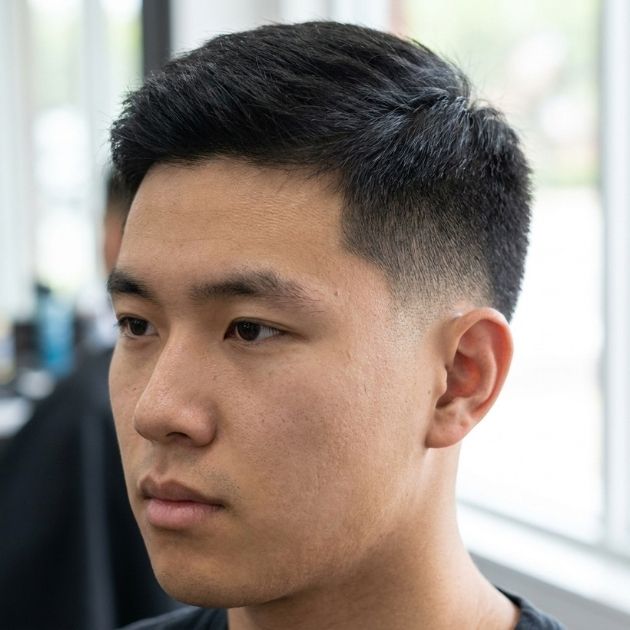
Straight Asian hair naturally lies flat, which makes this a low effort, high impact style. The top stays uniform in length, usually two to three inches, and falls forward or to the side.
This cut needs minimal styling. A light pomade or matte clay is enough to keep strands in place without looking greasy.
Low Taper Fade with Asian Side Part
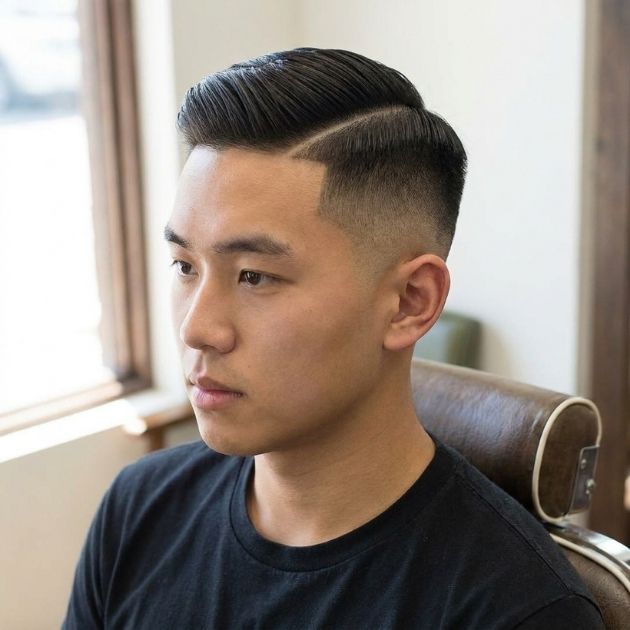
The side part adds structure to an otherwise simple cut. A hard or soft part line separates the hair, giving it a polished, put together look.
This style works well for:
- Job interviews and office environments
- Formal events like weddings
- Men who want a classic, timeless finish
Low Taper Fade with Asian Messy Hair
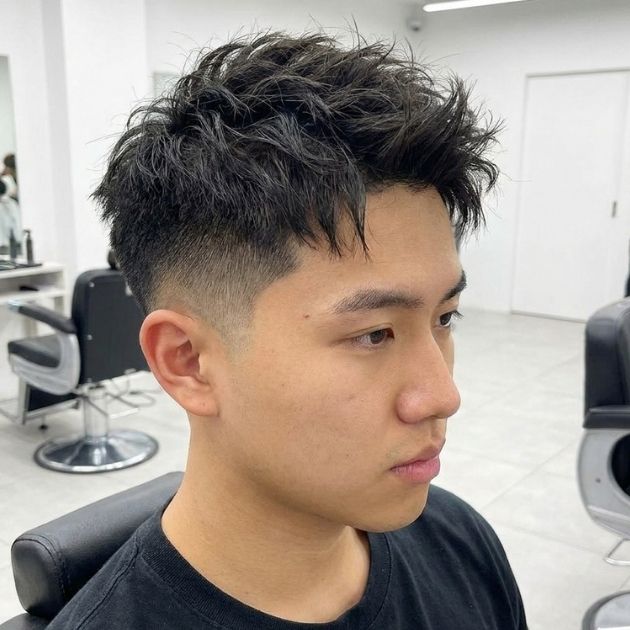
Messy hair on top pairs well with the clean fade below, creating contrast between structured and relaxed. Hair is left slightly longer and styled with fingers rather than a comb.
A texturizing spray or light wax gives it that lived in, effortless look without appearing unkempt.
Low Taper Fade with Asian Fringe
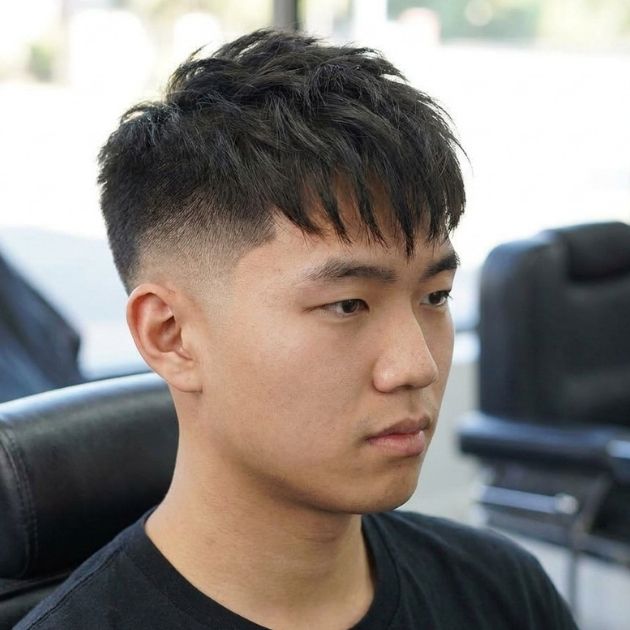
The fringe, or bangs, sits forward over the forehead. This style has grown popular through K-pop and Japanese street fashion influences.
It softens angular face shapes and works especially well with straight, thick Asian hair that holds a forward fall naturally.
Low Taper Fade Asian Quiff
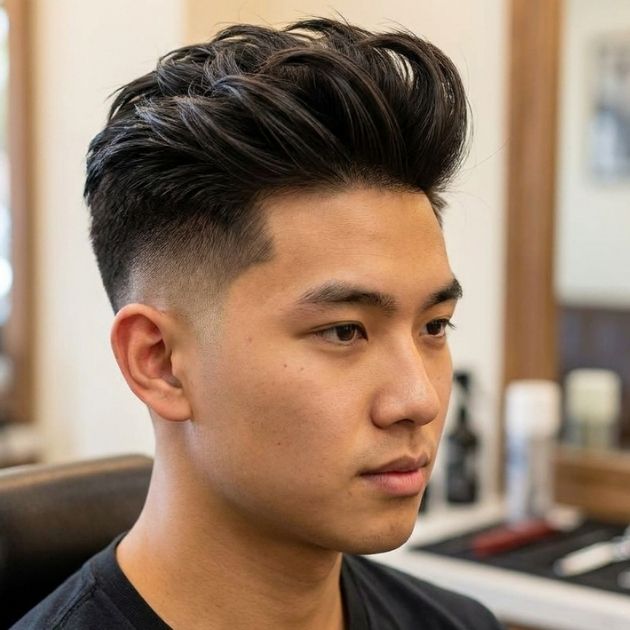
The quiff lifts hair up and back from the front hairline, creating height and volume. Paired with a low taper fade, it balances a bold top with a subtle base.
Styling tips:
- Blow dry hair upward while brushing it back
- Apply a strong hold pomade for lasting volume
- Use a small amount of hairspray to lock the shape
Low Taper Fade Asian Slick Back
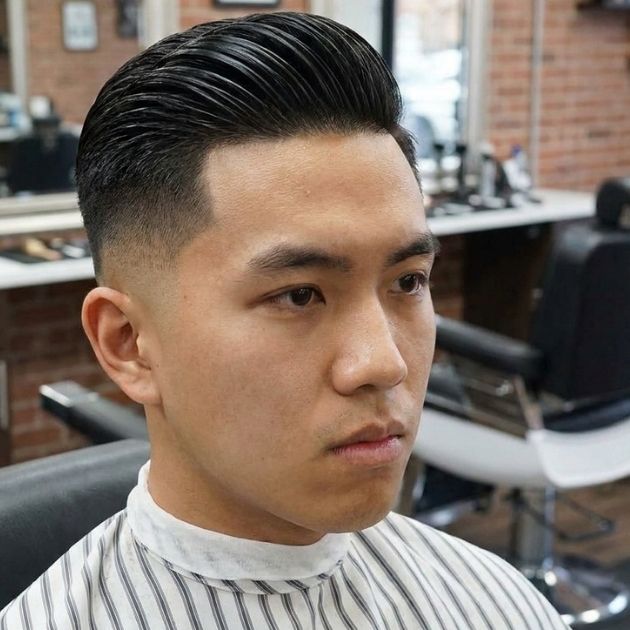
This style combs all hair straight back using a glossy or matte pomade. It suits men with medium to long hair on top and gives an instantly sharp, mature appearance.
It works particularly well for business settings and evening events.
Low Taper Fade Asian Two Block Hair
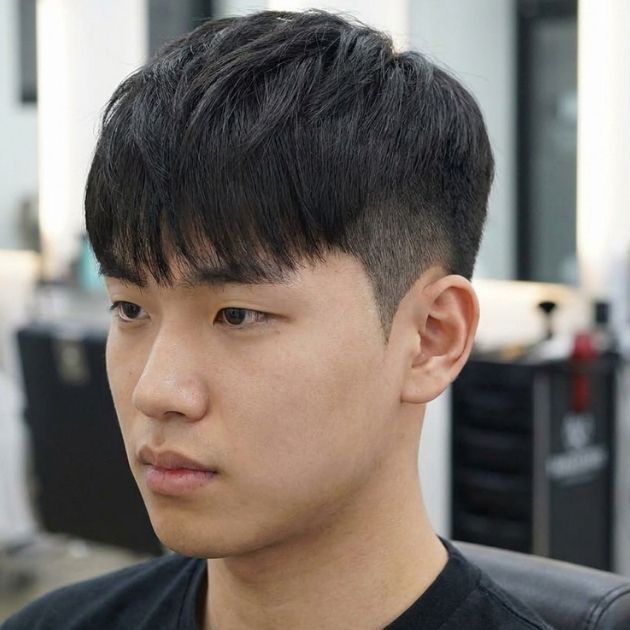
Originally a Korean style, two block hair features noticeably longer hair on top compared to short, tightly faded sides. The dramatic length difference is what defines this cut.
This is a strong choice for men who want their top style to stand out visually against the fade.
Low Taper Fade Asian Comma Hair
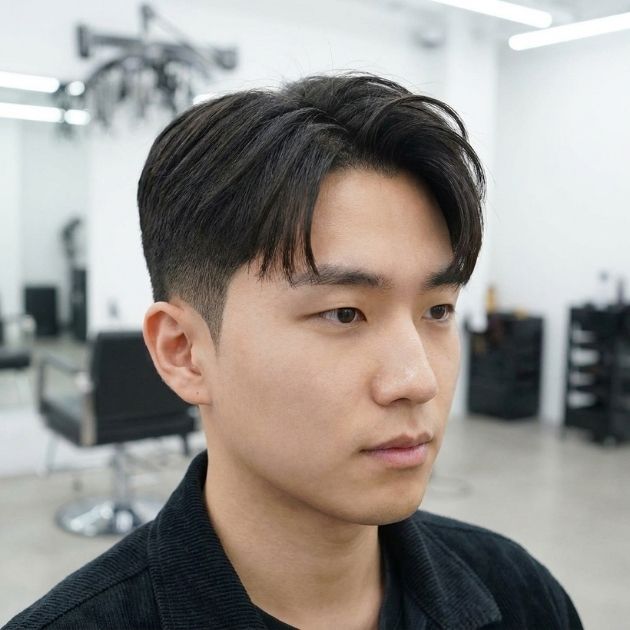
Comma hair curves the fringe into a soft, comma shaped swoop across the forehead. It is a signature K-drama inspired look that suits round and oval face shapes.
A lightweight styling cream helps hold the curve without stiffness.
Low Taper Fade Asian Curtains Hairstyle
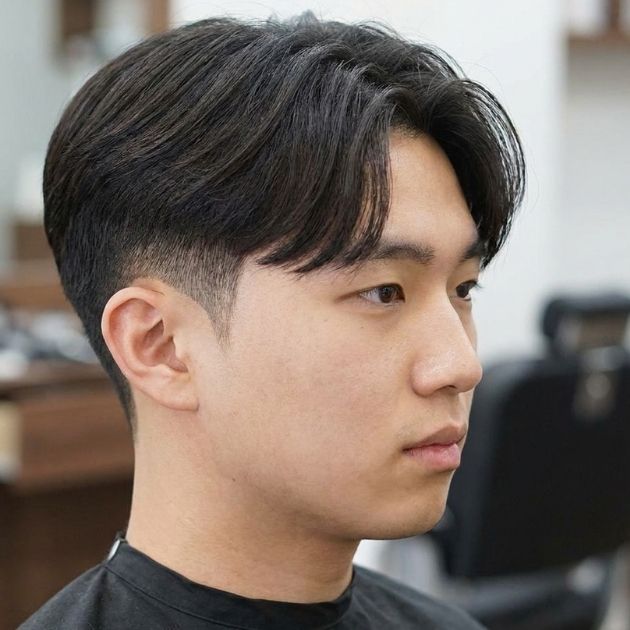
Curtains part the hair down the middle, with both sides framing the face like an open curtain. This 90s inspired trend has returned strongly among younger men.
It works best with straight to slightly wavy Asian hair textures that naturally fall to either side.
Low Taper Fade Asian Pompadour
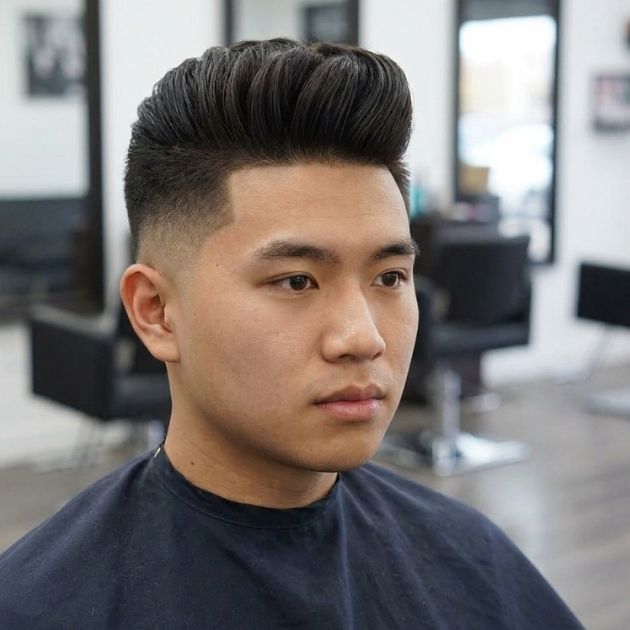
The pompadour adds significant height at the front while sweeping hair backward. It is bolder than a quiff and requires more length on top, typically three to four inches.
This style needs daily styling with a strong hold product and a blow dryer for best results.
Low Taper Fade with Asian Textured Hair
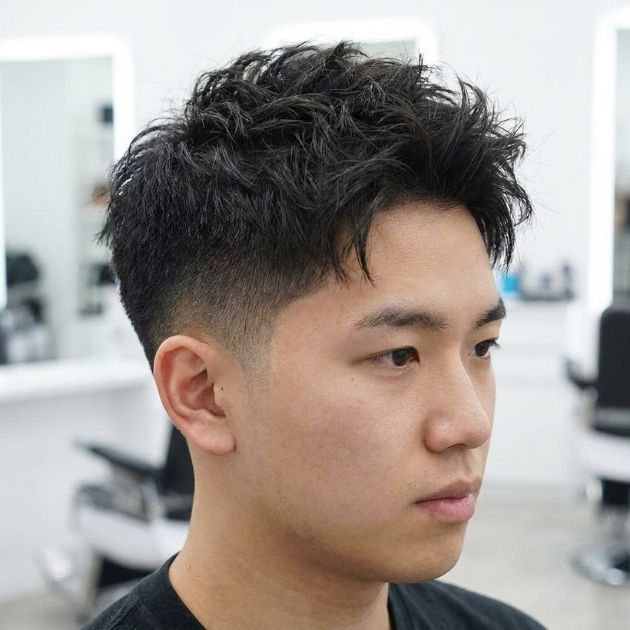
Texture is added through a razor or point cutting technique, which removes bulk and adds movement. This suits thick Asian hair that can otherwise look heavy or blocky.
The result is a natural, piecey finish that requires only a small amount of matte paste.
Low Taper Fade Asian Textured Crop
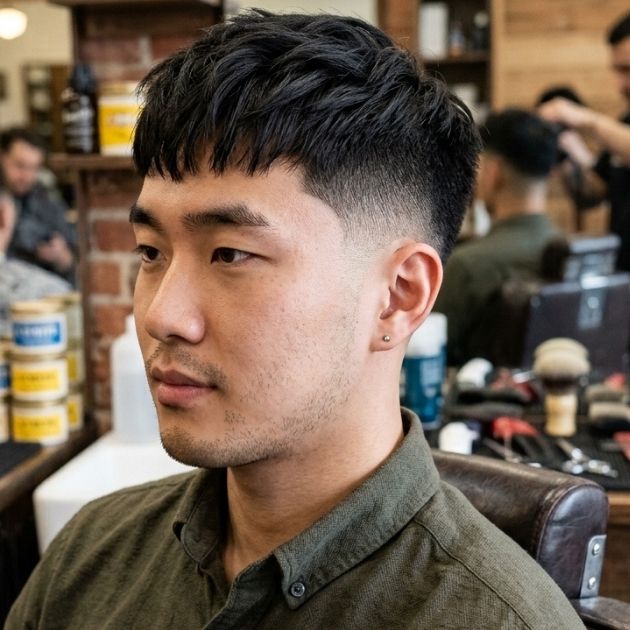
The textured crop keeps hair short on top, usually one to two inches, with choppy, textured ends. It is one of the lowest maintenance styles on this list.
Ideal for:
- Men with active lifestyles
- Those who prefer minimal daily styling
- A modern, casual everyday look
Low Taper Fade Asian French Crop
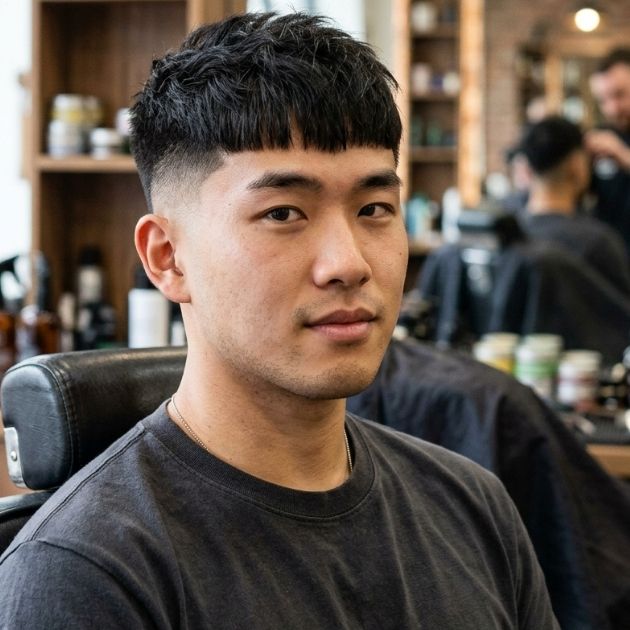
The French crop features a straight, blunt fringe across the forehead with short sides. It gives a structured, slightly edgy appearance.
This cut pairs a defined fringe line with the soft blend of a low taper fade for contrast.
Low Taper Fade Asian Spiky Hair
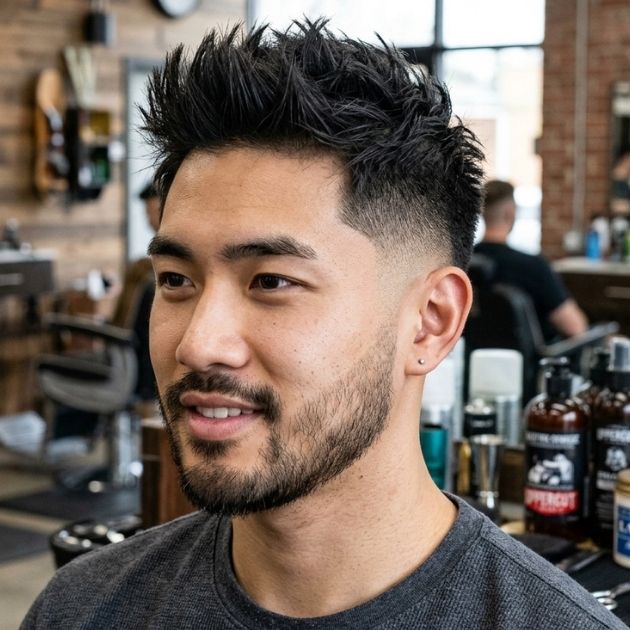
Spiky styles use gel or wax to create defined, upward pointing pieces. It is a youthful, energetic look that works well for teens and men in their twenties.
Apply product to damp hair and use fingers to pull sections upward for a natural spike pattern.
Low Taper Fade Asian Hair with Design
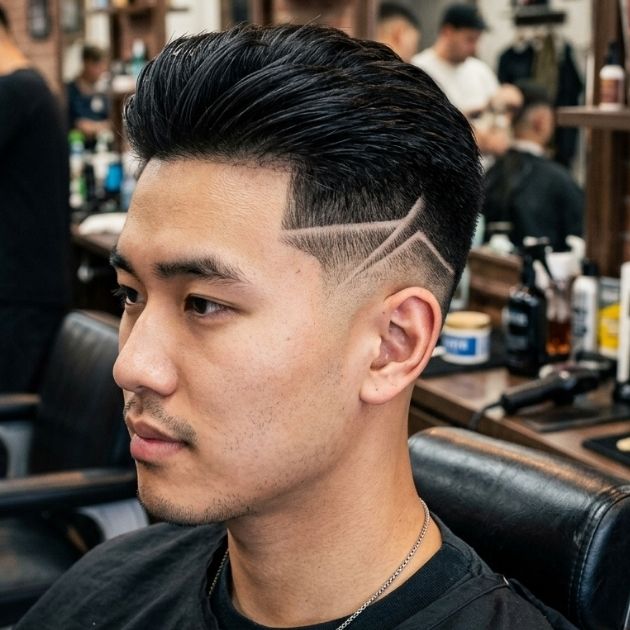
Adding a shaved line, part, or pattern into the fade gives the cut a personalized edge. Designs are typically shaved into the taper area near the temple.
Common design options include:
| Design Type | Placement | Best For |
| Single line part | Above the temple | Subtle, everyday wear |
| Geometric pattern | Side of head | Bold, statement looks |
| Curved line | Following the fade edge | Soft, blended appearance |
How to Ask Your Barber for a Low Taper Fade Asian Haircut
Clear communication helps your barber deliver exactly what you want. Bring a reference photo if possible, since terms can vary slightly between barbershops.
Use these steps when explaining your request:
- Specify the fade type. Say “low taper fade” clearly so it is not mistaken for a mid or high fade.
- Describe the top length. Mention the number of inches or compare it to a style from this list.
- Note your hair texture. Let your barber know if your hair is straight, wavy, or coarse, since this affects the cutting technique.
- Ask about maintenance. Confirm how often you will need touch ups to keep the fade sharp.
If you want a design, point to the exact spot on your head where you want it placed.
How to Maintain a Low Taper Fade Asian Haircut
A low taper fade needs regular attention to stay sharp, since the sides grow out faster than the top.
Follow these maintenance tips:
- Schedule touch ups every 2 to 4 weeks to keep the fade line clean.
- Wash hair 2 to 3 times a week using a sulfate free shampoo to avoid drying out the scalp.
- Apply lightweight styling products, since Asian hair is often naturally coarse and dense.
- Use a wide tooth comb on wet hair to prevent breakage.
- Trim the top every 4 to 6 weeks if you are maintaining a shorter style like a crop.
Consistent care keeps the contrast between the faded sides and styled top looking intentional rather than grown out.
FAQ’s
Does a low taper fade work well with thick Asian hair?
Yes, a low taper fade suits thick Asian hair well because it removes bulk on the sides while keeping length and volume on top.
How often should I get a low taper fade touched up?
Most men need a touch up every 2 to 4 weeks, since the low fade area grows out and loses its sharp edge quickly.
Is a low taper fade good for straight Asian hair?
Yes, straight hair holds this cut’s shape well and requires minimal styling product to look neat throughout the day.
Can I add a design to a low taper fade?
Yes, shaved line designs or patterns can be added near the temple area, giving the cut a more personalized, unique finish.
What is the difference between a low taper fade and a low fade?
A taper fade blends more gradually and subtly, while a regular low fade often has a slightly more defined, visible transition line.
Which low taper fade style is easiest to maintain?
The textured crop is the easiest to maintain, since it requires short length on top and minimal daily styling effort.
Is a low taper fade suitable for formal workplaces?
Yes, this fade looks clean and professional, especially when paired with a side part, slick back, or classic straight top style.
Final Thoughts
A low taper fade is one of the most versatile cuts for Asian hair, offering a clean base that pairs with almost any top style. From a simple textured crop to a bold pompadour, there is an option here for every face shape and lifestyle.
Bring your preferred style to your next barber appointment, communicate your hair texture clearly, and stick to a regular maintenance schedule. This combination will keep your fade sharp and your top style looking fresh all year.