
Walk into any barbershop in 2026 and you’ll hear the same request over and over: a low taper fade with a fringe on top. It’s become the go-to cut for men who want something sharp on the sides but relaxed and expressive up front.
What makes this haircut stand out is balance. The fade keeps things tidy and professional, while the fringe brings in movement, texture, and a bit of personality. It’s not too formal and not too wild, which is exactly why it works for school, the office, or a night out.
This guide breaks down what a low taper fade fringe actually is, why so many men are choosing it, 20 style variations to try, how to explain the cut to your barber, and how to keep it looking fresh between visits.
What Is a Low Taper Fade Fringe
A low taper fade fringe combines two separate barbering techniques into one cohesive look.
The taper fade is the part on the sides and back. It starts low, usually just above the ears and at the nape of the neck, and blends the hair gradually shorter as it moves down toward the skin. Because the fade begins low, the transition is subtle rather than dramatic, which is why this cut reads as clean and low-key compared to a high or skin fade.
The fringe is the section left longer on top at the front, cut to fall forward across the forehead. Depending on how it’s cut and styled, the fringe can sit heavy and blunt, textured and choppy, or swept off to one side.
Put together, you get a haircut that’s short and controlled where it needs to be, with room for texture and styling freedom where it matters most, right at the front of your face.
Why the Low Taper Fade Fringe Is Popular
A few reasons explain why this cut keeps showing up in barbershops and on style boards heading into 2026.
- It suits nearly every hair type. Straight, wavy, curly, thick, or fine hair can all be shaped into a fringe, which is rare for a single haircut style.
- It works for most face shapes. Because the fringe can be adjusted in length and thickness, barbers can use it to balance a high forehead, soften a square jaw, or add width to a narrow face.
- It’s genuinely low maintenance. The fade grows out evenly instead of leaving awkward lines, and the fringe can be restyled in under a minute each morning.
- It scales from formal to casual. Comb the fringe back and it looks polished enough for an interview. Let it fall loose and textured, and it looks weekend ready.
- It photographs and films well. This matters more than people admit. A defined fringe with a soft fade holds its shape on camera, which is part of why it’s popular with athletes, creators, and anyone regularly in front of a lens.
Together, these factors make the low taper fade fringe one of the most requested men’s cuts of the year, not because it’s flashy, but because it’s practical and flattering at the same time.
20 Low Taper Fade Fringe Haircut Ideas for Men
Below are 20 ways to wear the low taper fade fringe, organized by texture, length, hair type, and finish, so you can match one to your own hair and lifestyle.
Taper Fade Textured Fringe
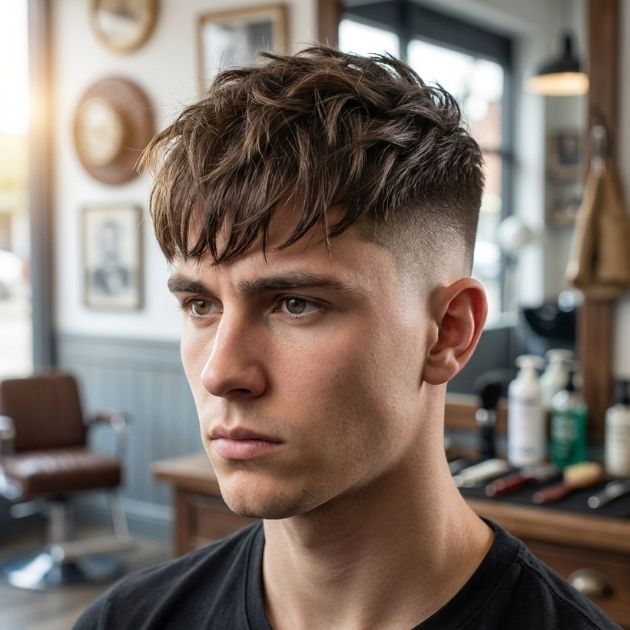
This is the modern default version of the cut. The sides fade low and smooth, while the fringe is point-cut or razored into small, choppy pieces for texture. It works especially well on medium to thick hair and suits oval or heart-shaped faces.
Styling tip: Apply a matte clay to damp hair and push the fringe forward with your fingers rather than a comb, which keeps the texture looking natural instead of overly styled.
Low Taper Fade Messy Fringe
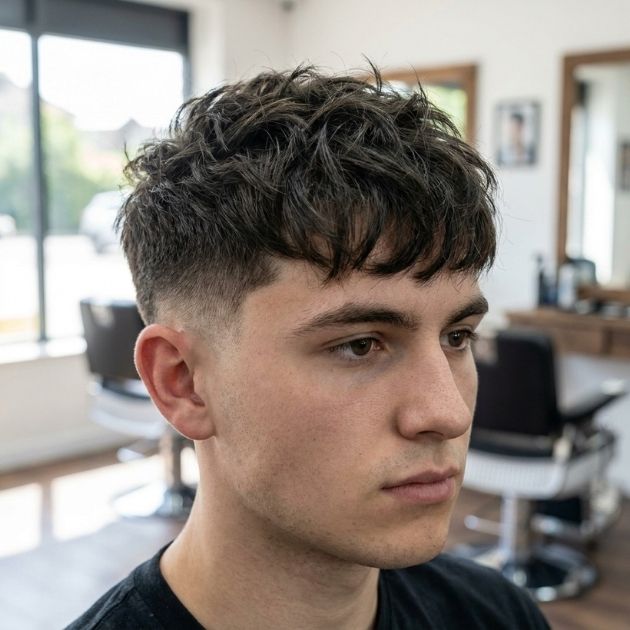
A relaxed, undone take on the same idea. The taper stays neat and low, but the fringe is left loose and tousled instead of shaped precisely. It’s a favorite for casual, everyday wear.
Styling tip: Rough-dry with your fingers and finish with a light sea salt spray for texture without stiffness.
Low Taper Fade Short Fringe
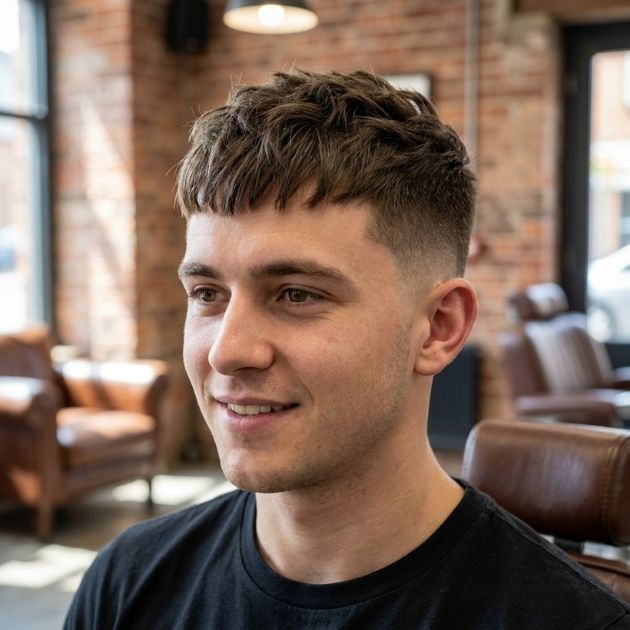
For men who want a cleaner, more structured finish, keeping the fringe short is a smart move. It sits just above the brow, giving a sharp, tidy frame without much bulk on top.
Styling tip: A small amount of light pomade keeps the short fringe controlled all day.
Low Taper Fade Long Fringe
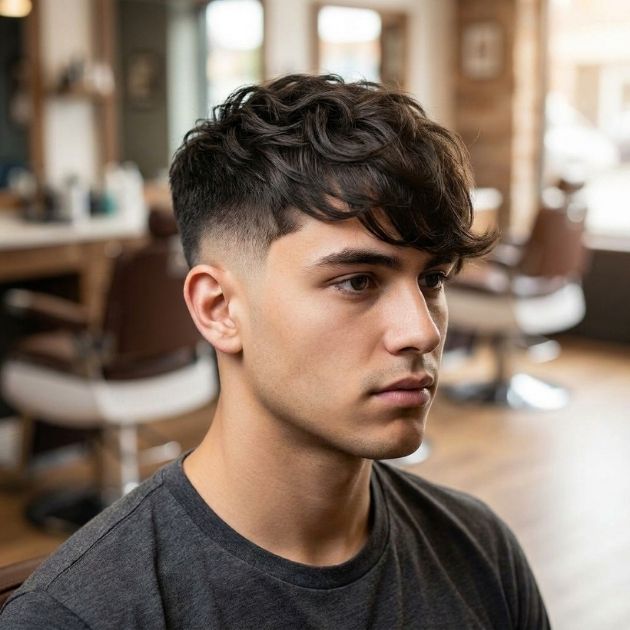
The opposite approach, a longer fringe that falls further down the forehead and adds noticeable movement. This works well on thicker or straighter hair that can hold the extra length without looking flat.
Styling tip: Blow-dry the fringe forward using a round brush, then set with a light-hold spray.
Low Taper Fade Side Swept Fringe
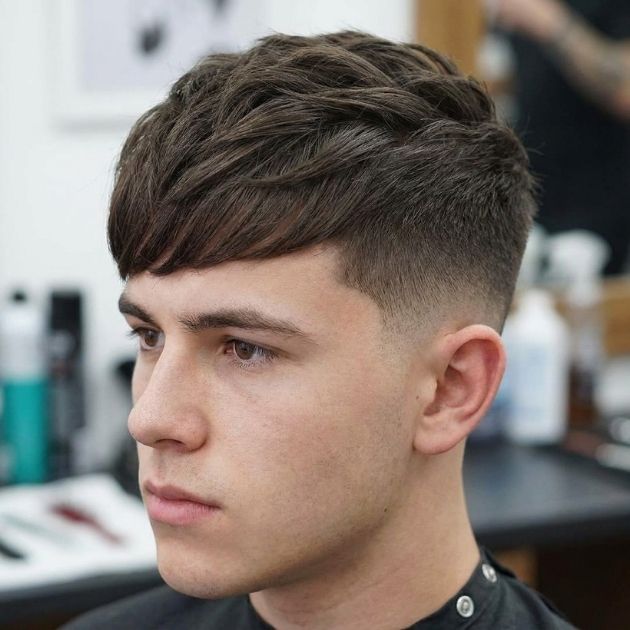
Instead of falling straight down, the fringe is directed to one side, creating a softer, slightly more polished look. It’s a good option for men who want the cut to look more refined for work settings.
Styling tip: Comb the fringe sideways while damp and use a small amount of pomade to lock in the direction.
Low Taper Fade Layered Fringe
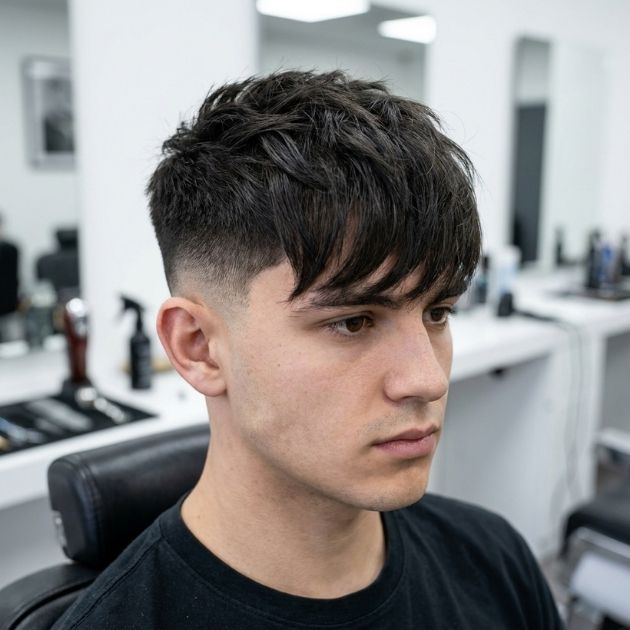
Adding subtle layers through the top gives the fringe more shape and depth, especially useful for fine or thin hair that needs help looking fuller.
Styling tip: A texturizing spray at the roots adds lift before styling the fringe forward.
Low Taper Fade Thick Fringe
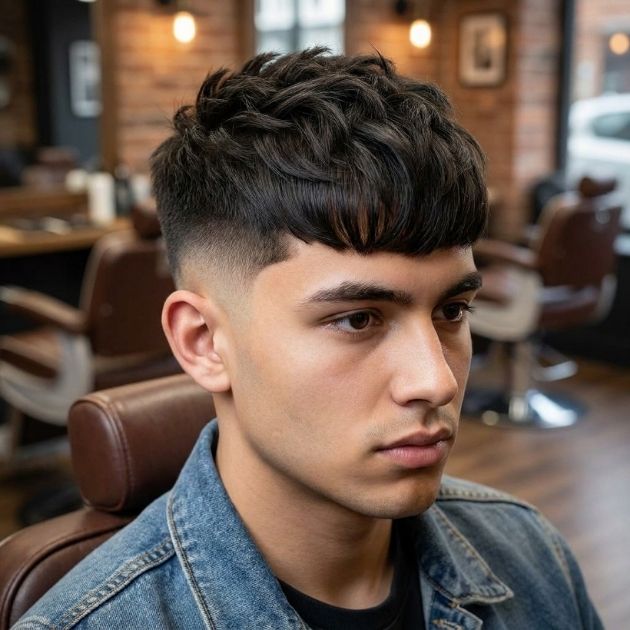
Best suited to men with naturally dense hair, this version keeps the fringe full and heavy for a bold, statement front section that contrasts sharply with the clean fade underneath.
Styling tip: Use a strong-hold cream to keep thick hair in place without weighing it down.
Low Taper Fade Thin Fringe
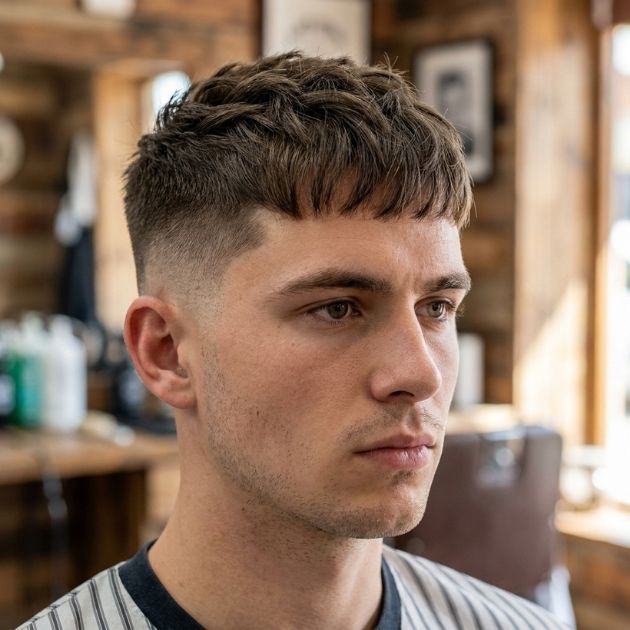
For finer hair, a thinner, more delicate fringe avoids looking sparse. Cutting it slightly shorter also helps it sit with more shape rather than falling flat.
Styling tip: A volumizing mousse applied at the root before drying gives thin hair extra lift.
Low Taper Fade Fringe Curly Hair
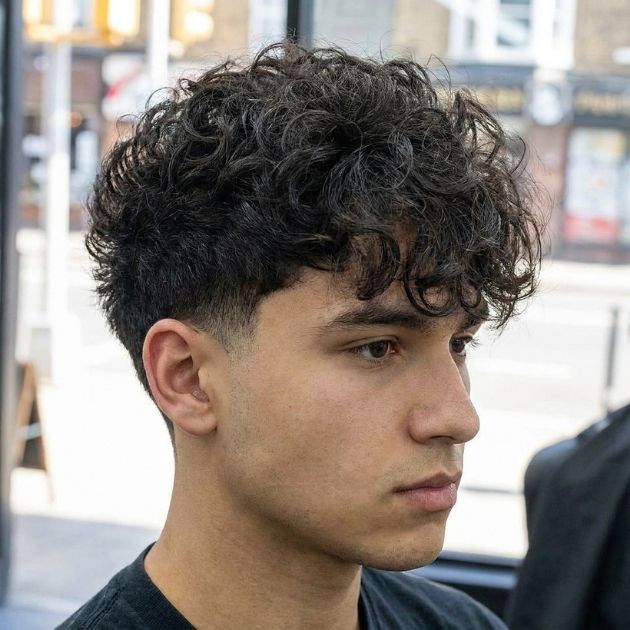
Curly hair brings this cut to life on its own, no heavy styling needed. The taper keeps the sides controlled while the natural curl pattern in the fringe adds movement and character.
Styling tip: Use a curl-defining cream on damp hair and let it air dry to preserve the natural pattern.
Taper Fade Fringe Straight Hair
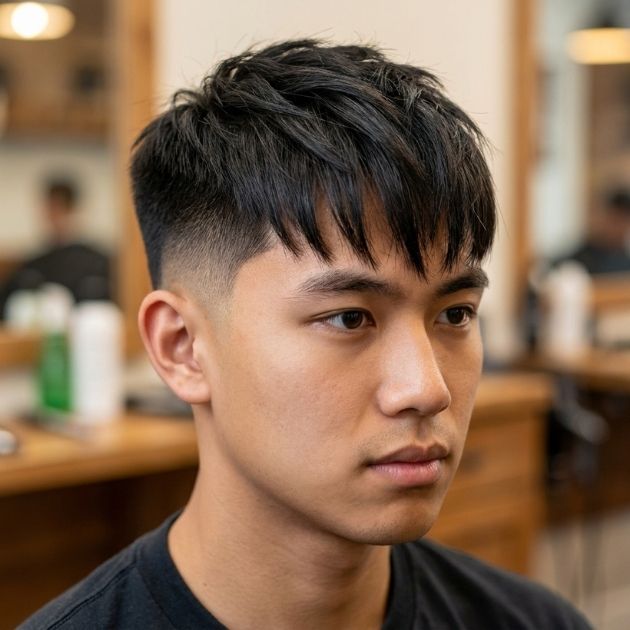
Straight hair gives the fringe a sleek, sharp edge, ideal for men who prefer a more deliberate, structured look rather than a tousled one.
Styling tip: A flat brush and light heat while drying help create a smooth, straight fringe line.
Low Taper Fade Textured Crop Fringe
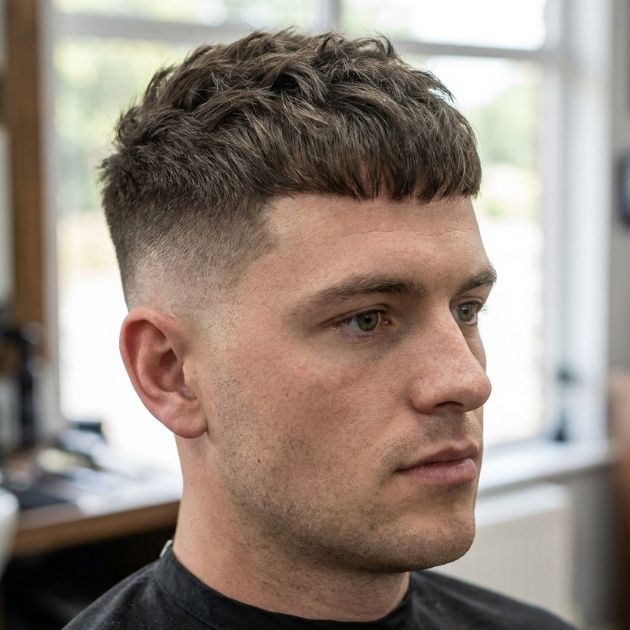
This variation borrows from the classic French crop, keeping the fringe short, choppy, and forward-facing while the sides taper low and tight. It’s a versatile option that works for both casual and smart-casual settings.
Styling tip: Work a small amount of clay through dry hair for a matte, piece-y finish.
Low Taper Fade Casual Fringe
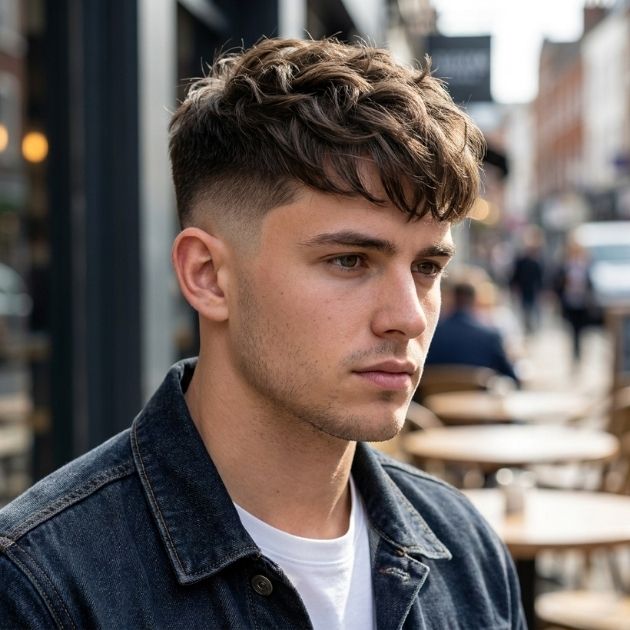
A relaxed, everyday version with minimal styling, just enough shape to look intentional without appearing overworked. Great for men who want a low-effort morning routine.
Styling tip: Air-dry with fingers and add a touch of light cream if needed.
Modern Fringe
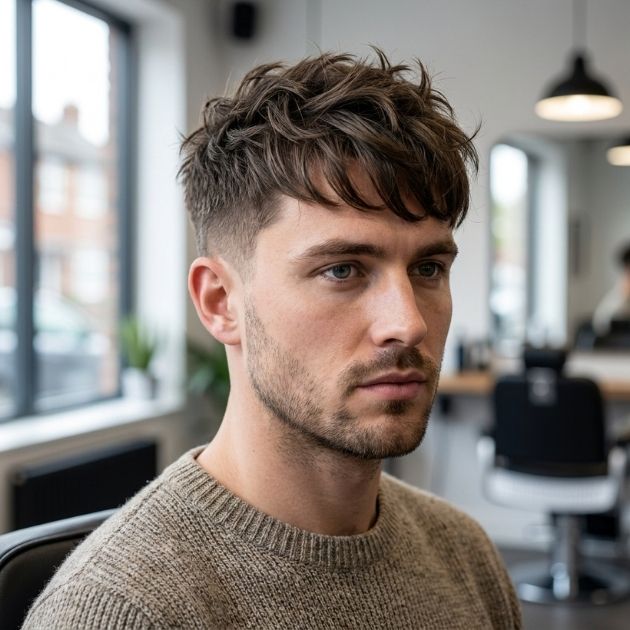
A cleaner, more contemporary take that leans structured rather than messy, often paired with a slightly sharper fade line. It suits men who want a current look without going too bold.
Styling tip: Blow-dry with a paddle brush to set the shape before applying a light matte product.
Low Taper Fade Fringe on Top
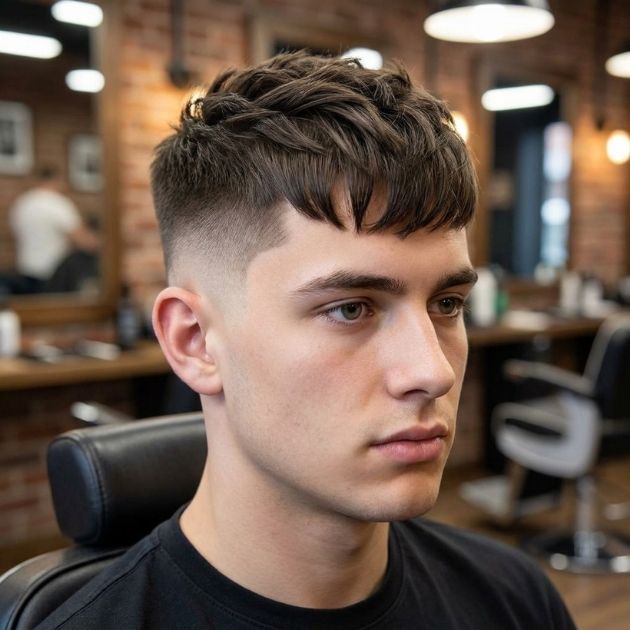
Here the emphasis is on volume directly at the crown, with the fringe blending down from a fuller top section. It creates height that balances a low, subtle fade.
Styling tip: Dry with a diffuser and lift the roots before styling the fringe forward.
Low Taper Fade Wavy Fringe
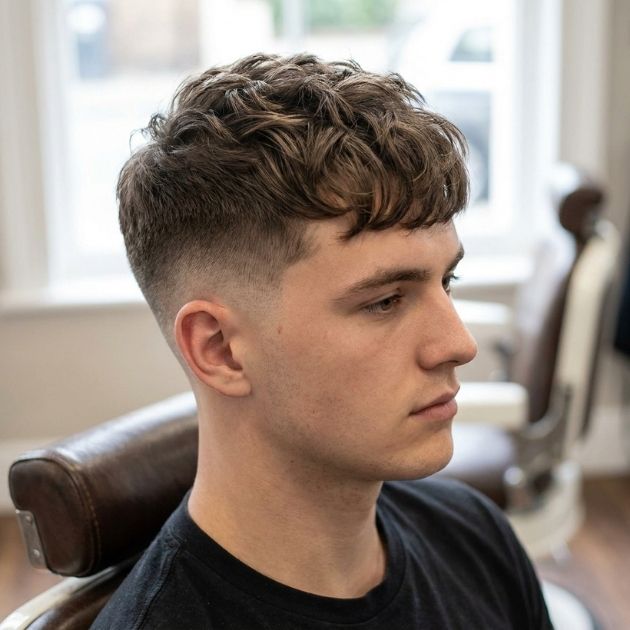
Natural waves add effortless texture to the fringe without extra effort, making this one of the easier variations to maintain day to day.
Styling tip: A sea salt or texture spray enhances the wave pattern without drying hair out.
Soft Fringe

A gentler, rounder fringe shape that sits lightly on the forehead rather than in sharp, defined pieces. It suits men who want the cut to look approachable and understated.
Styling tip: Use a lightweight cream rather than a stiff-hold product to keep the finish soft.
Taper Fade Fringe with Volume
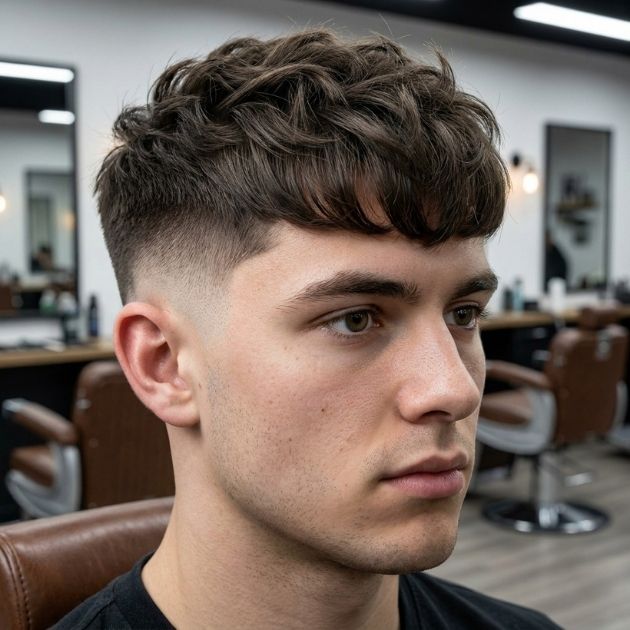
Focused on height and body at the front, this version uses blow-drying technique as much as cutting to lift the fringe away from the forehead before it falls forward.
Styling tip: Dry hair upside down briefly to build volume at the root before styling forward.
Asian Fringe
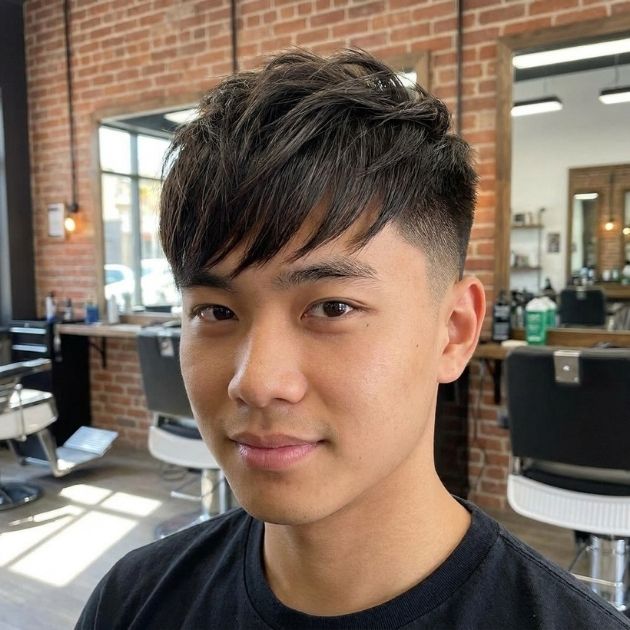
A popular style built around straight, dense hair, typically featuring a blunt, forward-facing fringe with a low, soft taper on the sides. It creates a clean, youthful silhouette.
Styling tip: Keep products minimal, a light wax is usually enough to hold the shape without added shine.
Taper Fade Barber Style Fringe
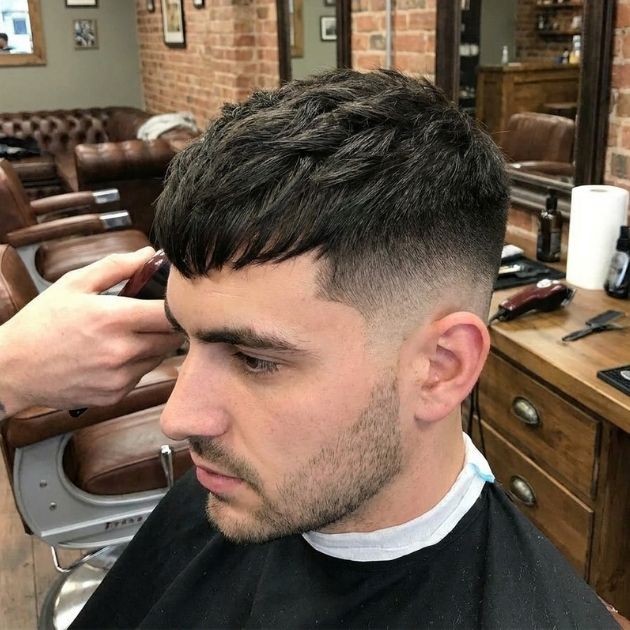
This is the precision-cut version you’d expect from a skilled barber, sharp fade lines, an evenly blended fringe, and clean detailing around the ears and neckline.
Styling tip: Regular trims every two to three weeks keep the sharp lines from softening.
Classic Fringe
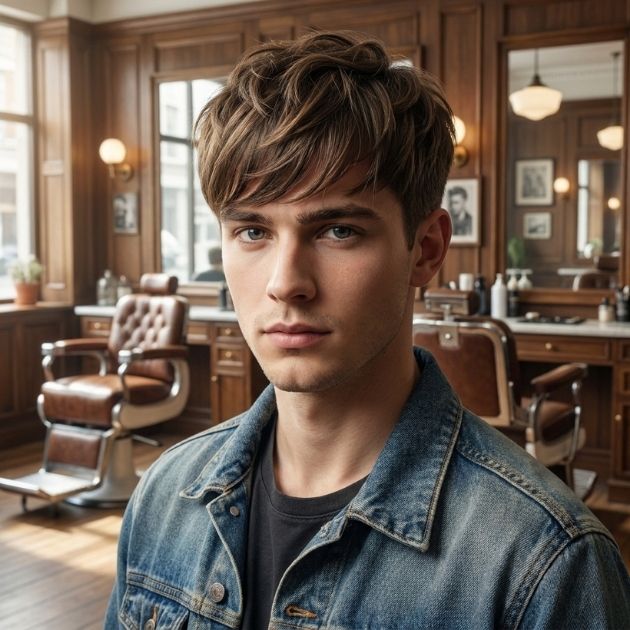
A timeless, no-frills version with a straight, even fringe line and a simple low fade. It’s the safest option for men who want the style without leaning too trendy.
Styling tip: A comb and light pomade are all that’s needed for a neat daily finish.
How to Ask Your Barber for a Taper Fade Fringe
Getting the exact look you want starts with clear communication. Barbers work faster and more accurately when you give specific details instead of vague descriptions.
- Name the fade placement first. Say you want a low taper fade that starts just above the ears and blends toward the neckline, not a mid or high fade.
- Describe the fringe length. Mention whether you want it short and above the brow, or longer so it falls across the forehead.
- Specify the texture. Ask for a textured, messy, blunt, or side-swept finish so the barber knows whether to use scissors, a razor, or point cutting.
- Mention your hair type. Curly, straight, thick, or fine hair all behave differently, and telling your barber upfront helps them adjust technique and length accordingly.
- Bring a reference photo. Even a rough match helps avoid miscommunication, especially around how much length to leave in the fringe.
- Talk face shape if you’re unsure. A good barber will suggest fringe length and side placement based on whether you have a round, oval, square, or long face shape.
How to Maintain a Low Taper Fringe
This cut is low maintenance, but a little routine care keeps it looking sharp between barber visits.
- Trim every 2 to 3 weeks. This keeps the fade lines clean and prevents the fringe from growing past the point where it can hold shape.
- Wash and dry properly. Towel-dry hair to damp, not soaking wet, before applying any product so it distributes evenly.
- Use the right product for your finish. Matte clay or paste for texture, light pomade for sleek styles, mousse or texture spray for volume and natural movement.
- Style the fringe daily. Even a quick finger-styling session after a shower keeps the front section looking intentional rather than flat.
- Protect it while you sleep. A silk or satin pillowcase reduces friction, which helps the fringe hold its shape longer and keeps the fade lines from looking fuzzy.
- Watch for humidity. In humid weather, a matte finishing product controls frizz and puffiness without adding shine or grease.
- Book fade touch-ups separately if needed. Some men get the sides refreshed every 10 to 14 days while leaving the fringe to grow slightly longer between full cuts.
FAQ’s
Does a low taper fade fringe suit thin hair?
Yes. A shorter, layered fringe adds the appearance of volume and fullness at the front without overwhelming thin hair.
How often should I get a low taper fade fringe trimmed?
Most men book a trim every 2 to 3 weeks to keep the fade sharp and the fringe in shape.
What products work best for styling this haircut?
Matte clay, light pomade, texture powder, or sea salt spray all work well depending on whether you want a sleek, messy, or voluminous finish.
Can I get this haircut with curly hair?
Yes, curly hair actually enhances the fringe with natural texture, and the fade stays just as clean as it does on straight hair.
Is a low taper fade fringe professional enough for work?
Yes, especially when the fringe is combed back or side-swept, which gives the cut a neater, more polished appearance.
Does this haircut work for receding hairlines?
In many cases yes, since a longer or textured fringe can help soften and camouflage the hairline, though it’s worth discussing specifics with your barber.
Final Thoughts
The low taper fade fringe has earned its popularity because it does something a lot of haircuts can’t, it looks sharp with almost no daily effort. The fade keeps the sides clean and professional, while the fringe gives you room to express texture, volume, or a bit of edge depending on your mood.
Whether you go with a short, structured fringe or a longer, textured version, this cut adapts to your hair type, face shape, and lifestyle rather than forcing you to adapt to it. Bring the version you like best to your next barber appointment, describe it clearly, and keep up with regular trims, and you’ll have a haircut that stays fresh, modern, and genuinely low maintenance well into 2026.