
The low taper fade mullet has quietly become one of the most requested men’s haircuts of the past two years, and 2026 is shaping up to be its biggest season yet. It takes the rebellious energy of the classic mullet and softens it with a barbershop-precision fade, so the result feels intentional rather than accidental.
If you have ever scrolled through hairstyle inspiration and wondered how to get that clean-front, longer-back look without looking dated, you are in the right place. This guide breaks down what a low taper fade mullet actually is, shows 17 real styling variations for different hair types and textures, and explains exactly how to describe the cut to your barber so you walk out with the look you pictured.
Whether your hair is thick, thin, curly, straight, or wavy, there is a version of this haircut that will work for you. Let’s get into it.
What Is a Low Taper Fade Mullet?
A low taper fade mullet is a modern haircut that blends a subtle, low fade on the sides with the longer, layered length of a traditional mullet at the back. Unlike a high or mid fade, the low taper starts near the ear and neckline, so the transition between short and long hair is soft and gradual instead of sharp and dramatic.
The front and top usually stay short to medium in length, giving a clean, professional silhouette from the front. The back is left noticeably longer, creating the signature mullet shape that adds personality and movement to the overall cut.
This combination works because it solves a common problem. A full mullet can feel too bold for everyday settings, while a full fade can feel too plain. The low taper fade mullet sits right in the middle, offering:
- A neat, controlled look at the sides and front
- Longer hair at the back for texture and character
- A gradual blend that grows out cleanly instead of leaving a visible line
- Versatility across straight, wavy, curly, thick, and thin hair types
Because the fade is low rather than high, it tends to suit most face shapes and is considered lower maintenance than skin fades that need frequent touch-ups every two to three weeks.
Low Taper Fade Mullet Men
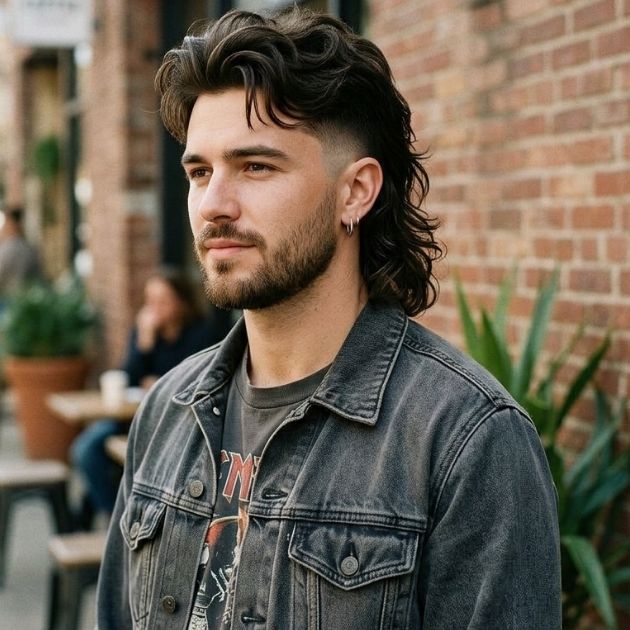
Below are 17 of the most popular ways men are wearing the low taper fade mullet in 2026. Each variation adjusts the texture, length, or parting to suit a different hair type, face shape, or personal style.
Classic Low Taper Fade Mullet
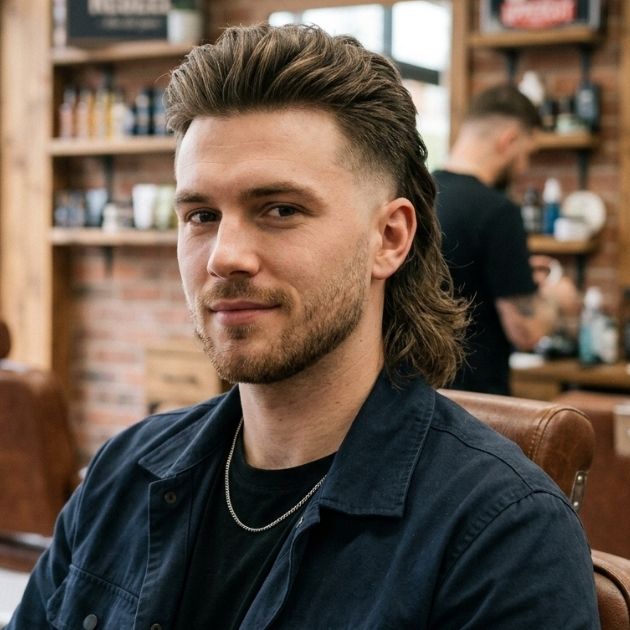
The classic low taper fade mullet keeps things balanced. The sides fade gently into a short top, while the back holds a moderate length just past the collar. It is the most versatile version of the cut and works well for men who want the mullet silhouette without going too extreme.
- Best for: straight or slightly wavy hair
- Styling tip: use a light matte clay to keep the top textured without shine
Low Taper Fade Mullet Modern Style
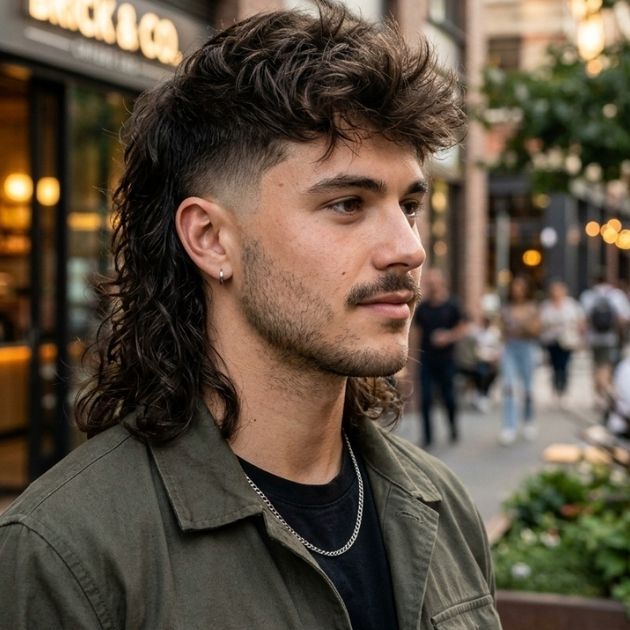
The modern take softens the sides even further and adds light layering on top for movement. It feels current and photographs well, which is why it is popular with men who post their haircuts online.
- Best for: straight or wavy hair
- Styling tip: blow-dry the crown upward before applying a texturizing cream
Low Taper Fade Mullet Messy Style
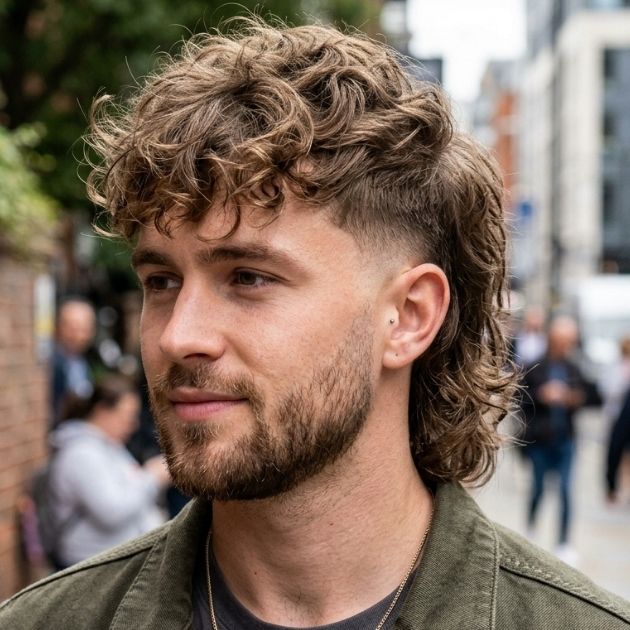
This version embraces natural texture instead of fighting it. The top and back are left slightly tousled, and the fade keeps the sides tidy so the overall look stays balanced rather than unkempt.
- Best for: thick or wavy hair
- Styling tip: work matte clay through damp hair with your fingers for a lived-in finish
Short Hair Low Taper Fade Mullet Style
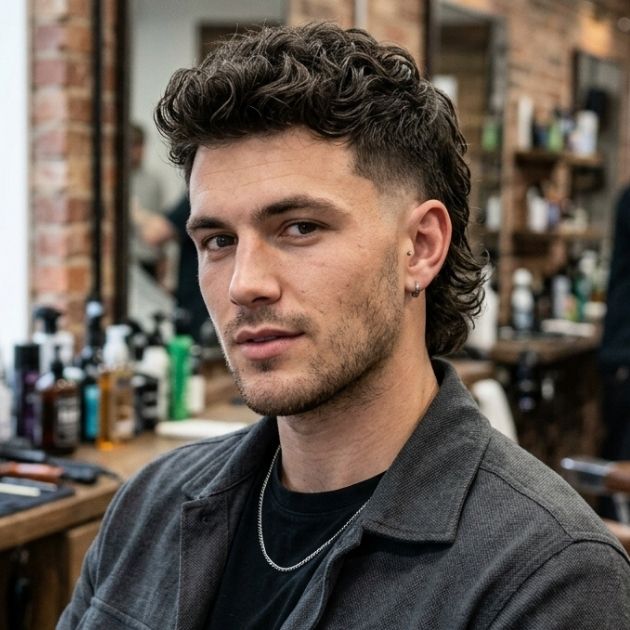
For men who are not ready to commit to a long back, the short low taper fade mullet keeps the length difference subtle. The back is only slightly longer than the top, so the mullet shape is present but understated.
- Best for: straight or thin hair
- Styling tip: a light pomade adds control without weighing thin hair down
Taper Fade Mullet Asian Style
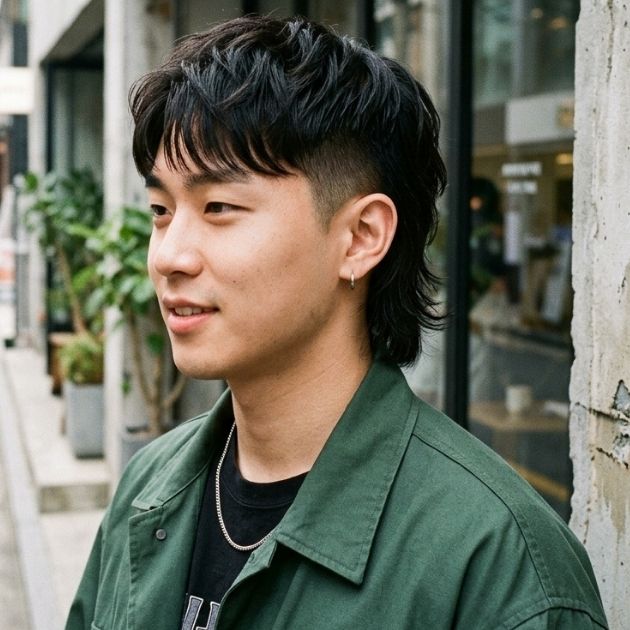
Popular across Asian barbershops, this variation pairs the low taper with a fuller, textured top that often includes a soft fringe. The fade is kept subtle so the focus stays on the top’s shape and volume.
- Best for: thick, straight hair
- Styling tip: ask your barber to point-cut the top for softer, less blunt edges
Low Taper Fade Mullet Textured Fringe
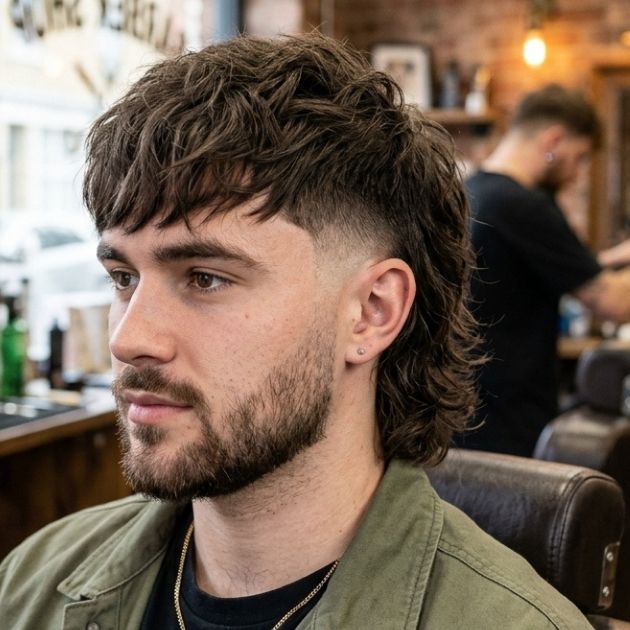
Here, the front is styled into a textured fringe that falls over the forehead, while the back keeps the classic mullet length. It is a strong choice for men who want a face-framing element up front.
- Best for: straight or wavy hair
- Styling tip: use a matte paste and press the fringe forward with your palms, not a comb
Taper Fade Mullet Curly Style
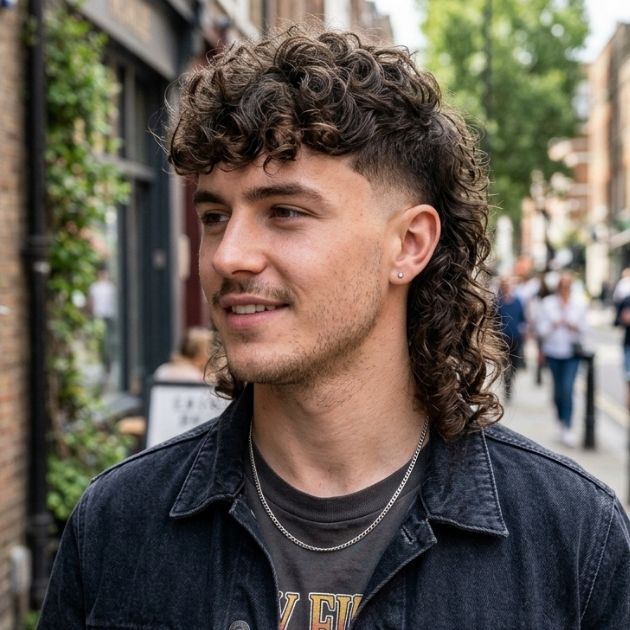
Curls add natural volume and bounce to the mullet shape, so this version often needs less product than straight variations. The low taper fade also helps keep curly sides from ballooning outward.
- Best for: curly hair
- Styling tip: apply a curl cream to damp hair and let it air dry to avoid frizz
Low Taper Mullet Straight Hair
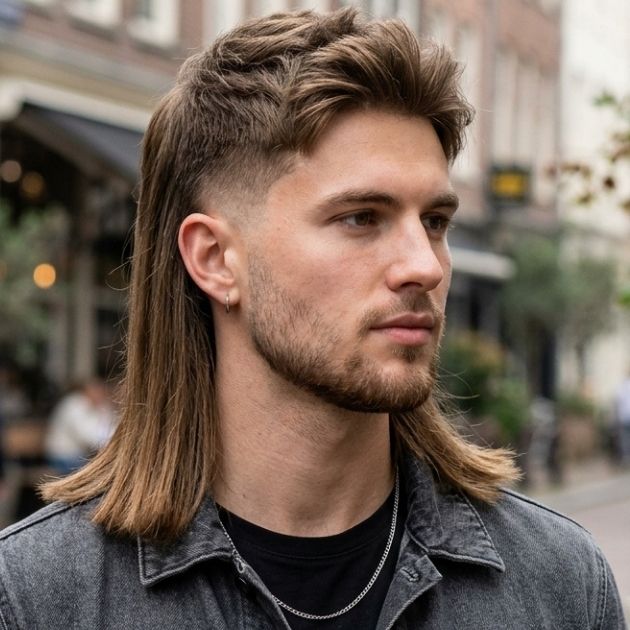
Straight hair gives this haircut a sharp, defined outline. The contrast between the tapered sides and the sleek back is more visible than with textured hair types, which makes the mullet shape read clearly.
- Best for: fine to medium straight hair
- Styling tip: use a light shine spray instead of heavy pomade to avoid a flat look
Taper Fade Mullet Textured Style
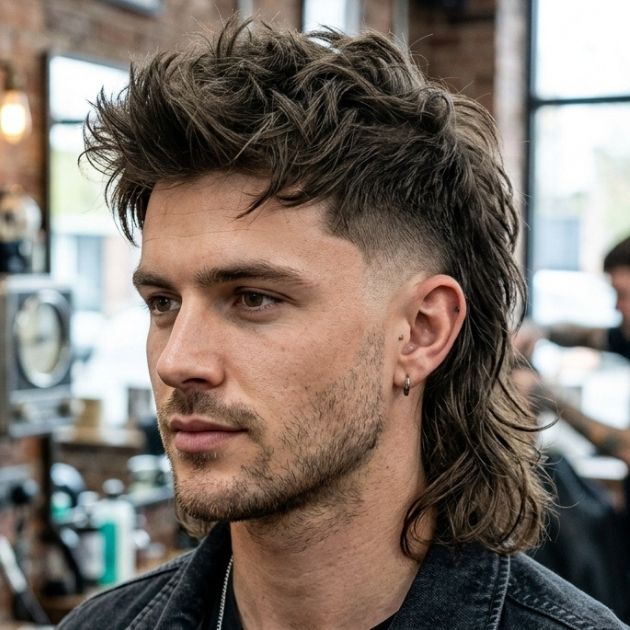
This variation focuses on choppy, textured layers throughout the top and back rather than one uniform length. It gives the haircut a more lived-in, editorial feel.
- Best for: medium to thick hair
- Styling tip: ask for point-cutting or texturizing shears during your appointment
Taper Fade Mullet Wavy Style
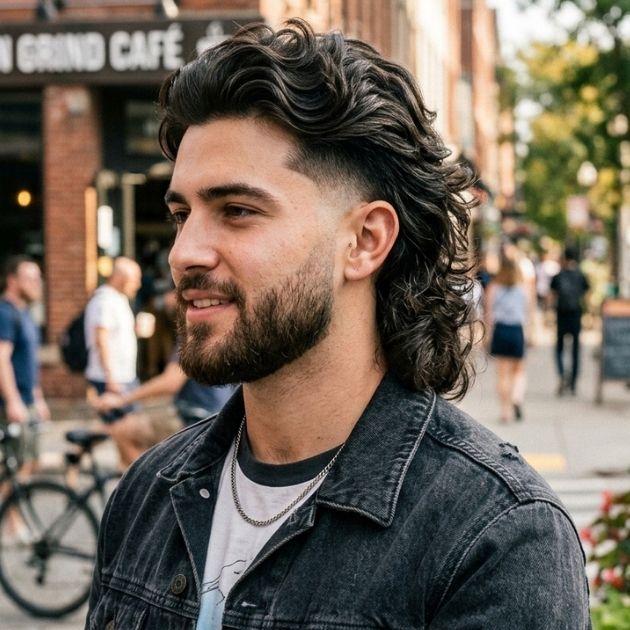
Waves naturally complement the flow of a mullet, adding subtle movement without needing much styling effort. The low fade keeps the sides from competing with the wave pattern.
- Best for: wavy hair
- Styling tip: scrunch in a light sea salt spray for beachy texture
Taper Fade Mullet Thin Hair Style
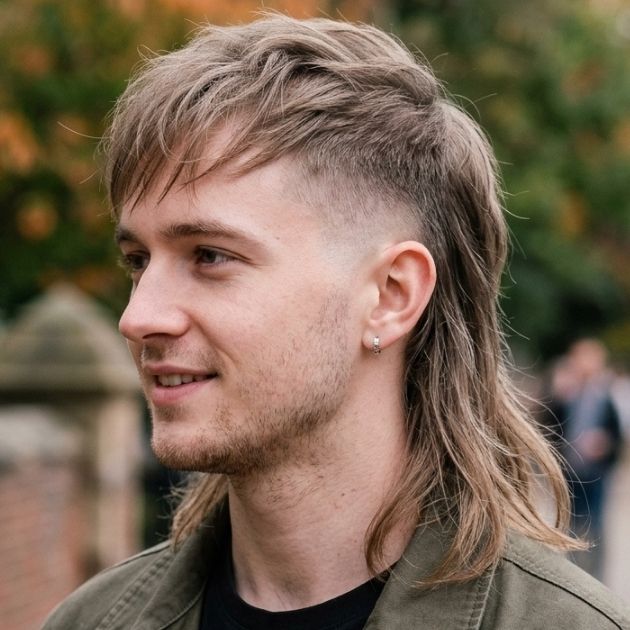
Thin hair can look fuller with the right layering, and this style uses shorter layers on top with a slightly longer back to add the illusion of density and shape.
- Best for: thin or fine hair
- Styling tip: a volumizing mousse applied at the roots helps create lift
Taper Fade Mullet Thick Hair Style
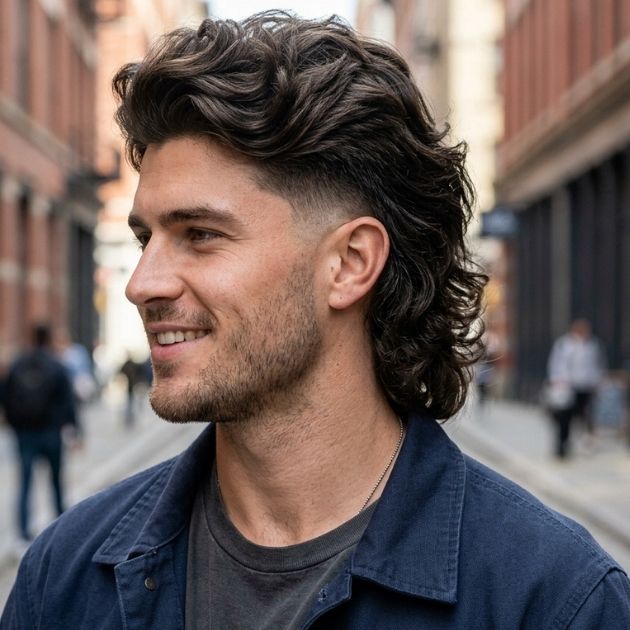
Thick hair holds shape well, so the sides can be faded gradually near the ears while the top stays fuller and more natural. This version tends to require less daily styling.
- Best for: thick hair
- Styling tip: ask your barber to thin out bulk with thinning shears if the top feels heavy
Taper Fade Mullet Middle Part
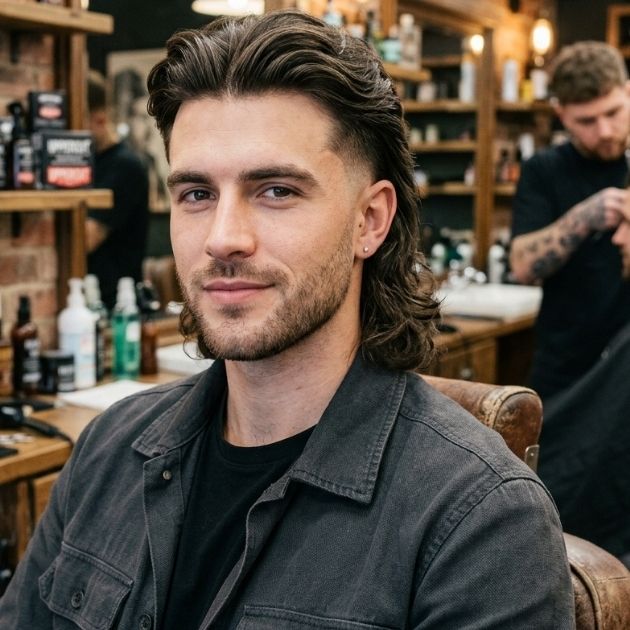
The middle part version splits the top down the center, giving a slightly vintage, 90s-inspired look while the low taper keeps the overall style modern.
- Best for: straight or wavy hair with medium length on top
- Styling tip: blow-dry away from the center part to train the hair before applying product
Taper Fade Mullet Fringe Style
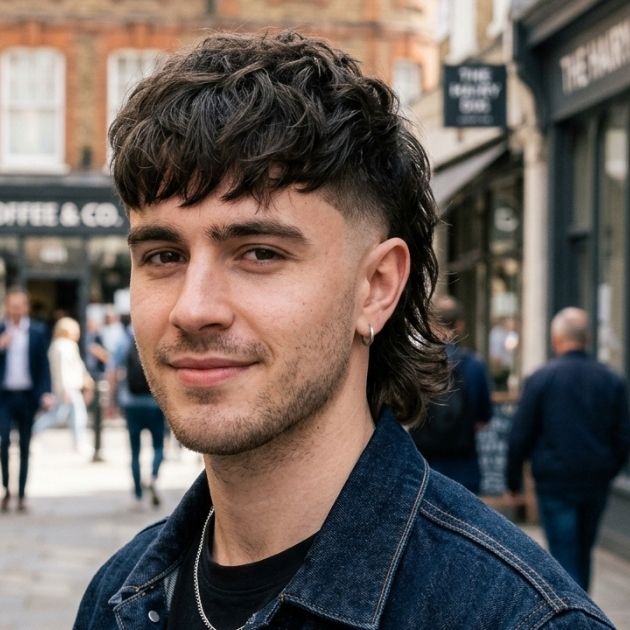
Similar to the textured fringe version but with a fuller, more structured front section. The fringe sits lower on the forehead and pairs well with a slightly shorter back for balance.
- Best for: straight or wavy hair
- Styling tip: use a blow dryer with a round brush to shape the fringe forward
Textured Top Style
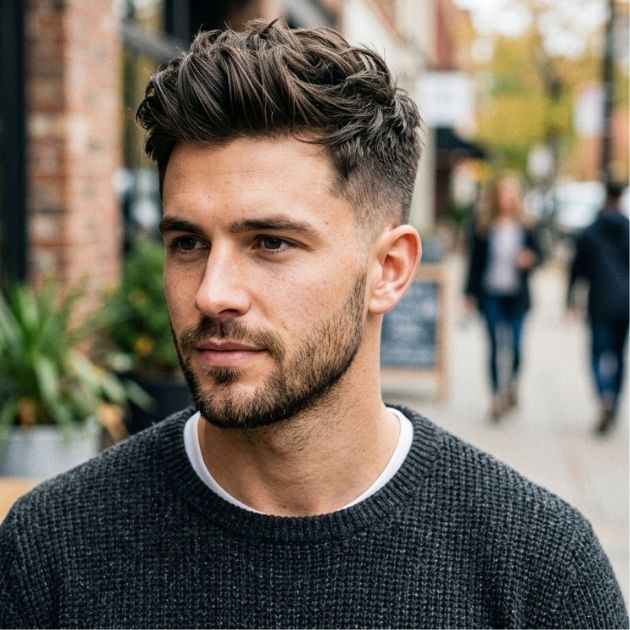
This final variation puts all the focus on textured, piecey styling across the top, with the fade and mullet acting as a clean frame around it. It is a great option for men who like a slightly edgier finish.
- Best for: medium to thick hair, straight or wavy
- Styling tip: apply a matte clay and pull small sections upward with your fingertips for definition
How to Ask Your Barber for a Taper Fade Mullet?
Miscommunication is the most common reason a haircut does not turn out the way you pictured it. To avoid that, be specific rather than general when you sit down in the chair.
- Show reference photos. Bring one photo of the fade you want on the sides and a separate photo of the back length. Barbers work best from visuals rather than descriptions alone.
- Specify the fade guard. Mention that you want a low taper, starting near the ear and neckline rather than higher up on the head. You can reference guard numbers, such as starting around a #3 and blending down to a #1.
- Describe the back length clearly. Tell your barber whether you want the back to sit just past the collar or grow out longer. Vague terms like “keep it long” can be interpreted very differently.
- Mention your hair type. Let your barber know if your hair is straight, wavy, or curly so they can adjust the layering technique accordingly.
- Talk about maintenance. If you want a low-maintenance cut that grows out cleanly, say so. If you are fine with visiting every four weeks for a sharper fade, mention that too.
- Ask about face shape. A good barber can adjust the length on top and the angle of the fade to complement your face shape, so it is worth asking for their input.
Being clear on these points takes less than a minute but dramatically increases the odds that you leave the shop happy with the result.
Why Choose a Taper Fade Mullet?
The taper fade mullet has stuck around for a reason. It is not just a trend cycle throwback, it solves several real styling problems at once.
- It works across hair types. Straight, wavy, curly, thick, and thin hair can all be adapted to this cut with small adjustments in layering and length.
- It grows out gracefully. Because the fade is low rather than a full skin fade, regrowth blends naturally instead of leaving a hard line that needs constant upkeep.
- It balances professional and casual. The short front and sides read as neat and put together, while the longer back adds a distinct, personal touch for off-duty days.
- It suits most face shapes. Round faces often benefit from the added height and shape on top, while oval and heart-shaped faces can carry the longer back with ease. Square or diamond face shapes may want to discuss proportions with their barber first.
- It is low maintenance compared to skin fades. A trim every four to six weeks is usually enough to keep the shape sharp, compared to the two to three week cycle that high skin fades often need.
- It is highly customizable. With 17 variations to choose from, the cut can be dialed up for a bold, statement look or kept subtle for a more conservative environment.
FAQ’s
What is a low taper fade mullet?
It is a haircut that combines a soft, low fade on the sides with longer hair at the back, creating a modern take on the classic mullet.
How often should I get my low taper fade mullet trimmed?
Most barbers recommend a trim every four to six weeks to keep the fade sharp and the back shape controlled.
Does a low taper fade mullet suit curly hair?
Yes, curly hair adds natural volume and texture to the mullet shape, and the low fade helps keep the sides from looking bulky.
Can I dye my hair with a low taper fade mullet?
Yes, this haircut works well with color, from subtle highlights to bolder shades, since the length at the back gives dye plenty of room to show.
Is a low taper fade mullet good for round faces?
Yes, the added height and volume on top can help balance rounder proportions, while the tapered sides keep the look clean.
What face shapes should avoid this haircut?
Men with very square or diamond-shaped faces may want to discuss proportions with their barber, since a longer top can sometimes exaggerate strong angles.
How is a low taper fade different from a high fade mullet?
A low taper fade starts near the ear and neckline for a subtle, gradual blend, while a high fade starts closer to the temple for a bolder, more dramatic contrast.
Final Thoughts
The low taper fade mullet earns its popularity by being genuinely adaptable. It is not one fixed look but a framework that flexes around your hair type, face shape, and personal style, from a barely-there messy top to a dramatic long-back finish.
If you are considering the cut for 2026, start with the version that matches your current hair texture and length, bring clear reference photos to your barber, and be upfront about how much maintenance you are willing to commit to. Get those details right, and the low taper fade mullet can easily become your go-to signature style for the year ahead.