
If you have spent any time scrolling through barbershop reels or flipping through a style book at your local shop, chances are you have come across the Southside Fade. It is one of those haircuts that looks deceptively simple at first glance, but the precision behind it is what separates a good barber from a great one.
This guide breaks down everything you need to know about the Southside Fade: where it comes from, what makes it different from a standard fade, the most popular variations, and how to get the best results whether you are sitting in a barber’s chair for the first time or you are a longtime fan of the style.
What Is a Southside Fade Haircut?
The Southside Fade is a skin fade haircut that keeps the top short and dense while the sides and back are cut progressively shorter, often down to bare skin near the ear and neckline. It is technically a variation of a high and tight cut, but with a tighter, cleaner blend that creates sharp contrast between the top and the sides.
The name traces back to the South Side of Houston, Texas, where the style became a signature look in local barbershops before spreading through Black and Latino communities and eventually into mainstream men’s grooming culture. Some barbers also refer to it as the “Southside Boosie Fade,” a nickname tied to its early popularity in Southern hip-hop circles.
What sets the Southside Fade apart from a generic fade is the level of contrast. Rather than a gradual, soft blend, this cut favors a crisp transition that makes the top of the head look fuller and more defined, even on men with finer or thinning hair.
Key Features of a Southside Fade
Before you book an appointment, it helps to know exactly what you are asking for. A true Southside Fade typically includes the following elements:
- High contrast blend. The fade moves quickly from skin-short sides to a noticeably longer top section.
- Skin-tight sides. Most versions take the sides down to zero or close to it, exposing the scalp.
- Short, uniform top. Unlike textured crops or quiffs, the top is usually kept short and even, sometimes styled in a slight box or crew shape.
- Sharp hairline work. A clean line up around the forehead, temples, and neckline is part of what makes the style look finished.
- Low daily maintenance. Once cut, the style holds its shape with minimal product or styling effort.
- Versatility with facial hair. The cut pairs well with a defined beard, mustache, or clean shave, depending on personal preference.
These features make the Southside Fade a practical choice for men who want a haircut that looks sharp from day one through day fourteen without needing constant touch ups.
Different Types of Southside Fade Haircuts
While the core concept stays the same, barbers have adapted the Southside Fade into several variations to suit different hair types, face shapes, and lifestyles.
Classic Southside Fade
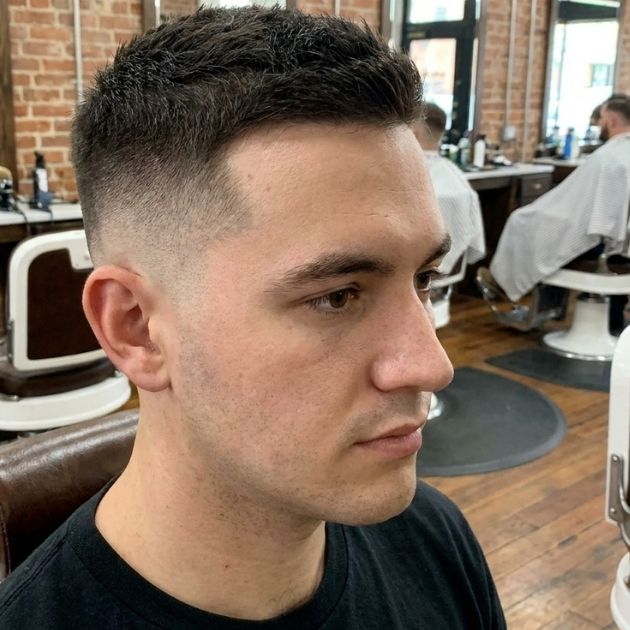
This is the original version: a high, skin-tight fade on the sides and back paired with a short, even top. It is the go-to choice for men who want the purest form of the style without added design elements.
High Southside Fade
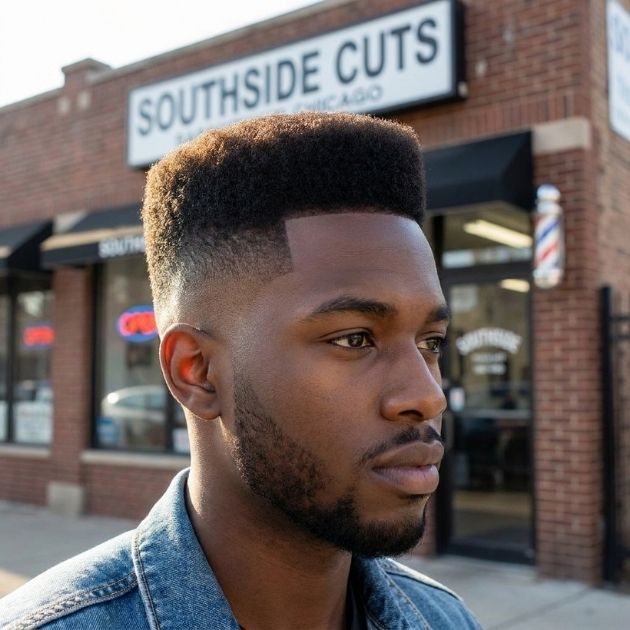
The fade line starts higher up the head, closer to the temple, which creates an even bolder contrast and makes the top section appear taller and fuller.
Mid Southside Fade
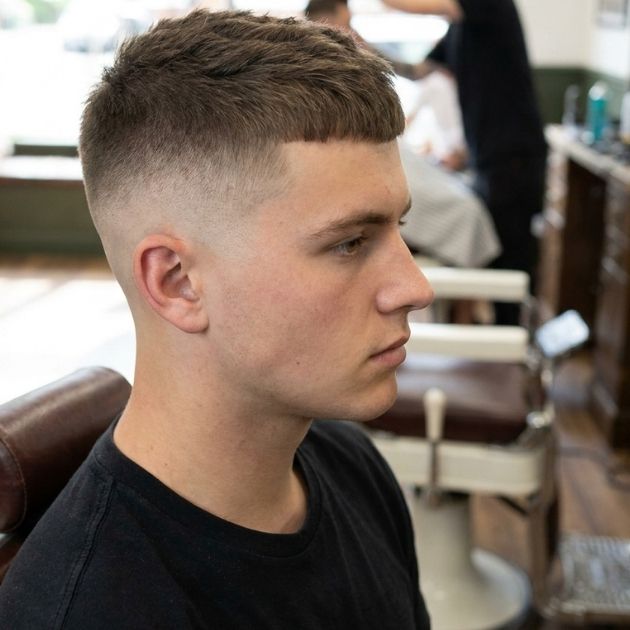
The fade begins around the middle of the head, offering a balanced look that is slightly less dramatic than the high version while still keeping the signature crisp blend.
Low Southside Fade
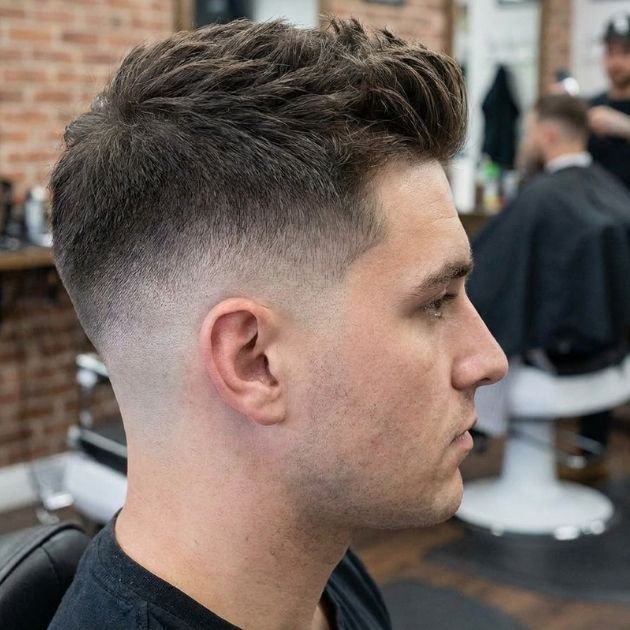
Here, the fade starts closer to the ears, leaving more length on the sides before the blend kicks in. It is a subtler take that works well for office environments or more conservative settings.
Bald Southside Fade
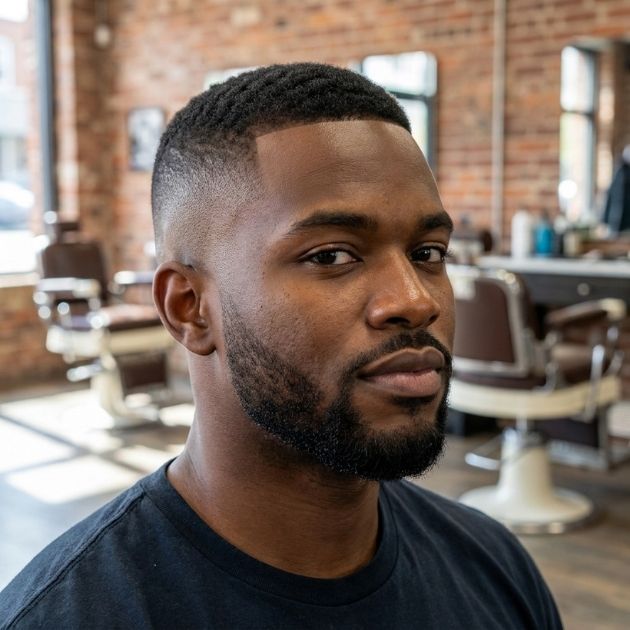
This version takes the sides all the way down to the skin for maximum contrast. It is popular among men dealing with early hair thinning since it disguises receding patches at the temples.
Southside Taper Fade
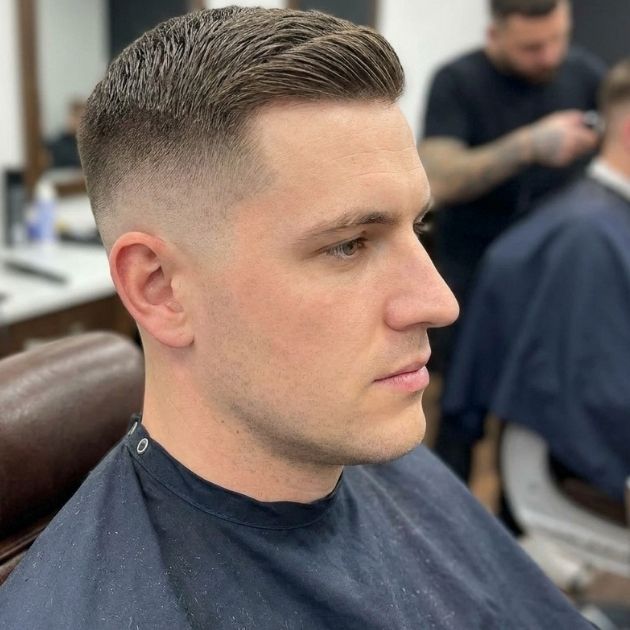
A combination of a taper and a fade, this style keeps a slightly longer perimeter around the ears and neckline while still fading the rest of the sides closely. It offers a softer transition than the classic skin fade.
Reverse Southside Fade
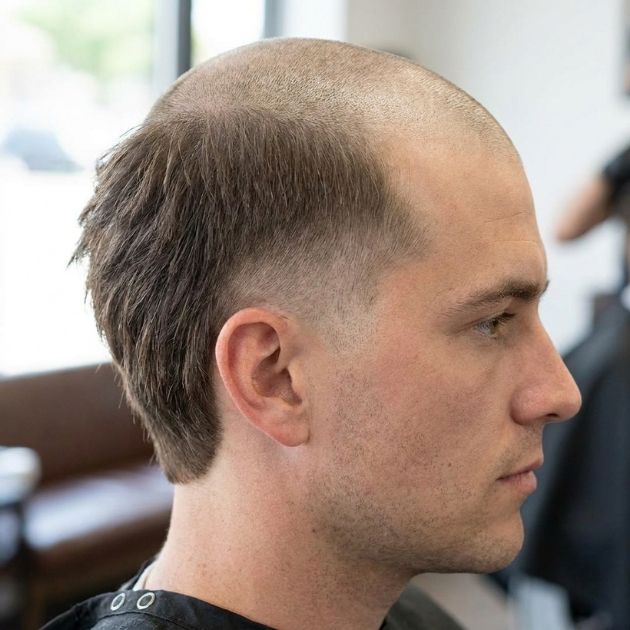
Instead of fading the back and sides shorter, the reverse version shaves the top and leaves more length at the nape. It is often recommended for men managing male pattern baldness, since it keeps hair where it naturally grows thicker.
Shadow Southside Fade
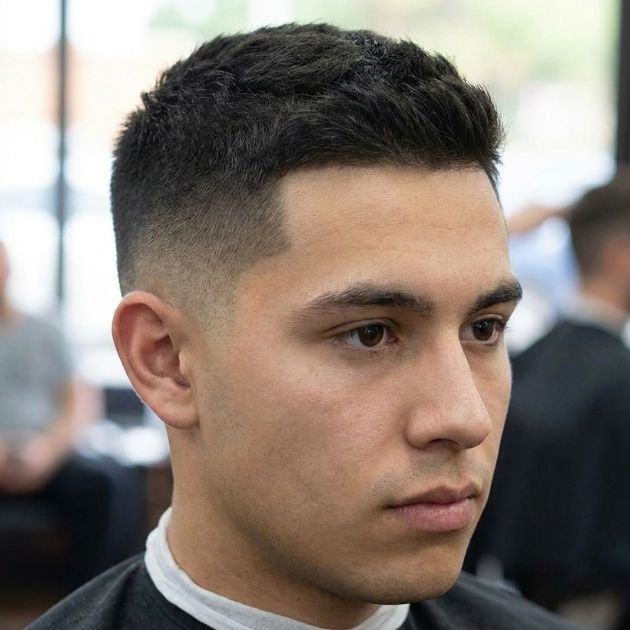
This variation uses clipper guards to leave a faint shadow of hair on the sides rather than going completely bare. It softens the contrast slightly, which some men prefer for a more natural, everyday look.
Burst Southside Fade
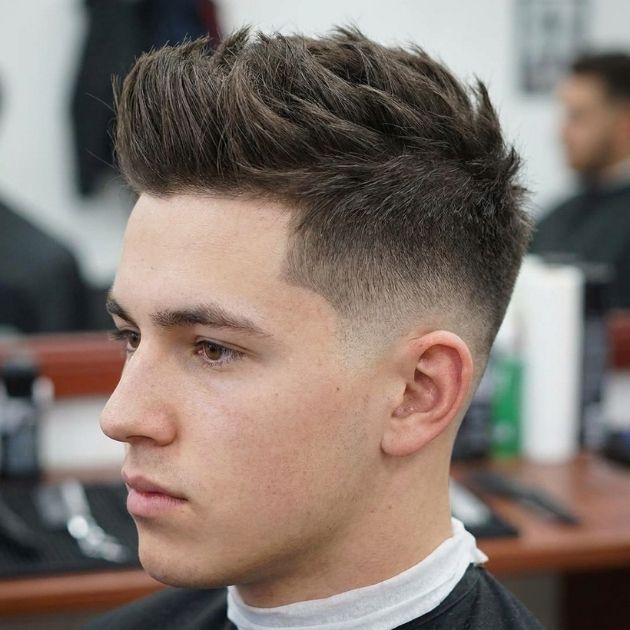
The fade curves around the ear in a semicircle rather than running in a straight line across the head. This creates a unique, eye-catching shape that pairs especially well with curly or textured hair.
Drop Southside Fade
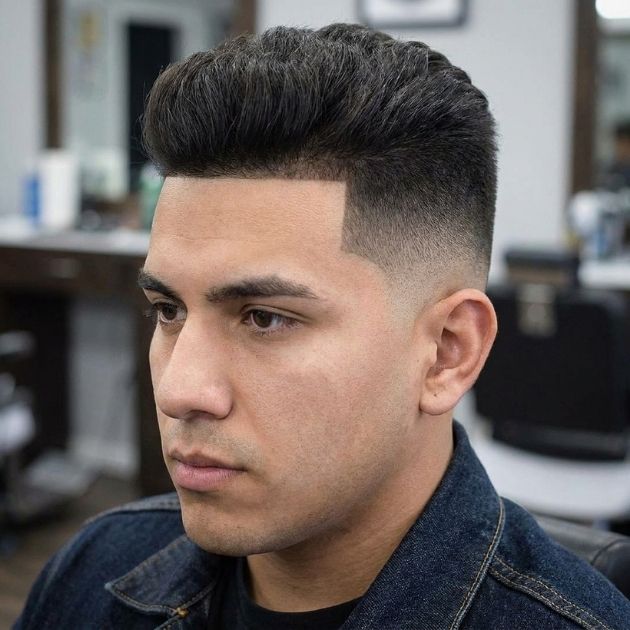
The fade line dips downward behind the ear before curving back up toward the nape. This adds visual movement to the cut and is a favorite among men who want a slightly edgier finish.
How to Ask Your Barber for a Southside Fade
Walking into a new shop without the right vocabulary can lead to a haircut that misses the mark. Use these tips to communicate clearly:
- Name the style directly. Say “I want a Southside Fade” rather than just “a fade,” since fades vary widely in height and contrast.
- Specify the fade height. Mention whether you want a high, mid, or low fade so the barber knows where to start blending.
- Clarify the top length. Decide in advance how much length you want on top, since this affects styling versatility.
- Bring a reference photo. A clear image takes the guesswork out of the conversation and helps the barber match the exact contrast level you want.
- Mention your hair type. Curly, coily, or straight hair behaves differently under clippers, so flagging this helps your barber adjust technique.
- Discuss facial hair pairing. If you have a beard, ask your barber to line it up at the same time for a cohesive finished look.
Styling Tips
Keeping a Southside Fade looking sharp does not require a complicated routine, but a few habits make a noticeable difference:
- Use a small amount of matte pomade or styling clay on the top section to add texture without unwanted shine.
- Brush or comb hair in the direction you want it to lay while it is slightly damp, then let it air dry or use a low heat setting.
- Schedule touch ups every two to three weeks to keep the fade line crisp, since regrowth softens the contrast fastest at the temples.
- Moisturize the scalp regularly, especially with bald or skin fade versions, to avoid dryness and irritation.
- If you have waves, brush in a consistent direction daily and consider a durag at night to maintain the pattern.
- Avoid heavy, greasy products that can weigh down a short top and make the cut look flat.
Who Should Get a Southside Fade?
The Southside Fade works for a wide range of men, but it tends to suit certain situations especially well:
- Men with busy schedules who want a haircut that looks neat for weeks without daily styling effort.
- Military personnel who need a regulation friendly cut that holds up under uniform grooming standards.
- Men experiencing thinning hair or early balding, since the style draws attention to the fuller area on top while minimizing the appearance of thinning at the crown or temples.
- Athletes who want a low maintenance look that stays in place during workouts.
- Anyone who wants a bold, modern look with strong contrast and a defined shape.
If you prefer longer, flowing hairstyles or want to avoid frequent barber visits every two weeks, this particular fade may require more upkeep than you are looking for.
Frequently Asked Questions
Where did the Southside Fade originate?
The style originated in barbershops on the South Side of Houston, Texas, before spreading nationally through hip-hop and streetwear culture.
How often do I need a touch up?
Most men need a fresh fade every two to three weeks to keep the contrast looking sharp.
Does the Southside Fade work on curly hair?
Yes, it works well on curly and coily hair, and variations like the burst fade are especially popular with textured hair types.
Is the Southside Fade good for receding hairlines?
Yes, the bald or reverse versions are often recommended because they minimize the visual impact of thinning at the temples or crown.
Can I add a beard to this haircut?
Absolutely, a well-groomed beard or mustache often complements the sharp contrast of a Southside Fade.
Is this haircut suitable for the workplace?
Yes, especially the low or mid fade versions, which offer a clean, professional appearance.
Final Thoughts
The Southside Fade has earned its place as one of the most requested men’s haircuts because it blends sharp style with practical, low maintenance upkeep. From the classic version to bold variations like the burst or drop fade, there is a style within this family that fits almost any hair type, face shape, and lifestyle.
The key to getting it right is clear communication with your barber and a basic understanding of which variation matches your goals, whether that is hiding early thinning, standing out with a bold design, or simply keeping things clean and professional. Bring your reference photos, ask the right questions, and you will walk out with a fade that holds its shape long after you leave the chair.